Xi Jinping’s India visit for BRICS confirmed, a 2019 throwback and a look forward
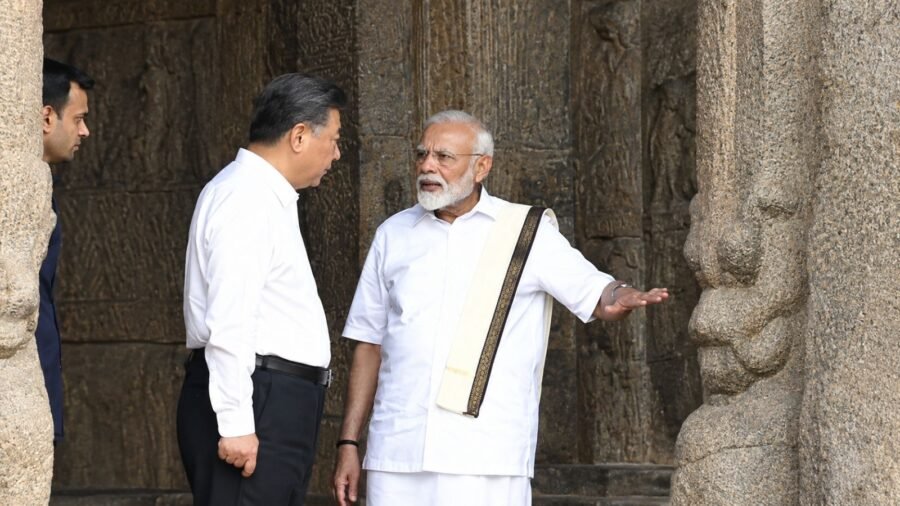
The suspense is over. The announcement has been made. Xi Jinping will visit India this weekend – September 12-13 – to attend the (now very) high-profile BRICS summit in New Delhi. The Chinese Foreign Ministry made that announcement on its website and various social media platforms.
“At the invitation of (the) Prime Minister of the Republic of India, Narendra Modi, President Xi Jinping will attend the 18th BRICS Summit in New Delhi from September 12 to 13,” Beijing said.
At the invitation of Prime Minister of the Republic of India Narendra Modi, President Xi Jinping will attend the 18th BRICS Summit in New Delhi from September 12 to 13. pic.twitter.com/abKPwOyqRm
— CHINA MFA Spokesperson 中国外交部发言人 (@MFA_China) September 10, 2026
In hindsight, yes. We (probably) knew Xi was coming. Sources told the Express today that security teams from Beijing had already set up shop at the central Delhi hotel which will host the president, and that Delhi Police’s Special Cell had been tasked with coordinating security from the host nation’s side.
Xi will join his Russian and Iranian counterparts, Vladimir Putin and Masoud Pezeshkian, in a 48-hour whirlwind of meetings, pull-asides, and hushed discussions on everything from trade and the global economy to the wars being fought in West Asia and Ukraine. Modi’s meetings with Putin and Pezeshkian – both of whom he has already spoken to this fortnight past – will be closely watched.
Story continues below.
Subscribe to see fewer ads.
As too will his encounter with Xi Jinping, who makes his first India visit in seven years.
Xi Jinping’s last India visit
Turn the clock back to October 2019 for a two-day ‘summit’ in Tamil Nadu.
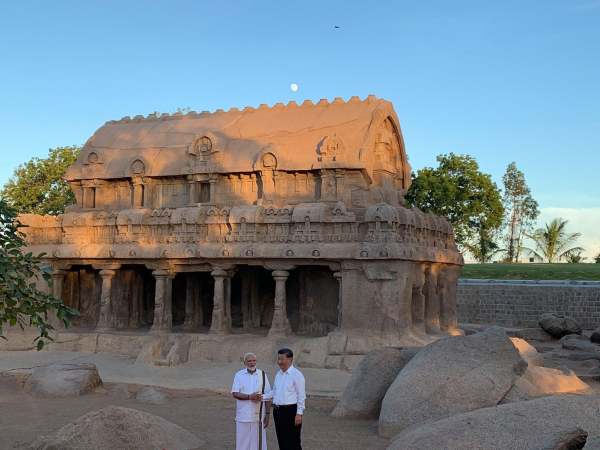 The location was chosen with care – it was far from Delhi’s formal setting and calibrated to convey warmth and an arguably unique cultural touch.
Xi was in Mamallapuram (or Mahabalipuram), a temple town roughly 50km from Chennai and which is home to 7th and 8th century rock-cut temples and carvings listed as a UNESCO World Heritage Site.
The location was chosen with care – it was far from Delhi’s formal setting and calibrated to convey warmth and an arguably unique cultural touch. It was also a genteel push to trade ties that have since exploded; by some estimates India-China bilateral goods trade crossed $150 billion in FY2025/26.
Story continues below this ad
The timing of the meet was also significant since it came weeks after the Indian government scrapped special status for Jammu and Kashmir under Article 370. China was fiercely critical of the move.
Tensions between Delhi and Beijing would escalate dramatically in the months to come because of the clash between their two militaries in Ladakh in June 2020, but that was an unknown factor, of course.
What happened during the visit
The Prime Minister received Xi himself – dressed in a white shirt and veshti to match – and gave the Chinese leader a tour of the Shore Temple and other monuments in Mamallapuram.
Then there was a traditional dance performance to take in and a dinner built around Tamil culinary hits like rasam and ‘meen varuval‘ – filets of fish marinated in spices and pan-fried.
Story continues below this ad
Sometime between the temple tour and the fried fish, Modi and Xi sat down over a staggered six hours to discuss the ‘new chapter in India-China ties’. These included exchanging notes on trade and investment, and the trade deficit that was then roughly $11 billion and is now a staggering $112 billion.
“The two leaders spoke about trade and investment… was concluded there will be a new mechanism in place for trade and investment between the two nations,” then-Foreign secretary Vijay Gokhale said.
A joint approach to fighting terrorism was also discussed.
There was no major agreement signed or deal announced.
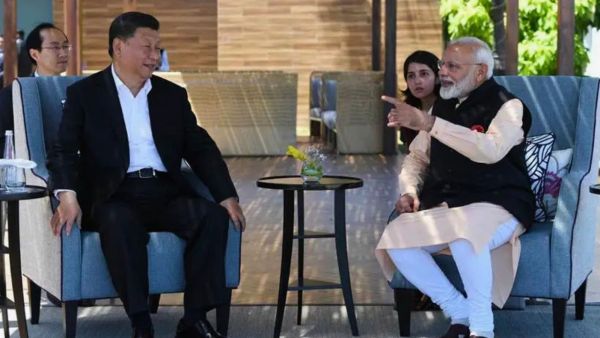 Sometime between the temple tour and the fried fish, Modi and Xi sat down over a staggered six hours to discuss the ‘new chapter in India-China ties’. (Source: Twitter/ @MEAIndia)
And that was by design. The idea was to build personal rapport between the leaders rather than produce concrete deliverables, and both sides agreed the meeting was ‘candid and constructive’.
And then?
June 2020. The Galwan Valley clash happened.
The first large-scale military action between the two countries in decades, in which 20 Indian soldiers and an unspecified number of Chinese troops were killed. The fallout went beyond the violence.
Story continues below this ad
Diplomatic ties froze and Delhi and Beijing began amassing troops along the LAC, the Line of Actual Control that serves as the de facto international border between the two countries. It took over eight months for the first big positive step forward – in February 2021 tanks began rumbling back from the LAC and makeshift military positions were pulled down, though there were still occasional spats, including India banning nearly four dozen Chinese-made mobile phone apps in November 2020 ‘based on inputs (that they were) engaging in activities prejudicial to integrity and defence of India…’
Since then ties have improved, particularly after US President Donald Trump’s tariff offensive targeted both India and China, prompting an exchange of high-level visits and a slow thawing of relationships.
And it could happen that the dynamic could be boosted at a BRICS summit in 2026 as in 2024, when Modi and Xi met days after the ‘disengagement and resolution of issues’ from the Ladakh clashes.
So what now?
Xi’s visit this weekend has enormous implications for any continued thaw in India-China ties and for how the two countries might work together – in trade and regional defence – in an increasingly uncertain and unstable global world order, particularly one driven by critical supply chain disruptions.
Story continues below this ad
Yes, he won’t be alone; Putin and Pezeshkian are also attending, and that adds layers of tensions and challenges, not the least of which are tightropes over Russia’s war in Ukraine and the US’ war in Iran.
And Modi’s meetings with each leader will draw as much scrutiny as his sit-down with Xi.
The bottom line is this — the 2019 meeting was an attempt to build Modi-XI personal chemistry without paperwork. It got wiped out within months by a border clash neither leader saw coming.
This weekend tests whether Modi and Xi can do better this time — with a much bigger trade gap, a still-unresolved border row, and a global backdrop (Trump tariffs, wars in Ukraine and West Asia) that seems to be pushing them toward each other whether they fully trust one another or not.
‘Violated party policy’: Bihar Congress notice to 29 rebels amid deepening rift
By Sohail Khan · 10 Sep
To help rescued orangutans beat stress, Odisha zoo turns to music therapy
By Sohail Khan · 10 Sep
Leave a Reply