Why does Times Square drop a ball on New Year’s Eve? The 700-pound story from 1907 behind a global tradition
Why does Times Square drop a ball on New Year's Eve? The 700-pound story from 1907 behind a global tradition
A 700-pound illuminated ball first descended over Times Square in 1907 to welcome 1908, beginning a tradition that still draws crowds today
Published on: Sep 30, 2026, 09:06:57 IST
Prefer HTon Google
Share via
Copy link
Every year, millions of people watch a glowing sphere slowly descend during the final seconds of the year in New York's Times Square. But the iconic ball drop began as a replacement for a banned fireworks display.
The ball that started the tradition weighed 700 pounds and was made of iron and wood, fitted with 100 electric light bulbs. The first ball drop took place at midnight on December 31, 1907, ushering in 1908.
The idea was the brainchild of New York Times publisher Adolph Ochs, who was looking for a novel way to draw crowds to Times Square after the city banned the fireworks that had been part of the newspaper's New Year's Eve celebrations.
From fireworks to a glowing ball
The Times had opened a bureau in Times Square in 1905, and Ochs had successfully turned the area into a magnet for New Year's celebrations. The first gathering in 1904 proved to be a huge draw, with more than 200,000 people turning out to watch fireworks launched from the Times Tower.
By 1907, however, fireworks were no longer an option. Ochs turned to an old device known as a time ball.
Time balls had been used since the 19th century to help ships set their chronometers by providing a visual time signal. One of the best-known examples is at the Royal Observatory in Greenwich, England, where a time ball began operating in 1833. Similar time balls later appeared around the world.
Ochs drew inspiration from the concept but adapted it to create what would become the Times Square ball drop. The first ball was nothing like the one seen today. It was five feet in diameter and weighed 700 pounds. Made of iron and wood, it was fitted with 100 25-watt electric bulbs and lowered from the Times Tower's flagpole using ropes and pulleys.
As the clock struck midnight, thousands of onlookers gathered beneath the tower. When the glowing sphere finally touched the ground, it marked the start of the new year. The crowd erupted in celebration, blowing horns, shaking rattles and tooting whistles.
The event was an immediate hit and continued to draw crowds in the years that followed. What was intended as a substitute for the banned fireworks quickly became a major attraction in its own right.
From 700 pounds to a global spectacle
The ball has dropped almost every year since, with the tradition suspended in 1942 and 1943 during World War II. Blackout regulations meant the lights could not be seen from the street, but people still gathered in Times Square to mark the occasion with bells and whistles.
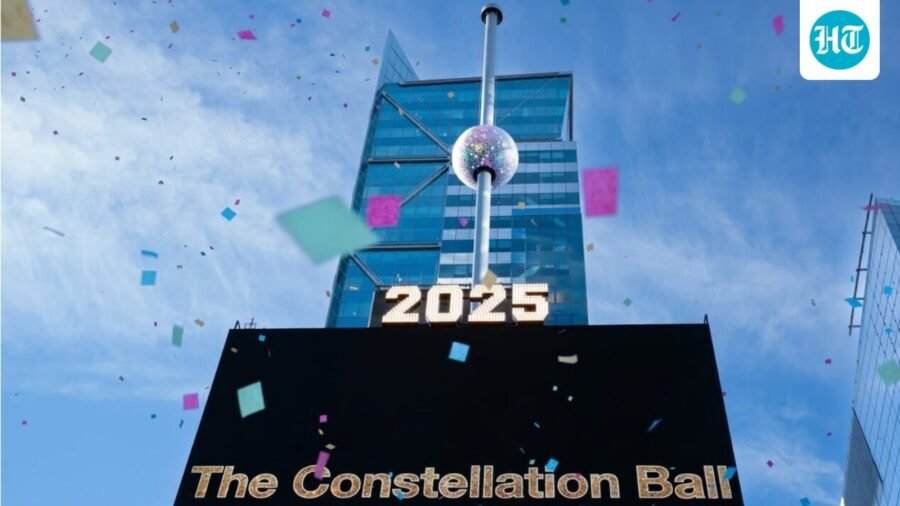
The ball itself has also evolved considerably over the decades. The current 12.5-foot-diameter Constellation Ball, unveiled in 2025, weighs 12,350 pounds and features 5,280 Waterford crystal facets and thousands of LEDs.
Yet the fundamental idea behind the drop remains the same. Drawing inspiration from the time balls of the 19th century, the Times Square tradition has grown from a creative replacement for fireworks into one of the world's most recognisable New Year's celebrations.
More than a century after it first captivated crowds, the glowing sphere has become an enduring symbol of New Year's Eve around the world.
See Less

Bushfire season is fast approaching; new satellite tool can help communities better prepare
By Sohail Khan · 30 Sep
How sugar from outer space became one of the backbones of life on Earth
By Sohail Khan · 30 Sep

Leave a Reply