‘Highly dangerous consequences’: Iran after Israeli PM Benjamin Netanyahu’s ‘secret’ visit to UAE
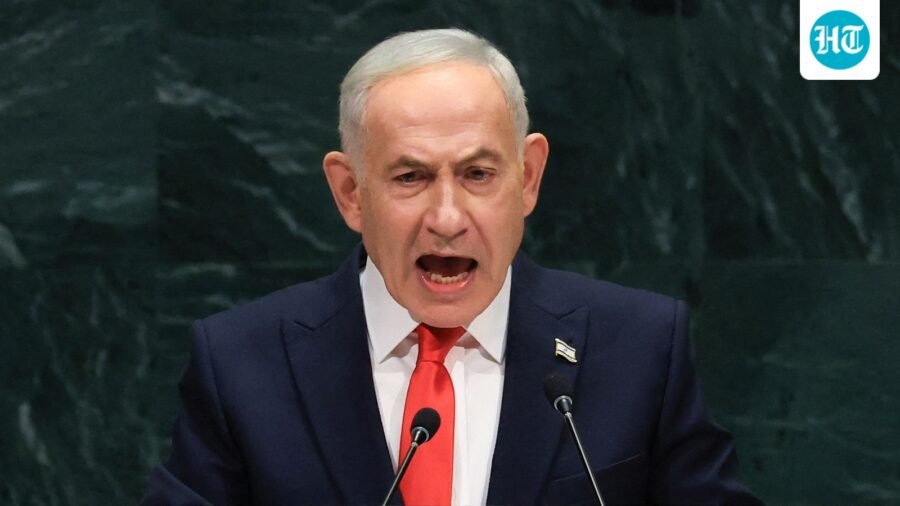
‘Highly dangerous consequences’: Iran after Israeli PM Benjamin Netanyahu's ‘secret’ visit to UAE
Iran said the presence of a “criminal” whose hands were “stained with the blood” of innocent people posed a serious threat to regional peace and security.
Updated on: Sep 30, 2026, 11:03:51 IST
Prefer HTon Google
Share via
Copy link
Iran has warned of “highly dangerous consequences” following Israeli Prime Minister Benjamin Netanyahu’s ‘secret visit’ to Abu Dhabi and his meeting with UAE President Sheikh Mohammed bin Zayed Al Nahyan.
Iran’s foreign ministry strongly condemned Netanyahu’s presence in the UAE and asked countries across the region to remain vigilant over the security risks posed by Israel.
“The ministry of foreign affairs of the Islamic Republic of Iran strongly condemns the visit of Benjamin Netanyahu, the child-killing and war-mongering Prime Minister of the Zionist regime, to the United Arab Emirates and warns of the highly dangerous consequences of the presence of the occupying regime in the region,” the ministry said in a statement issued on Tuesday.
“The presence of a criminal whose hands are stained with the blood of hundreds of thousands of innocent people and who is under prosecution by international courts is extremely dangerous and alarming,” they added.
Iran also accused Israel of repeated threats against the Islamic Republic and warned regional governments against allowing their territories to be used for actions that could destabilise neighbouring countries.
“Regional security is a collective and indivisible matter,” the Iranian Foreign Ministry said. It called on regional governments to “refrain from providing the grounds for the destructive presence of the Zionist regime” and not allow their territories to become a platform for actions against other countries.
What happened during Netanyahu’s UAE visit?
Netanyahu made an unannounced one-day trip to Abu Dhabi on Sunday and met Sheikh Mohammed bin Zayed, according to Israeli officials.
The UAE later confirmed the meeting through its state news agency, WAM. The two leaders discussed bilateral relations and ways to strengthen ties between Israel and the UAE.
Netanyahu reportedly travelled on a private aircraft and spent several hours in Abu Dhabi before returning to Israel, as per AFP. His office did not initially announce the trip.
Why Iran is concerned
The US and Israel launched a war on Iran on February 28 and assassinated their Supreme Leader and other top officials. Iran retaliated by launching attacks on US military bases across the Gulf and closing the Strait of Hormuz, a vital oil artery. Retaliatory Iranian strikes on UAE were intercepted, Reuters reported at the time.
The seven-month long war has since spilled across the region, with Iran targeting facilities in countries hosting US forces. These include Qatar, Bahrain, Kuwait and Jordan.
Tehran views Israel as a major security threat and has repeatedly opposed the expansion of Israeli military and intelligence cooperation with Gulf states.
The Iranian foreign ministry said Israel's “proven hostility and animosity” towards Iran, along with “repeated threats” against the Islamic Republic, meant that countries in the region should consider the consequences of closer Israeli engagement.
Israel-UAE ties and the Abraham Accords
The two countries established formal diplomatic relations in 2020 under the US-brokered Abraham Accords. The UAE became one of the first Arab states in decades to establish open diplomatic ties with Israel.
Since then, the relationship has expanded into areas including trade, technology, investment and security cooperation.
Abu Dhabi has sought to maintain ties with Israel and the US while also protecting its own security and regional interests, Reuters reported.
See Less


Flydubai flight headed to Israel turns back over Saudi Arabia after emergency
By Sohail Khan · 30 Sep

Leave a Reply