When the House ceases to hold power to account
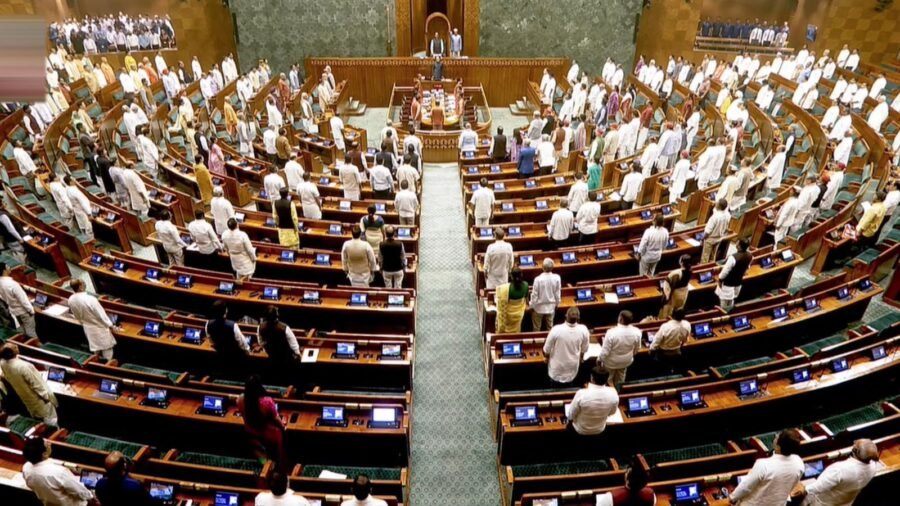
The country’s democratic institutions – the two Houses of Parliament and the state assemblies – have become virtually dysfunctional and are now just caricatures of what they used to be when these bodies were established.
When it all began in the 1950s, our Houses of Parliament and the state assemblies were vibrant bodies which met around 100 days a year or more and MPs and MLAs articulated the concerns of their constituents. Question Hour and Call Attention Motions kept the government on its toes and ministers viewed an approaching session with a great deal of trepidation. That is all folklore now. Both Parliament and the assemblies hardly meet and the disruptive nature of politics has hollowed out these institutions. As a result, these democratic bodies do not serve the purpose for which they have been established and the massive salary bills and perquisites of our representatives are a drain on the exchequer.
Advertisement
The shouting matches disrupt scheduled legislative work. Since the Houses hardly meet, the governments, whether at the Centre or in the states, are no longer accountable or answerable to the elected bodies.
Let us look at the two Houses of Parliament to begin with. The two Houses met for an average of 127 days during the 1950s and this rose to 138 sittings in the following decade. But there has been a steady decline since the 1990s. In recent times, the number of sittings per year has crashed to 70 days or less. Side by side, the percentage of time lost to disruptions has spiralled to over 25 per cent. For example, the Fourteenth Lok Sabha met for just 66 days per year and lost 26 per cent of its time to disruptions, which means it actually functioned for just 50 days.
Veteran parliament watchers realise the consequence of this decline. There are fewer days for Question Hour, Call Attention Motions, debates on the Demands for Grants of various departments and legislative business. In the earlier decades, MPs would pin down ministers during Question Hour, and Speakers would pull up ministers who were unprepared or who tried to mislead the House. Such was the tension during that hour that many ministers would plead with MPs in the lobby to absent themselves or to show some “kindness” to them during question time.
Advertisement
These days Question Hour has lost its fizz – either it is knocked out by disruptions or MPs are unprepared. As a result, there is no forum or environment for our representatives to raise issues that concern us in Parliament.
On May 13, 2012, when the two houses met to commemorate their diamond jubilees (they had their first sitting on May 13, 1952), the late Sitaram Yechury of the CPM said that, with the sharp drop in sittings per year, Parliament was unable to perform its oversight responsibilities. He suggested that it be mandatory for Parliament to meet on at least 100 days every year. This was a suggestion that was made in public interest, but never implemented.
One can gauge the gravity of the situation when one realises that the average sittings of the 17 th Lok Sabha (2019-2024) slumped to just 55 days per year.
So, our MPs earn huge salaries and perquisites but have no forum to represent the people who elected them. Nor are they duly worried about this state of affairs.
Let us now turn to state assemblies. The average sittings of state assemblies per year, which was around 80 days or more in the 1950s and 1960s, has now crashed to just about 25 days.
Article 174(1) of the Indian Constitution stipulates that the Governor shall from time to time summon the state legislature “but six months shall not intervene between its last sitting in one session and the date appointed for its first sitting in the next session”. So, for most chief ministers, facing the assembly is a mere formality and the quicker it is over, the better.
PRS Legislative Research tells us the story of some of the state assemblies. The legislative assembly in India’s biggest state – Uttar Pradesh – met for 45 to 50 days a year in the 1970s. This has seen a steep drop to just 15-20 days a year now, which means the government is just fulfilling the constitutional mandate, and most working days relate to the Budget Session. The other session that is called in the year is seems to be just to stay within the constitutional stipulation.
The Karnataka Assembly met for 82 days in 1972 and 73 days in 1976. Two decades ago, the legislature even passed a law saying the assembly must meet for at least 60 days a year. But, since then, the assembly violates its own law. Its sittings average 25 to 33 days per year. Some years, it was pretty abysmal. It met for just 18 days in 2019 and 14 days in 2020. The Kerala Assembly, which averaged 83 days per year in the 1950s, is now down to 43. Tamil Nadu Assembly, which averaged 64 days per year in the 1950s, has dropped to 32 days in recent years.
It is a similar story elsewhere. The Punjab Assembly, which met on average for 40 days a year earlier, now meets for just 10-15 days (11 days in 2021). Much like Punjab, the Haryana Assembly, which met for an average of 40 days a year, is now content to meet for just 10-15 days. Bihar has dropped from an average of 60-70 sittings per year to about 30. The same is the story with Maharashtra and Gujarat, where the average sittings have fallen by 50 per cent.
Things are no different in the North-east. The sittings of the Tripura assembly have also fallen from 40 per year to less than 20. Thus, the affliction is widespread and covers all regions of the country. Even on these depleted number of days, a good percentage of the time is lost to disruptions.
How do our MPs and MLAs represent the people when our Parliament and state assemblies hardly meet? The test of democracy is not just the regularity of elections but what happens between elections. How can our presiding officers justify the fact that the sittings of our Houses of Parliament have crashed from 138 days per year to just 55? Is there a single political party which is worried about how these institutions have got hollowed out and lost their representative character?
The problem with our elected assemblies is not limited to just the steep drop in sittings per year. It covers every aspect of the work of a legislative body, including Question Hour and Call Attention Motions, the working of committees, and law-making.
Then Lok Sabha Speaker Shivraj Patil introduced the committee system in Parliament in 1993 to enable MPs to be focused on their areas of interest in public policy and to specialise. Called the Departmentally-Related Standing Committees, the idea got off to a good start in the initial years, but like everything else, there is a decline in their functioning.
The first and major problem is that the attendance is below par – just about 50 per cent in most cases – even though MPs get special allowances for attending the meeting and for travel. Although the working of Standing Committees is crucial for Parliament, MPs play truant and get away with it because political parties do not enforce discipline.
Parliamentary responsibilities are given low priority by parties. All that they expect from MPs is to respond to the whip and to the political dictates of their party’s “High Command” when the session is on.
There are dozens of examples of the gross irresponsibility of our MPs when it comes to law-making. Here are a few: On August 30, 2012, the Lok Sabha passed the All India Institute of Medical Sciences (Amendment) Bill and the Chemical Weapons Regulation (Amendment) Bill in a record three minutes. The AIIMS Amendment Bill concerned the establishment of six more such premier hospitals at Rs 4,900 crore, and the Chemical Weapons Bill sought to bring Indian law in tune with international agreements.
On September 3, 2012, the Lok Sabha passed three bills — The Protection of Women Against Sexual Harassment at Workplace Bill ( a law which affects millions of working women); The National Highways Authority (Amendment) Bill; and The North-Eastern Areas (Reorganisation) and Other Related Laws (Amendment) Bill, 2012 – without debate. The North-Eastern Areas law pertained to the setting up of separate high courts in the states of Manipur, Meghalaya and Tripura instead of just one high court for the region in Guwahati. This bill was moved at 12.03 hrs and passed at 12.05 hrs. On the following day, the House passed the National Institute of Mental Health and Neuro-Sciences, Bangalore Bill in two minutes. It was moved by the minister at 12.07 hrs and passed by the House at 12.09 hrs.
Our Parliament has begun competing with instant noodles.
One can throw up such examples session after session and year after year. More recently, in the Monsoon Session this year, the Taxation and Other Laws (Amendment) Bill and the Micro, Small and Medium Enterprises Development (Amendment) Bill were cleared in three minutes each by the Lok Sabha. The House took just four minutes each to pass the Registration of Births & Deaths (Amendment) Bill, the Supreme Court (Number of Judges) Amendment Bill, and the Kerala (Alteration of Name) Bill, whereas the House took five minutes to okay. The Bankers’ Books Evidence Bill and The Mines and Minerals (Development & Regulation) Amendment Bill. The Prevention of Insults to National Honour (Amendment) Bill, 2026 passed the previous day in just 14 minutes with two MPs participating.
These examples of “law-making” in Parliament should shock the conscience of every parliamentarian in the country.
Equally shocking would be the perquisites given to MPs. The list is very long but one item should put the citizens on full alert – special, privileged allotment of firearms to MPs by the Customs Department.
Four decades ago, Parliament was informed that over a 15 month period from October 1987, as many as 38 MPs were allotted guns seized by customs department. They even got a 5 per cent discount in those days. They were also entitled to buy three discarded army vehicles like jongas and jeeps according to the Association of Democratic Rights and the National Election Watch.
Obviously, the firearms perk continued in later years, as RTI activist Ambrish Pandey found out. He obtained details about the allotment of guns to MPs from 2001 to 2012 from the anti-smuggling unit of the Customs Department. He found 82 MPs were allotted weapons, including 13 MPs who had serious criminal cases like murder, attempt to murder and kidnapping pending against them. One MP had 44 criminal cases pending against him. The allotted guns included lethal, prohibited-bore weapons. The more recent guidelines do not talk of discounts. But there are no strict eligibility criteria.
Why are these perks continuing when our MPs’ parliamentary duties have slumped, more so when the cost of running parliament has hit the roof?
In the 1950s, it was estimated that it cost the public exchequer Rs 36,000 per day to run Parliament. In 2004, the estimated cost had jumped to Rs 1.23 crore per day. This rose to Rs 2 crore per day in 2012. Now PRS Legislative estimates the cost to be a staggering Rs 9 crore for a full working day of six hours.
Irrespective of which party or alliance is in power at the Centre and in the states, the parties which occupy the Opposition benches do not allow the Houses to function. There is slogan-shouting, placard-wielding, etc and the chaos results in adjournment of the House. This has become a standard leitmotif whether it be the Lok Sabha or a state assembly.
The fall in standards is precipitous, and the people must demand that the salaries, allowances and perks of our MPs and MLAs be cut by 50 per cent, until some semblance of accountability is restored. One looks forward to such a resolution being adopted at the next conference of presiding officers.
The writer is author of What Ails Indian Parliament, (HarperCollins) 1995


Soft inside, crisp outside: How to make restaurant-style kulcha at home
By Sohail Khan · 24 Sep
‘I did it’: Hina Khan visits 17,582-ft Khardung La
By Sohail Khan · 24 Sep
Leave a Reply