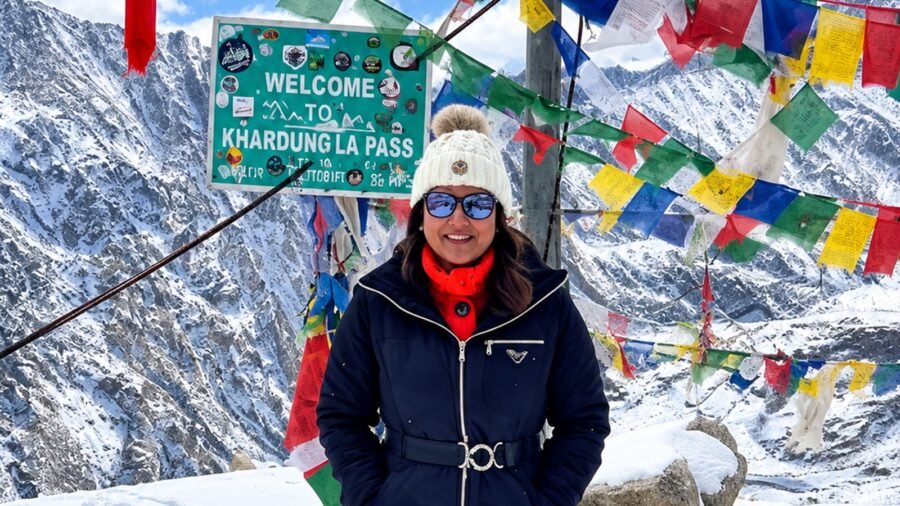
‘I did it’: Hina Khan visits 17,582-ft Khardung La
View this post on Instagram
A post shared by 𝑯𝒊𝒏𝒂 𝑲𝒉𝒂𝒏 (@realhinakhan)
Is it safe for cancer patients to visit high altitudes?
Dr Vaishnavi Joshi, Consultant – Medical Oncology & Haemato – Oncology, Aster CMI Hospital, Bangalore, says that for cancer patients, visiting a very high-altitude place such as Khardungla La requires extra planning.
Story continues below.
Subscribe to see fewer ads.
According to her, low oxygen can make the heart and lungs work harder and may cause headaches, tiredness, dizziness, faster breathing, and reduced exercise tolerance. “People who have anaemia, lung or heart problems, reduced fitness, recent surgery, or treatment-related weakness may feel these effects more strongly, while some cancer treatments can also affect blood counts, immunity or the lungs, so the same altitude may not be suitable for every patient,” she tells indianexpress.com.
Before travelling, Dr Joshi advises cancer patients to speak to their oncologist and check whether their current health and treatment allow high-altitude travel. Especially if they are receiving “chemotherapy, radiation, immunotherapy or targeted treatment”. In such cases, she adds, they should carry all prescribed medicines, medical records, and emergency contacts.
 Hina Khan was diagnosed with breast cancer in 2024. (Source: Instagram/@realhinakhan)
Do’s and don’ts to follow
Dr Joshi says that during the journey, one should “acclimatise gradually, rest after reaching high altitude, avoid heavy exercise initially, drink enough fluids, eat regular balanced meals, keep warm, protect from excessive sun exposure and cold” and always follow any advice about oxygen or other medicines given by the treating doctor.
She stresses that travel should ideally be planned when the patient is medically stable rather than during a period of significant treatment-related weakness.
Story continues below this ad
Warning signs to note
“The main do’s and don’ts are to listen to the body and avoid rushing or physically overexerting yourself, while patients should not ignore persistent headache, unusual breathlessness, chest discomfort, severe weakness, confusion, fainting, vomiting or difficulty walking,” Dr Joshi reiterates.
She also warns against consuming excessive alcohol and skipping medicines or medical appointments. “You should not assume that being able to tolerate normal activities at sea level means the body will respond similarly at high altitude,” she emphasises.
Dr Joshi points out that if serious or rapidly worsening symptoms occur, the person should stop exerting themselves, seek medical help, and move to a lower altitude when medically appropriate.
Finally, she says that since high-altitude illness can become serious, cancer patients should have an individual travel plan based on their “cancer type, treatment, blood counts, lung and heart health”, and overall recovery.
Story continues below this ad

Letters to The Editor — September 26, 2026
By Sohail Khan · 25 Sep
Revisiting India’s nuclear doctrine without revising it
By Sohail Khan · 25 Sep
On the Draw — September 25, 2026
By Sohail Khan · 25 Sep
Leave a Reply