When ECs disagree: 10 key questions answered
Benchmarks
Nifty23,063.10-383.71
FEATURED FUNDS★★★★★
Motilal Oswal Midcap Fund Direct-Growth
5Y Return
21.07 %
Invest Now
Enter search text:
Business News›News›Trending›When ECs disagree: Key questions answered on Election Commission row; why it happened, how it unfolded, who decides & what is the bigger issue
Read Today's Paper
When ECs disagree: Key questions answered on Election Commission row; why it happened, how it unfolded, who decides & what is the bigger issue
Synopsis
The Election Commission row has raised questions over internal dissent, electoral-roll management and the appointment of Election Commissioners. Reported objections by Sukhbir Singh Sandhu and Vivek Joshi have put the spotlight on decision-making, voter database access and Special Intensive Revision. Meanwhile, a Supreme Court split over the 2023 appointment law has added another layer to the Election Commission controversy.

Listen to this article in summarized format
Loading…
×
×
Unlock AI Briefing and Premium Content
New Year Offer 24 Hours Left
Already a member? Sign In
What's Included
- Exclusive Stories
- Daily ePaper Access
- Smart Market Tools
- Curated Investment Ideas
- Ad-lite Experience
Subscription

 ANI
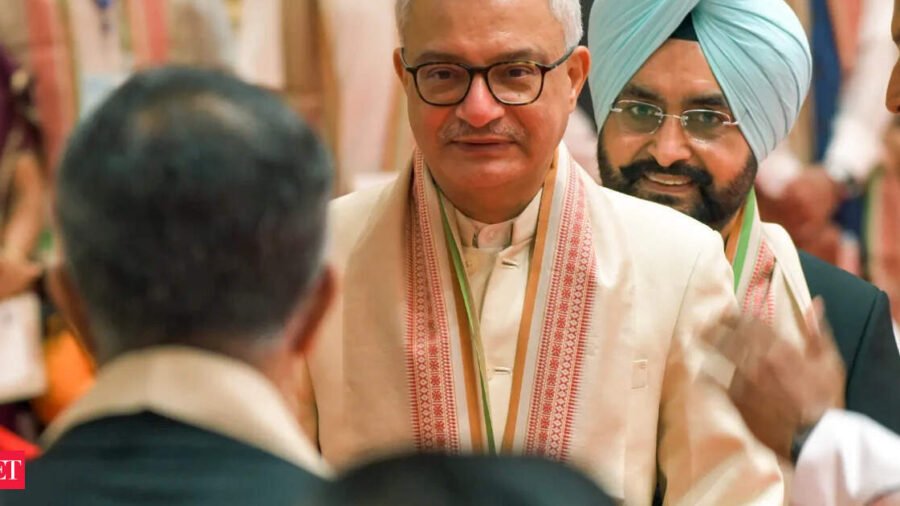
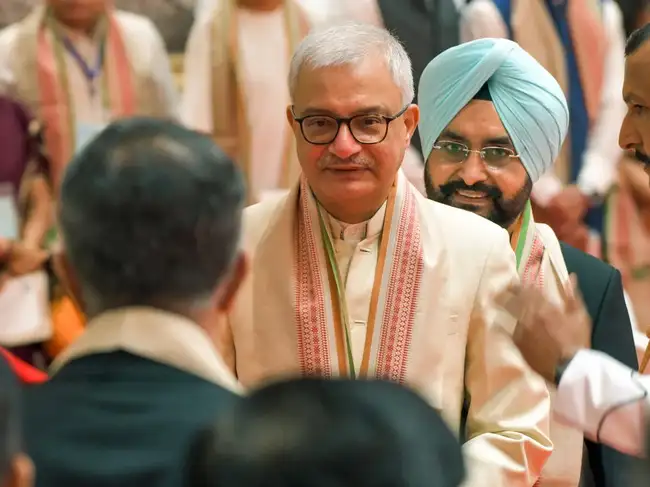
ANIThe Election Commission of India (ECI) is facing scrutiny on two fronts at the same time, reported disagreements within its three-member structure over electoral-roll management and a constitutional challenge to the law governing the appointment of the Chief Election Commissioner (CEC) and Election Commissioners (ECs).
According to an investigation by , Election Commissioners Sukhbir Singh Sandhu and Vivek Joshi recorded objections at least 14 times over 10 months to decisions and orders which they said were taken in the Commission's name without their knowledge or approval. The reported objections covered voter registration, deletion and restoration of names, changes to Form 6 and access to the electoral-roll database.
Read more – Gyanesh Kumar’s journey to CEC post: From Article 370 & Ram Mandir trust to key Centre roles and CEC post; why his 19-month tenure is now under fresh scrutiny
The Election Commission, however, has said that decisions relating to the Special Intensive Revision (SIR) and other matters were taken unanimously by all three commissioners.
Read more – Gen Z voting rights on hold as special summary revision stays stalled since January 2024
The controversy has also coincided with a split decision in the Supreme Court over whether challenges to the law governing the appointment of election commissioners should be examined by a larger Constitution Bench. The matter will now go before the Chief Justice for the constitution of an appropriate bench.
Here are 10 key questions that explain the issues at the centre of the Election Commission row.
1. What did Election Commissioners Sukhbir Singh Sandhu and Vivek Joshi object to?
The reported objections relate to several core aspects of electoral-roll administration.
According to , the two commissioners raised concerns over changes to Form 6, which is used by citizens to register as voters for the first time, as well as the deletion and restoration of names during SIR.
They also questioned the filing of appeals against orders restoring voters and raised concerns about access to and control of the electoral-roll database. Some objections reportedly dealt with communications and decisions issued in the name of the Commission without the two commissioners' approval.
The issue over Form 6 is particularly significant. Joshi had reportedly questioned whether the statutory form could be altered without amending the relevant rules, while Sandhu subsequently backed that concern and later described the change as “unauthorised and illegal”.
2. Can Election Commissioners disagree with each other?
Yes. The legal framework governing the Commission allows for differences of opinion.
The Chief Election Commissioner and Other Election Commissioners Act, 2023 provides that the Commission should, as far as possible, conduct its business unanimously. Where the members do not agree, the law provides for decisions to be taken according to the majority view.
With three members, that means a 2-1 decision can determine an issue.
The present controversy raises a slightly different question, however: whether an action can be taken in the name of the full Commission when two of its three members say they had not approved it.
That distinction, disagreement over a decision versus disagreement over whether the Commission had authorised an action, is central to the current dispute.
3. Does the Chief Election Commissioner have greater authority than the other commissioners?
The CEC heads the Election Commission, but the institution is not structured as a conventional government department in which the chief simply gives directions to subordinate officers.
The multi-member nature of the Commission was tested during the tenure of former CEC T N Seshan. The Supreme Court upheld the multi-member structure, establishing that the other election commissioners had a meaningful role and that decisions could be taken by majority.
The 2023 law also provides for the Commission's procedure and allocation of work, while recognising majority decision-making when members differ.
The question, therefore, is not simply who is the “boss”, but how authority is distributed among the three members and what decisions require collective approval.
4. Why are the reported objections significant?
The importance lies in what the objections reportedly concerned.
A disagreement over the merits of a policy is one thing. A commissioner questioning whether an action was authorised by the Commission raises a separate institutional question.
investigation reported that Sandhu and Joshi objected to decisions which they said had been taken without their knowledge, including matters relating to electoral-roll management and the Commission's technology systems.
At the same time, the ECI has rejected the suggestion that its SIR decisions lacked collective approval, saying its decisions were unanimous.
The competing accounts make the question of internal procedure particularly important.
5. Is dissent within the Election Commission unprecedented?
No. Former Election Commissioner Ashok Lavasa publicly differed from the majority in several cases involving complaints under the Model Code of Conduct during the 2019 Lok Sabha election.
The present controversy is different in its nature and scope. The reported objections by Sandhu and Joshi involve electoral-roll administration, voter registration, database access and the authorisation of actions taken in the Commission's name.
More significantly, the reported concerns come from two of the three sitting members of the Commission.
6. Should disagreements within the Election Commission be made public?
This is an institutional question with arguments on both sides. Keeping internal deliberations confidential can give members space to debate contentious issues freely before a final decision is taken. Public disclosure of every internal disagreement could potentially make such deliberations more guarded.
Greater transparency, on the other hand, can allow citizens to understand how important decisions were considered and whether differing views were examined before a final position was adopted.
The issue has parallels elsewhere in public institutions. The Reserve Bank of India's Monetary Policy Committee publishes individual voting positions and members' statements, while Supreme Court judgments routinely record majority and dissenting opinions.
The Election Commission has traditionally followed a different model, making the current dispute relevant to the wider question of how much of its internal decision-making should be publicly visible.
7. Why has the Election Commission's voter database become part of the dispute?
Election management is no longer only about physical voter registers and polling stations. It also depends heavily on digital systems through which electoral rolls are maintained and updated.
investigation reported that Sandhu and Joshi questioned what they described as the gradual centralisation of access to the electoral-roll database and whether statutory officials at the state and constituency level continued to have adequate control.
Electoral Registration Officers (EROs) have statutory responsibilities relating to voter rolls. The concern reported by the two commissioners was therefore not merely technological but also about how digital access interacts with the legal responsibilities of election officials.
One reported case involved 97 voters in Goa whose eligibility had been determined by election officials but whose names could not immediately be restored because of limitations in the software, according to the investigation.
8. Why does the SIR make the issue more sensitive?
The scale of the Special Intensive Revision makes any question concerning voter registration or deletion particularly consequential.
The SIR exercise has resulted in more than 13 crore names being left out of draft electoral rolls across 30 states and Union Territories, according to data reported by . The number represents draft-roll exclusions and does not automatically mean that all those voters have permanently lost their right to vote. Claims, documents and appeals can alter the final rolls.
Delhi's exercise has also drawn attention because of the number of notices issued over what the authorities described as discrepancies. The process has consequently brought renewed focus on how quickly genuine voters can correct errors or establish their eligibility.
The larger administrative challenge is straightforward: a voter wrongly excluded from a roll needs an effective mechanism to have the error corrected before an election.
9. Why is the appointment of Election Commissioners also under scrutiny?
The controversy extends beyond the functioning of the Commission to the way its members are selected.
On September 23, a two-judge Supreme Court bench comprising Justices Dipankar Datta and Satish Chandra Sharma delivered differing views on whether petitions challenging the 2023 law governing the appointment of the CEC and ECs should be referred to a larger Constitution Bench. The matter is now to be placed before the Chief Justice for appropriate directions on the constitution of a larger bench.
The legal challenge concerns the institutional design of the appointment process and the question of how the independence of the Election Commission is protected while Parliament legislates on appointments.
Justice Datta and Justice Sharma differed on the reference issue, leading to the matter being placed before the Chief Justice for further action.
10. What is the bigger issue behind the Election Commission controversy?
At its heart, the controversy raises questions about institutional decision-making, electoral-roll safeguards and the independence of the body responsible for conducting elections.
A three-member Commission is capable of accommodating different views. The more fundamental question is how those differences are recorded, resolved and, where necessary, disclosed.
The electoral-roll issue adds another layer because the consequences ultimately affect individual voters. Digital systems, statutory election officials and centralised databases must operate within a framework that allows genuine errors to be identified and corrected.
The ongoing Supreme Court proceedings also put the spotlight on the appointment process itself.
Taken together, the developments raise three broad questions: who has authority to take decisions in the Commission's name, who controls the systems that maintain India's electoral rolls, and how should the independence of those who oversee elections be protected?
Add 

(You can now subscribe to our WhatsApp channel)
(You can now subscribe to our WhatsApp channel)
Read More News on
Election Commission rowElection Commission of IndiaSukhbir Singh SandhuVivek Joshielectoral roll controversySpecial Intensive RevisionSIR voter listElection Commissioners appointmentSupreme Court Election Commission casevoter database controversy


Enter search text:
Continue reading with one of these options:
Limited Access
Free
Login to get access to some exclusive stories
& personalised newsletters
Login Now
Unlimited Access
Starting @ Rs120/month
Get access to exclusive stories, expert opinions &
in-depth stock reports
Subscribe Now
ET
Unlock Access to All Exclusives with ETPrime FREE TRIAL
15 Days Free: Unlock All ETPrime Exclusives, Market Tools & ePapers
Trial offer expiring in00 : 05 : 00
I'd rather pay ₹2599 now


Uh-oh! This is an exclusive story available for selected readers only.
Worry not. You’re just a step away.

Prime Account Detected!
It seems like you're already an ETPrime member with
Login using your ET Prime credentials to enjoy all member benefits
Log out of your current logged-in account and log in again using your ET Prime credentials to enjoy all member benefits.
Unlock ETPrime's Exclusive Stories Today!
Subscribe to gain powerful insights on business, stock market and industry trends.
Big Price Drop! Flat 40% Off
Student Only Offer
Already a Member? Sign In now
Already a Member? Sign In now
Already a Member? Sign In now
Offer Exclusively For You
Save up to Rs. 700/-
ON ET PRIME MEMBERSHIP
Avail Offer
Offer Exclusively For You
Get 1 Year Free
With 1 and 2-Year ET prime membership
Avail Offer
Offer Exclusively For You
Get 1 Year Free
With 1 and 2-Year ET prime membership
Avail Offer
Offer Exclusively For You
Get Flat 40% Off
Then ₹ 1749 for 1 year
Avail Offer
Offer Exclusively For You
ET Prime at ₹ 49 for 1 month
Then ₹ 1749 for 1 year
Avail Offer
Special Offer
Get flat 40% off on ETPrime
Avail Offer
Avail Offer
Claim NowAlready a Member? Sign In now
Need Assistance?
Connect with an ETPrime expert for personalized support and guidance
+91 9484700004
' + h3 + '
' + h4 + '
- ' + listing + '
What’s Included with

1Exclusive Insights That Matter
Uncover the truth with our investigative stories
Make strategic moves using the real-world case studies
Read industry-specific stories to identify emerging trends
Spot opportunities with in-depth insights that matter

Trump temper on H-1B visas is forcing Indians to do these things to stay put in US

What Adani’s US indictment means for India Inc’s overseas fundraising

Why veterans like Reliance, L&T are on acquisition spree? Aswath Damodaran has an answer.

Will China’s dollar bond sale in Saudi Arabia trump the US in financial world?

Huawei launches its own OS to compete with Google and Apple. But can it win beyond China?

The problem with lab grown diamonds

Why a falling rupee is a better option for the economy

A list of top 20 momentum stocks that have delivered massive returns in one year
2Invest Wisely With Smart Market Tools & Investment Ideas
Alpha Trade

Get daily trade ideas from SEBI-registered research analysts.
Investment Ideas

Grow your wealth with stock ideas & sectoral trends.
Stock Reports Plus

All-in-one stock research with Stock Score, peer comparison & key signals.
BigBull Portfolio
Get to know where the market bulls are investing to identify the right stocks.
Stock Analyzer
Check the score based on the company's fundamentals, solvency, growth, risk & ownership to decide the right stocks.
Market Mood

Analyze the market sentiments & identify the trend reversal for strategic decisions.
Stock Talk Live at 9 AM Daily

Ask your stock queries & get assured replies by ET appointed, SEBI registered experts.
3Stay informed anytime, anywhere with ET ePaper
ePaper – Print View

Read the PDF version of ET newspaper. Download & access it offline anytime.
ePaper – Digital View

Read your daily newspaper in Digital View & get it delivered to your inbox everyday.
Wealth Edition

Manage your money efficiently with this weekly money management guide.
4Times Of India Subscription (1 Year)
ePaper

Read the PDF version of newspaper. Download & access it offline anytime.
Deep Explainers

Explore the In-depth explanation of complex topics for everyday life decisions.
Health+ Stories

Get fitter with daily health insights committed to your well-being.
Personal Finance+ Stories
Manage your wealth better with in-depth insights & updates on finance.
New York Times Exclusives
Stay globally informed with exclusive story from New York Times.
5Enjoy Complimentary Subscriptions From Top Brands
Docubay Subscription
Stream new documentaries from all across the world every day.
Stories you might be interested in

64 baby turtles found trapped in Florida pool
By Sohail Khan · 24 Sep
Trump says AI will be a big topic in Xi meeting
By Sohail Khan · 24 Sep
India needs factories and AI-ready jobs, says CEA
By Sohail Khan · 24 Sep
Leave a Reply