When convenience becomes dependence
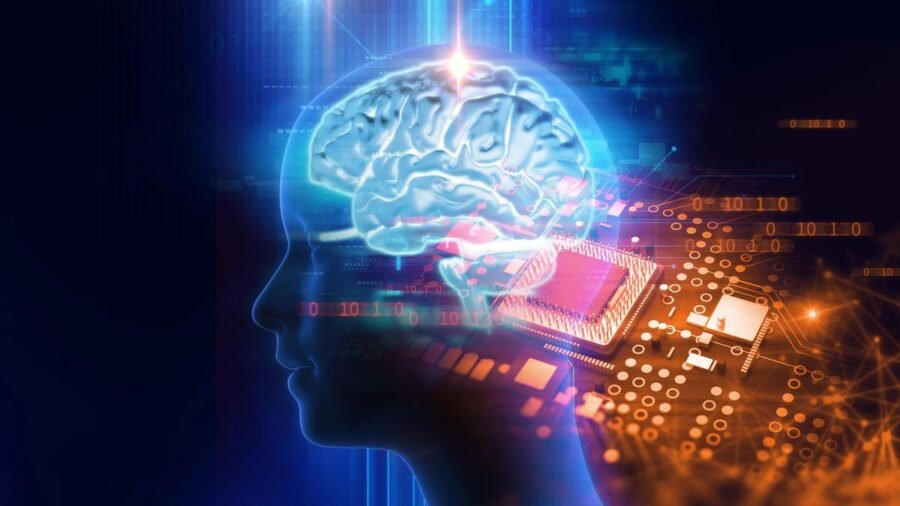
There was a bandh recently, and I was confronted with a problem of considerable importance: my college wanted me to work online. Normally, this would require effort in cognitive thinking. But instead of exercising my perfectly serviceable brain, I turned to Grok asking it to give me reasons for not working online. It obliged and I had a convincing list involving connectivity, productivity, safety and the general difficulty of conducting business when the city is observing a bandh. I could have thought through most of these myself. But why bother? The lazy side of my brain revelled in getting someone else to do my thinking for me.
This small episode made me wonder whether we have already started depending on artificial intelligence for the simplest acts of thinking. AI platforms have entered our lives with remarkable speed. We use them to write emails, prepare speeches, plan holidays, suggest restaurants, settle arguments, summarise books and explain things we could probably have understood if we had spent another five minutes thinking about them. We even ask them to compose replies to messages when we know perfectly well what we want to say but cannot be bothered to find the right words. The machine has become our researcher, secretary, travel agent, editor and sounding board.
Inherently, there seems to be nothing wrong with this. AI is an extraordinary tool, and refusing to use it would perhaps be like refusing to use a calculator because our grandparents did mental arithmetic. AI saves time, improves productivity and gives us access to information and expertise, once difficult to obtain. The problem begins when convenience becomes dependence and assistance becomes substitution.
Albert Einstein famously said, “The important thing is not to stop questioning.” That may be particularly relevant in an age when machines are becoming extraordinarily good at supplying answers. The danger is not that AI will answer our questions; it is that we have already stopped asking ourselves questions in the first place. Instead of thinking through a problem, we type it in a box. Instead of forming an opinion, we ask for one. Instead of trying to recall something, we Google it. Instead of making a decision, we ask a machine to give us the pros and cons and then quietly select the option we had always wanted.
There is a slightly embarrassing side to this new phenomena. We often use AI not to discover what we should do, but to justify what we have already decided to do. On the bandh day, I had already made up my mind not to work. What I wanted was not wisdom but logical reasons. I wanted my laziness dressed up as rational decision-making. AI obliged happily, presenting a well-argued case for doing nothing.
The concern is that thinking is becoming a neglected habit. Our brains need exercise, remembering a name, calculating without a calculator, finding our way without constantly consulting a map, writing a paragraph without asking AI to improve it and making a decision without seeking differing opinions are all minuscule mental exercises. They probably look insignificant, but collectively they keep the mind alert. If every little intellectual inconvenience is outsourced, we should not be surprised to find our cognitive muscles have gone to seed.
Its much too late to abandon AI, but we should use it intelligently, which means being fully aware when not to use it. Maybe we should first think out the reasons ourselves and then ask AI to challenge them. We could write a paragraph before asking the machine to polish it. We should attempt to recall something before reaching for the search bar. We should make up our own minds and not have AI do the decision-making for us.
Technology should make our lives easier, not make our brains redundant. If we are not careful, we will soon end up with bots that can write, calculate, remember, analyse and make decisions better than we can, while we sit before a screen wondering what prompt to use next. That would be a remarkable achievement for artificial intelligence but unfortunate for our cognitive ability.
priyannaik@yahoo.com

From Nepal to India, how AI is improving disaster management
By Sohail Khan · 28 Sep
40 years ago September 28, 1986: Relief for Haryana farmers
By Sohail Khan · 28 Sep
Between Trump’s US and Xi’s China, the trap India must avoid
By Sohail Khan · 28 Sep
Leave a Reply