What a US diesel export ban could mean for energy markets globally, and India
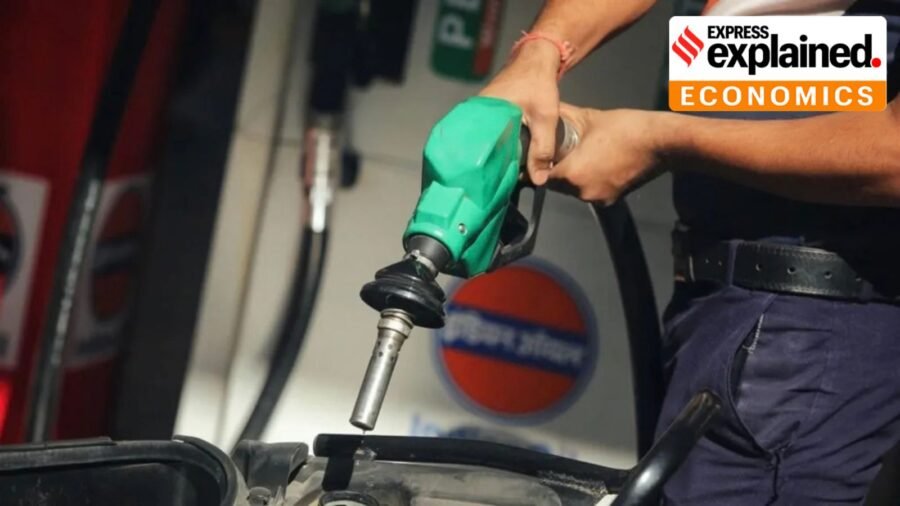
According to industry participants, analysts, and experts, a ban or major restriction of US diesel exports will affect countries that are regular importers of American diesel, and would lead to a further spurt in international prices of the fuel as more buyers will be chasing the non-US diesel barrels.
Story continues below.
Subscribe to see fewer ads.
The adverse impact will not just be beyond American shores though. Experts point out that any significant export curb is bound to lead to a reduction in refinery production rates in the US, which would hit the US’s production of other fuels like petrol as well, ultimately leading to even higher fuel prices there. To that extent, any such move could easily become counter-productive and self-defeating, and numerous petroleum industry chambers in the US have cautioned Washington about these risks.
Interestingly India, particularly its export-oriented private sector refiners like Reliance Industries and Nayara Energy, would stand to gain in case most or all of US diesel were to vanish from the international market. India is a net exporter of diesel and if global flows are constrained further, the country’s fuel exporters are set to benefit from higher international prices and better export margins, although higher export taxes — revised every fortnight — would partly shave off the gains for most Indian refineries. RIL’s special economic zone refinery, which is geared for exports, is exempt from these taxes.
Diesel dynamics in the US
Amid surging cracks or margins on diesel globally, US diesel prices have jumped sharply in recent weeks, reaching record levels of over $6 per gallon and bringing the pain of faraway wars to the American consumer. The timing is significant as the US is set to go into mid-term polls come November, and the Trump administration is evidently feeling the pressure.
Diesel is politically sensitive in the US as it is not just a transportation fuel, bit also powers long-haul trucks, agricultural machinery, construction equipment, and other heavy industrial equipment. This means that a jump in diesel prices can quickly feed into consumer-level inflation.
Story continues below this ad
The US is one of the largest diesel exporters globally, and with diesel exports from West Asia and Russia hit due to the conflicts there, American diesel exports have surged further over the past six-seven months. In August, US diesel exports averaged at record levels of about 1.6 million barrels per day (bpd), up from around 1 million bpd in February, before the West Asia war began.
The simplistic assumption that restricting diesel exports would shore up supply all over the US and in turn lower prices doesn’t really hold water. That is because of regional disparities within the US when it comes to fuel production and supply, and the fact that US pump prices are linked to international prices.
The US Gulf Coast produces considerably more diesel than the region itself consumes, and much of that surplus is exported as diesel produced in the region can’t be easily supplied to other parts of the country due to infrastructure bottlenecks and pipeline limits. This means that other regions largely depend on local production as well as diesel imports from other countries.
“The US isn’t one unified fuel market. Roughly 54% of the nation’s refining capacity is concentrated along the Gulf Coast, where refineries produce more fuel than consumers in that region use. The West Coast produces enough diesel to meet its own demand but still imports gasoline (petrol) and jet fuel. The East Coast, by contrast, lacks sufficient refining capacity and relies in part on diesel supplied from elsewhere — including imports, which account for about 10% of its diesel supply,” trade group American Petroleum Institute (API) said in a recent release.
Story continues below this ad
According to the API, which believes that a diesel export ban would “break havoc at home and abroad”, if US diesel exports were blocked, surplus fuel could start filling storage on the Gulf Coast, and the only way to avoid producing even more surplus diesel would be to process less crude oil. “But cutting refinery runs would not reduce diesel production alone. It would also mean producing less gasoline, jet fuel and other products at a time when global fuel supplies are already tight,” it said.
“Exports allow US refineries to balance their systems and maximize production. An export ban would require refineries to throttle utilization to reduce diesel production to equal domestic demand. Falling utilization would result in less gasoline and jet fuel production and higher prices for those products as well. Meanwhile, areas of the US that import fuel (primarily the Northeast) would face higher prices for all fuels that would now be in even shorter supply globally. This could not come at a worse time for consumers as home heating oil season is about to begin,” dozens of American petroleum chambers wrote in a joint representation to Trump last week.
A double blow for global fuel markets
“A US diesel export ban would deliver a double blow. First, it would hit countries that buy diesel directly from the US. Over the past six months, the US has exported around 1.5 million bpd of diesel, with 50% going to Latin America, 35% to Europe and the rest to Africa. Latin America (particularly Brazil, Chile and Mexico) would therefore be the hardest hit…Europe also relies heavily on US diesel, which accounts for around 25% of its diesel imports,” Abu Dhabi-based energy analyst Natalia Katona told .
“The second blow would come through prices. An export ban would push US refineries to cut runs, which, combined with the loss of diesel exports, would drive up prices across all products,” she added.
Story continues below this ad
Europe has become increasingly dependent on diesel imports from beyond the region over the past few years as it moved away from Russian fuel amid the war in Ukraine. The West Asia war has further exacerbated the supply situation for Europe. It is no surprise that the European Commission has expressed concern about the potential effects of a diet export ban or restriction by the US.
“Of the 8 million barrels of diesel traded globally by sea each day, the US supplies about 1.5 million of them — about 20%. An export ban would remove the single largest source of global diesel from the market, and the consequences could be catastrophic. Removing that much fuel from the global market would exacerbate the very global refining crisis that is increasing prices here in the US. And the impacts could extend far beyond pain at the pump, to dire consequences for international supply chains, agriculture, shipping, manufacturing and the entire global economy,” the API said.
Some benefits for India
India is a much smaller diesel exporter than the US and can’t offset any major loss in American supply to the global market. But India stands to benefit to some extent if the US indeed goes ahead and restricts or bans diesel exports. “For India, this would be good news. India faces stiff competition in Asia, where major diesel exporters such as China and South Korea leave limited room for other suppliers. That is why India has traditionally shipped around 50% of its diesel exports to East Africa, with the rest split between Southern Europe and Asia,” said Katona.
“The recent short-lived surge in (fuel) exports to Turkey illustrates how this could play out. India stepped in to partially replace lost Russian diesel supplies. A similar shift is likely in Europe and Latin America,” she added.
Story continues below this ad
Amid the disruption in diesel flows from Russia and West Asia, India is currently among the major fuel exporters as its domestic consumption is lower than its production. The country’s petroleum fuel exports in July jumped 28.4% year-on-year to 8.2 million tonnes, as per data from the Directorate General of Commercial Intelligence and Statistics (DGCIS).
If US exports are heavily restricted going forward, Indian diesel will become even more valuable to importers globally. In this context, India is being seen as an important swing supplier that can shift supplies between different regions based on different price signals as buyers compete to secure supplies. Trade sources indicate that Indian diesel supplies to Brazil, Turkey, Africa, and Europe have seen a spurt in recent months.
However, it is important to keep in mind that India’s peak fuel demand season begins in October and runs through March–April, which means India will likely have less diesel available for export than it has had so far during the energy crisis that began in March, said Katona.
Moreover, export margins for all but one refineries in India have been capped in a sense, with super normal gains being collected by the government in the form of special additional excise duty on fuel exports, which is revised every fortnight in line with global prices. This tax also helps keep the domestic market adequately supplied by disincentivising a jump in exports. The government has said time and again that keeping the domestic market adequately supplied with fuel is the top priority.
Story continues below this ad
Theoretically, higher international prices of crude oil and petroleum fuels should lead to higher pump prices in India, but the government and the public sector oil marketing companies (OMCs) have so far passed on only a small part of the price increase, with the companies absorbing heavy under-recoveries. According to industry watchers, that practice is expected to continue for the foreseeable future in a bid to protect the retail consumer from an inflationary shock. How long they can continue doing so will depend on how crude oil and fuel prices move hereon.

A smoke and mirrors summit in which Xi emerged with the upper hand
By Sohail Khan · 28 Sep
Why must a woman always trade curiosity about the world for safety?
By Sohail Khan · 28 Sep
Best places in India to see tigers in the wild
By Sohail Khan · 28 Sep
Leave a Reply