Wendell Berry, the Gandhian in America, an environmental visionary for the world
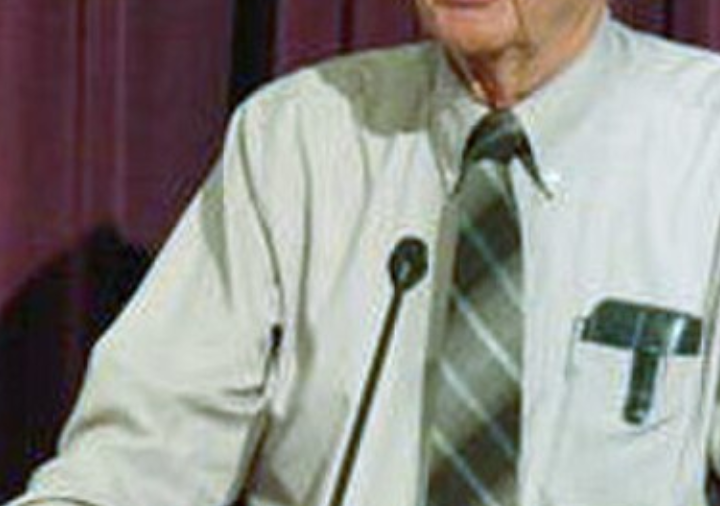
Wendell Berry, poet, farmer, environmental visionary, passed away on August 31, at the age of 92. He was a quiet, steady, sagely presence for people across the world.
Berry’s passing lends a bitter sharpness to the question on which the future of our species might depend. Can the energy, will and wisdom of those who value the inter-dependence of all life on Earth prevail over the concentration of power in the hands of a few who drive trends in technology and thus markets?
Advertisement
Love of nature is more ancient than the human ability to form words, to develop language. There is also no doubt that passionate expression of this love, and public actions driven by it, have grown on a planetary scale over the last half century.
Just last week, an online group that I am part of collectively mourned the loss of a chestnut tree that stood as a welcoming host at the entrance of Schumacher College in Devon, UK. Age and infirmity took their toll and the tree came down. The energy of those who will miss the tree, its loving shade and the music of breeze rustling through its leaves, is palpable.
Why does this energy seem inadequate to tackle and transform the forces destroying the delicate balance of life on planet earth? Wendell’s legacy inspires and empowers us to doggedly and defiantly keep seeking answers to this question.
Advertisement
As an activist, Wendell leaves behind a legacy of tirelessly standing up for justice and basic goodness in the face of ruthless power. From Vietnam to the American invasion of Iraq in 2003, Wendell passionately fought against American aggression abroad. Along with many fellow-travellers, he advocated a 50-year farm bill that would tackle the combined problems of soil loss and degradation, toxic pollution, fossil fuel dependency and the destruction of rural communities.
Wendell’s life and work were intertwined with the emergence of diverse shades of environmentalism over the last 75 years. These overlapping streams of thought and action have proved that we are not in the midst of a “love-of-nature” vs “progress” conflict. The key challenge of the 21st century is how to live in partnership with the rest of nature, and this requires us to first redefine both “progress” and “growth”.
Often described as an intellectual and spiritual heir to Henry David Thoreau, Wendell became a tall Gandhian presence in American public life, because he advocated empowering local economies, radical self-reliance and living within limits to ensure sustainability.
As we enter the second quarter of the 21st century, the concentration of money power and control over emerging technologies, in the hands of a few people, is more severe than ever before. In terms of tactics and strategy, the ideas and values that Wendell inspired can seem to be at a huge disadvantage.
And yet the essence of his inspiration is above and beyond all ideology, tactics, strategy — and will continue to flower in unexpected and unpredictable ways.
It is best to let his 1968 poem ‘The Peace of Wild Things’ speak for him:
When despair for the world grows in me
and I wake in the night at the least sound
in fear of what my life and my children’s lives may be,
I go and lie down where the wood drake
rests in his beauty on the water, and the great heron feeds.
I come into the peace of wild things
who do not tax their lives with forethought
of grief. I come into the presence of still water.
And I feel above me the day-blind stars
waiting with their light. For a time
I rest in the grace of the world, and am free.
The writer is founder of the Youtube channel ‘Ahimsa Conversations’


Don’t buy a lab-grown diamond before checking these 7 things
By Sohail Khan · 29 Sep
Towards a gender just Uniform Civil Code
By Sohail Khan · 29 Sep