Vehicles without insurance could be denied fuel at Madhya Pradesh petrol pumps
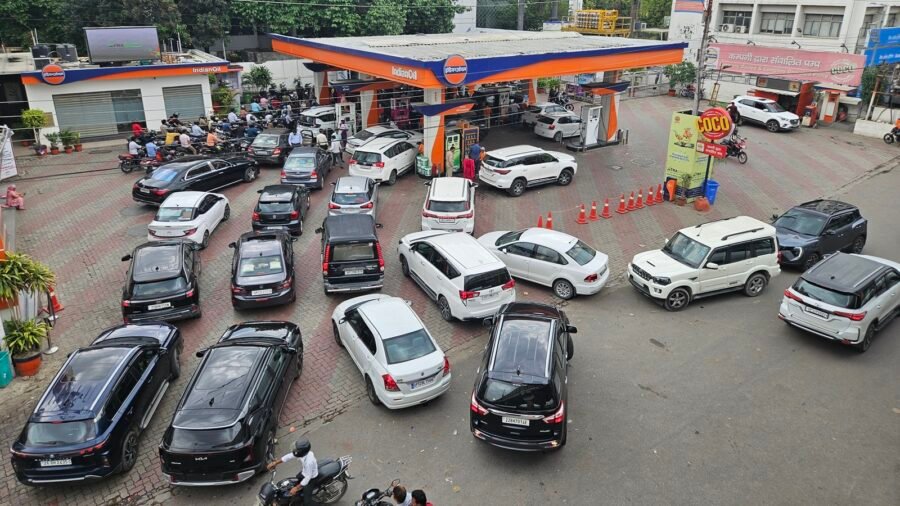
Can you be denied fuel without valid vehicle insurance? Drivers in Madhya Pradesh are set to find out. The state is set to launch a pilot project under which vehicles without valid insurance could potentially be denied fuel at petrol pumps, as the government moves to tighten road-safety enforcement through technology and expand its Zero-Fatality District programme to nine districts.
The decision to launch the uninsured-vehicle pilot in one district was taken at a meeting chaired by Abhay Manohar Sapre, retired Supreme Court judge and chairman of the Supreme Court Committee on Road Safety, at the Chief Secretary’s Office here on Monday.
The district with the highest number of uninsured vehicles will be selected for the pilot. Under the proposed system, cameras will be installed, particularly at petrol pumps, and linked to the VAHAN portal to identify vehicles without valid insurance and prevent them from being supplied fuel.
Story continues below this ad
Justice Sapre directed the state government to launch the pilot at the earliest after discussions with officials of the Union Ministry of Road Transport and Highways and technical experts. Once the system is tested, it is proposed to be expanded to other districts in phases.
The move is significant as it seeks to take insurance enforcement beyond conventional traffic checks by making insurance a condition for access to fuel. The Supreme Court had earlier proposed integrating automatic number-plate recognition cameras with the VAHAN and insurance databases so that uninsured vehicles could be identified electronically.
The meeting also decided to expand the Zero-Fatality District programme from six to nine districts in Madhya Pradesh. Indore, Bhopal and Ujjain will now be added to Dhar, Satna, Rewa, Sagar, Jabalpur and Khargone, where the programme is already being implemented.
The scale of the challenge remains considerable. Madhya Pradesh records an average of around 13,000 road accident deaths every year, according to figures presented at the meeting. The government said fatalities in the first six months of 2026 had declined by around 800 compared with the corresponding period of 2025, attributing the reduction to special road-safety measures. It said efforts were being made to bring the number of fatalities in 2026 down further compared with previous years.
Story continues below this ad
Justice Sapre stressed that preventing road deaths would require not only enforcement but also active participation from local communities. He called for the formation of committees at the local level and said community members should be encouraged to participate and provided incentives for their efforts.
He also called for short- and long-term plans to address road accidents caused by stray animals and other factors, with the measures implemented within defined timelines. The meeting specifically emphasised community participation to prevent accidents and fatalities caused by animals on roads.
Justice Sapre directed officials to analyse accidents across the state and prepare specific action plans to prevent their recurrence at the same locations or due to the same causes. The emphasis, he said, should be on ensuring that the plans are not merely prepared but effectively implemented within a time-bound framework.
The state government will make the required financial provisions for implementing the Zero-Fatality District programme, while CSR initiatives and technological solutions will also be used.
Story continues below this ad
Emergency response was another area identified for improvement. The meeting was informed that the average time taken to transport an accident victim to a hospital in urban areas was 16 minutes. The authorities will seek to reduce this response time further.

PM Narendra Modi to Vladimir Putin: Must move from endless war towards an end to war
By Sohail Khan · 1 Sep
SIR draft rolls see over 13 crore deletions so far, Delhi leads with 33% left out
By Sohail Khan · 1 Sep

Leave a Reply