India shrugs off oil shock to post 7.8% growth in Q1
India shrugs off oil shock to post 7.8% growth in Q1, PM Modi hails ‘herculean feat’
The latest GDP data, which now incorporates producer price indices, has also made an upward revision to the GDP numbers in the quarter ending March 2026.
Updated on: Sep 1, 2026, 06:27:47 IST
Prefer HTon Google
Share via
Copy link
The Indian economy grew at 7.8% in the first quarter (April-June 2026) of the current fiscal year braving what has been described as the largest oil shock in the history of capitalism. The data, released by the National Statistics Office (NSO) on Monday, positively surprised analysts and pleased the government.
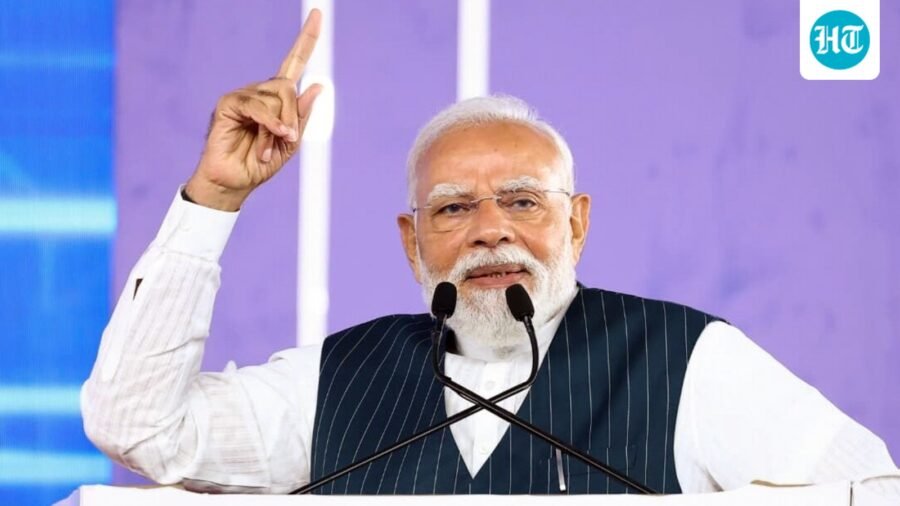
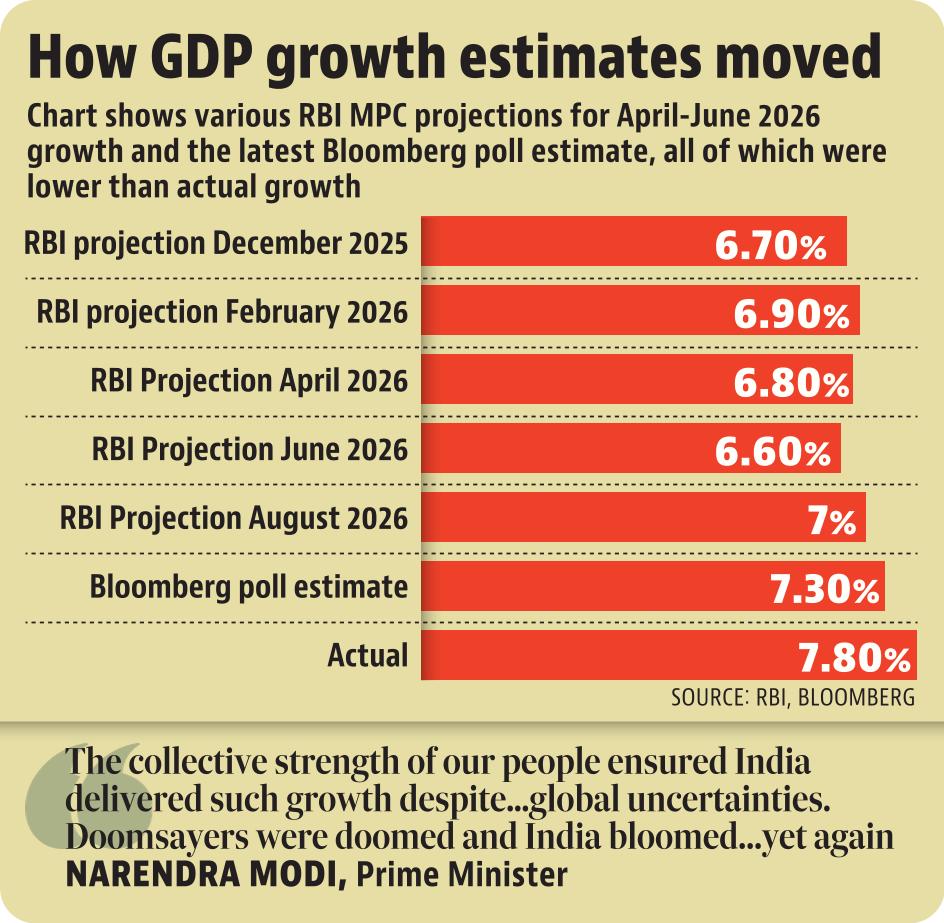
“India’s exemplary GDP growth of 7.8% during Q1 of FY 2026-27 is a herculean feat. The collective strength of our people ensured India delivered such growth despite oil price shocks and supply chain issues in the midst of global uncertainties. Doomsayers were doomed and India bloomed…yet again!”, Prime Minister Narendra Modi said in a post on X.
Sitharaman hails strong GDP growth
Finance minister Nirmala Sitharaman also attributed the performance to the government’s reforms and economic management. “The credit for this strong performance goes to the people of India and their hard work. Reforms undertaken by the NDA Government, together with an agile management of the economy, are bearing results,” Sitharaman said on social media.
Experts believe the latest GDP data does not rule out a growth slowdown over the full fiscal year and also increases the possibility of a rate hike later in the year.
Growth slowed after West Asia war
The latest numbers should not, however, be seen as evidence that the West Asia war did not adversely affect India’s economic momentum. The latest GDP data, which now incorporates producer price indices, has also made an upward revision to the GDP numbers in the quarter ending March 2026, which were published in June. March quarter growth now stands at 8.6% compared to 7.8% according to the data released by the NSO in June. This means that growth did slow down after the outbreak of the war.
None of this negates the fact that India’s domestic growth drivers shielded it from a large deceleration on account of the war. Disaggregated GDP numbers support this assessment. Private Final Consumption Expenditure (PFCE) and Gross Fixed Capital Formation (GFCF) grew at 7.1% and 11.9%, respectively, in the June quarter. Exports too grew at an impressive 12%, even as imports contracted by 1.1% in real terms.
At the sector-wise level, services gave the biggest boost to growth with a 10% rise. Manufacturing saw a growth of 9.2%.
“Growth continues to be supported by resilient domestic demand, sustained expansion in manufacturing and services activity, and robust exports, reaffirming India’s position as the world’s fastest-growing major economy”, RBI’s MPC had said in its latest resolution published on August 5.
War’s fiscal cost visible in GVA data
What is also discernible in the latest data is the fiscal cost of the war. This is best seen in the Gross Value Added (GVA) growth being 8.2%, greater than its GDP counterpart. GVA is GDP less net indirect taxes.
Growth in net indirect taxes fell to 3.9% in quarter ending June 2026 compared to 6% a year ago. High frequency data released by the NSO along with GDP numbers also shows a large rise in fertilizer subsidy spending in the June quarter.
GDP beats RBI: Estimates
The 7.8% GDP growth number is well ahead of previous RBI projections and a Bloomberg poll of economists, which had given a median estimate of 7.3% for this number. To be sure, some analysts did see this coming. “India’s GDP growth for the April-June quarter could print as high as 8%, bucking fears that India’s economy was dented by the Middle East conflict.
Strong high frequency data – autos, credit, exports and corporate earnings – have been presaging this outcome for a while”, Sajjid Chinoy, Chief India Economist at JP Morgan, had said in a note released on Sunday. Chinoy’s note attributed the impressive growth performance to three factors. A joint fiscal-monetary-regulatory stimulus in 2025, which included tax cuts and interest rate reduction, acceleration in exports due to currency depreciation, reduction in US tariffs and higher global growth; and a “swift and nimble” policy response to the supply shock for petroleum products.
However, the note cautions that “much of the recent pick-up is cyclical in nature, induced by tax cuts and lower interest rates and fuelled by strong credit. At some point, these impulses will wane, and growth rates will be shaped by the structural underpinnings of the economy”.
“GDP growth surprised to the upside, but still slowed vs an upwardly revised Q4FY26. This outperformance poses upside risk to our FY27 growth forecast of 6.8% y/y. As growth outpaced the RBI’s estimate, we acknowledge the risk of a December hike, but that is not our base case”, Aastha Gudwani, India Chief Economist at Barclays, said in a note.
See Less


Below normal rain likely in September after warmest August since 1901: IMD forecast
By Sohail Khan · 1 Sep
John Ternus: The making of Apple’s new CEO
By Sohail Khan · 1 Sep
Leave a Reply