TikTok’s ‘sunburning’ acne trend: Why dermatologists say it could make things worse

Instead of using traditional anti-blemish treatments like creams or medications, many young people are opting for a more extreme approach—exposing their skin directly to the sun in hopes of achieving a clearer complexion.
This TikTok trend, known as ‘sunburning’, has taken social media by storm, with users claiming that soaking in UV rays can effectively ‘heal’ acne.
Content creator Haley Wenthold, 19, shared her experience in a viral TikTok video, asserting that the method “actually works,” according to the New York Post. Her post has garnered millions of views, prompting discussions about its potential risks and effectiveness.
Story continues below.
Subscribe to see fewer ads.
Dr Nirupama Parwanda, MD, dermatologist, founder of Zolile Skin Clinic, New Delhi, tells indianexpress.com, “UV rays can reduce the immune response; they temporarily reduce inflammation and also bacteria like Propionibacterium acnes, which cause acne. Nevertheless, the effects wear off quickly, and continued exposure increases the risk of acne by producing more oil to compensate, damaging the skin and causing pigmentation.”
Dr Prerna Sikka, dermatologist and cosmetologist at Dr Karishma Aesthetics, adds, “UVB rays cause apoptosis (cell death) of T lymphocytes, reducing inflammation in the sebaceous glands. UV exposure also produces reactive oxygen species (ROS), which can kill acne-causing bacteria like Propionibacterium acnes.”
Potential risks associated with the ‘sunburning’ trend
According to Dr Sikka, the ‘sunburning’ trend, where people intentionally burn their skin to reduce acne, “poses serious health risks.” Repeated sunburns, she states, significantly increase the risk of skin cancer, particularly the deadliest one, melanoma. “UV radiation damages the DNA in skin cells, leading to mutations that can trigger cancer.”
Story continues below this ad
Concurring, Dr Parwanda mentions, “Excessive exposure to UV rays can damage the skin and can absolutely cause long-term damage. It increases the ageing process, spots, tanning, and wrinkles; it can also damage the DNA and increase malignant cells. Sometimes it can also cause skin cancer, but we are Indians, so we have melanin, which is a little protective, so we have less chance; but those who have white skin, Caucasian skin, have higher chances of getting melanoma.”
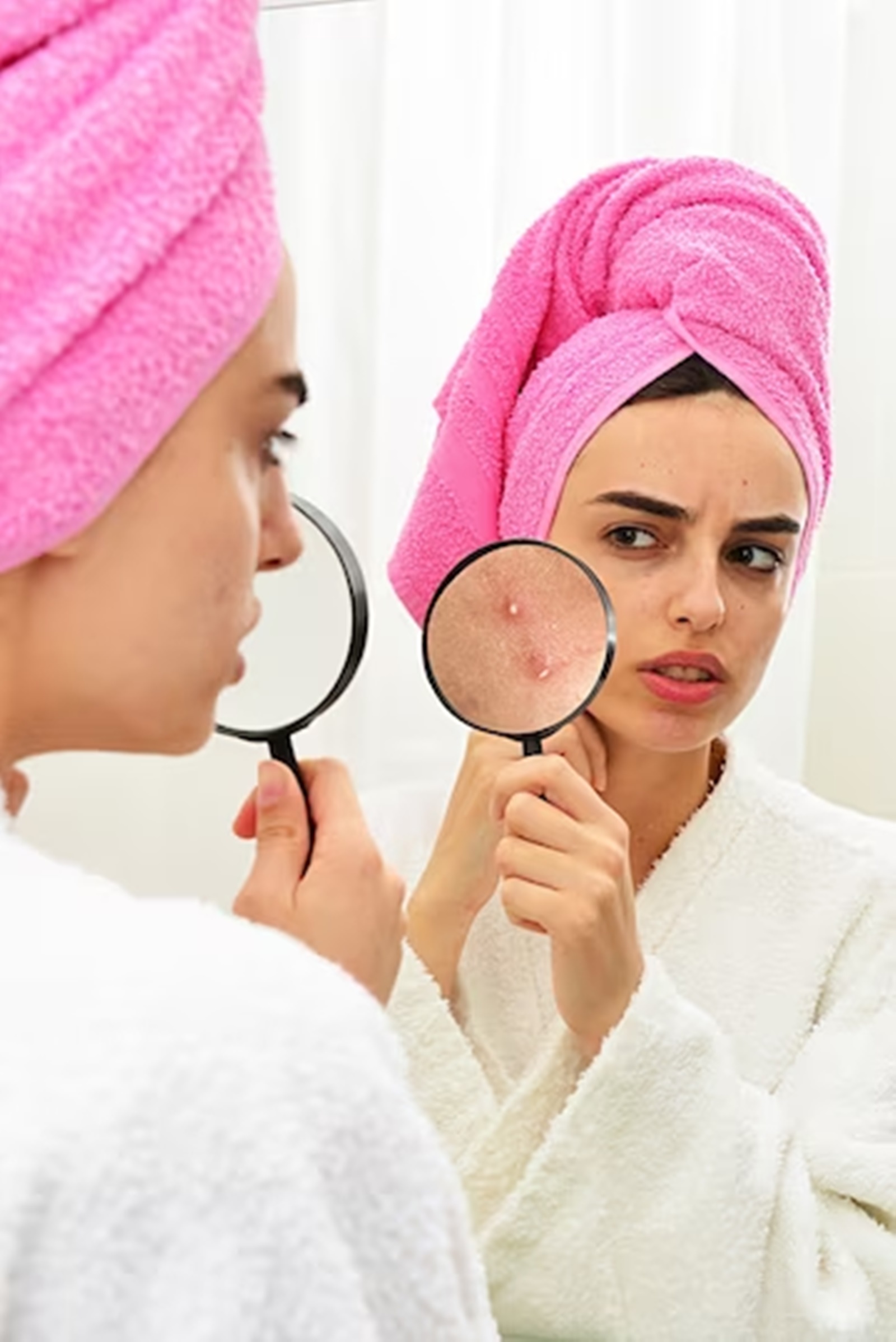 UV rays can thicken the skin’s outer layer, trapping sebum and bacteria in pores and leading to more breakouts. (Source: Freepik)
How does sun exposure affect sebaceous glands and sebum production?
“Sun exposure can temporarily reduce oiliness in acne-prone skin by reducing the activity of sebaceous glands and sebum production. However, this effect is usually not long-lasting,” reveals Dr Sikka.
Over time, she informs that the skin may respond by producing more sebum to compensate for the dryness, potentially worsening acne. “Additionally, UV rays can thicken the outer layer of the skin, trapping sebum and bacteria in pores, which can lead to more breakouts.”
Sun exposure also increases the risk of long-term skin damage, such as hyperpigmentation, particularly on acne scars and premature skin ageing.
Story continues below this ad
Alternative methods for individuals seeking effective treatments for acne
Dr Parwanda suggests the following:
-First, we have to stop new acne from forming and prevent further acne. To do this, we prescribe oral therapies such as antibiotics or oral retinoids.
-To reduce the existing acne, we recommend retinoids, salicylic acid, benzoyl peroxide, dapsone, niacinamide, etc
-To prevent acne, lifestyle modification, exercise, diet, avoid dairy products, avoid too much energy-dense food, and keep a good lifestyle.
Story continues below this ad
-Other accessory treatments like blue light therapy, chemical peel and spot treatments help a lot.

Biotechnology and healthcare: where we are in India, and where we need to go
By Sohail Khan · 17 Sep
Akanksha Chamola’s Mumbai home has a warm, lived-in charm — see Inside
By Sohail Khan · 17 Sep
4 Indian places where water shapes everyday life
By Sohail Khan · 17 Sep
Leave a Reply