This Giant Amazonian Ant is more than 3 cm long: What makes it unusual
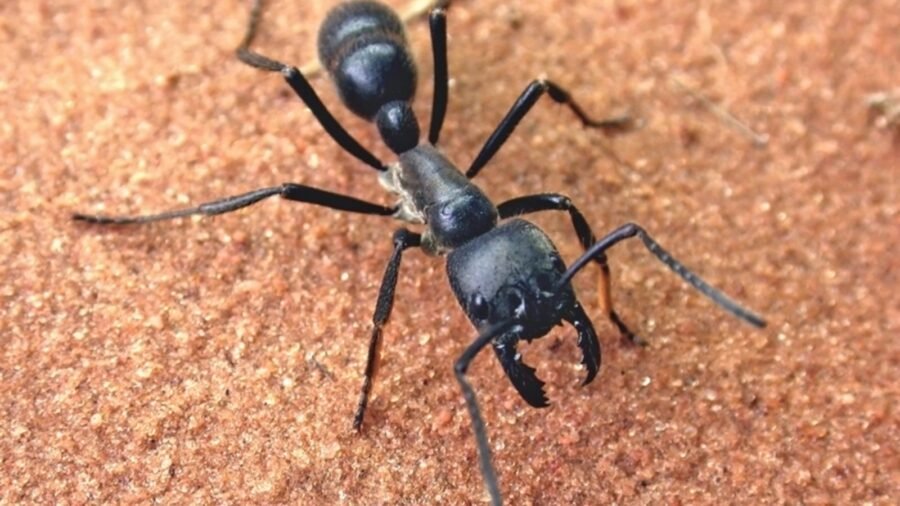
Ants are usually associated with tiny insects moving in long trails, but some species are surprisingly large. One notable example is Dinoponera gigantea, commonly known as the giant Amazonian ant. It is among the largest living ants, with workers reaching more than 3 cm in length.
Found in parts of South America, including Brazil, Peru, and Guyana, Dinoponera gigantea lives in rainforest environments and nests in soil. Guinness World Records lists the species as having the largest mean size of any ant colony, averaging up to 3.3 cm.
What does it look like?
The giant Amazonian ant is predominantly dark, or coal-black, with a robust body. Its size is particularly striking when compared with the few-millimetre ants commonly encountered around homes and gardens.
Story continues below.
Subscribe to see fewer ads.
Its scientific name comes from the genus Dinoponera, a group known for exceptionally large ants. D. gigantea is the largest species within this genus, according to AntWiki.
It doesn’t have a conventional queen
One of the most unusual things about Dinoponera gigantea is its social structure. Unlike many familiar ant species, its colonies lack a morphologically distinct queen. Instead, reproduction is carried out by a specialised reproductive worker known as a gamergate. Other workers remain non-reproductive and contribute to the colony’s functioning.
This makes the species particularly interesting to scientists studying how complex societies can function without the familiar queen-and-worker structure seen in many ants.
Is it the absolute largest ant?
That depends on how you measure “largest.” Dinoponera gigantea is widely recognised for its exceptional worker size, but some other ants can exceed it in particular categories. For example, driver ant queens of the genus Dorylus can reach around 5 cm or more, depending on the species and measurement used. Guinness World Records notes that Dorylus helvolus workers can reach up to 5 cm.
Story continues below this ad
The fossil record also offers an even more dramatic example: Titanomyrma, an extinct genus of giant ants whose queens could reach roughly 6–7 cm, depending on the species and specimen.
So while the phrase “largest ant in the world” needs some qualification, Dinoponera gigantea remains one of the most impressive living worker ants by size—a giant among the tiny insects we normally associate with ants.
Explore more captivating stories about pets and animals here, and make us your daily stop for the latest from the animal kingdom.


RO water ‘total dissolved solids’ below 25: What it really means for your health
By Sohail Khan · 27 Sep
Memories of Maharashtra’s 1972 drought
By Sohail Khan · 27 Sep
Leave a Reply