Memories of Maharashtra’s 1972 drought
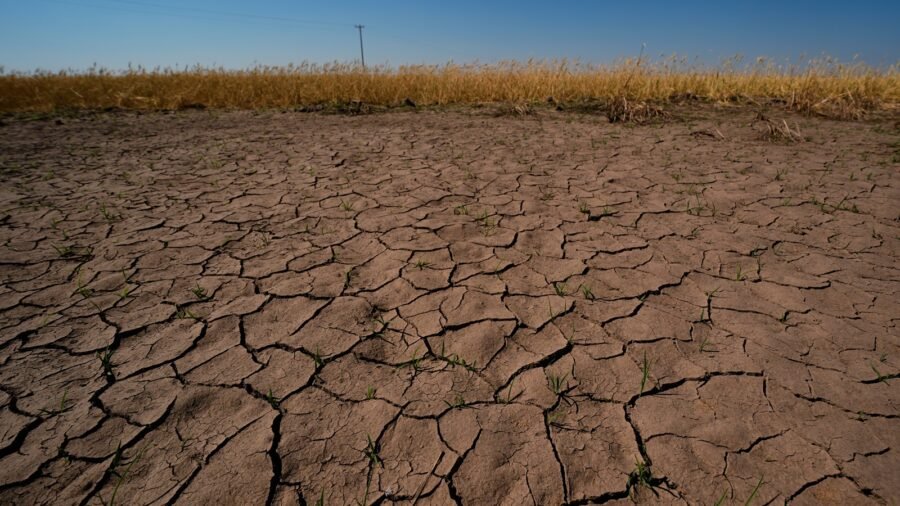
With El Niño causing rainfall deficits and crop losses in rural Maharashtra, the state could be heading for a drought. Chief Minister Devendra Fadnavis said last week, “We are bracing for a severe drought, which could be worse than 1972.” NCP (SP) chief Sharad Pawar said the same: “This year’s drought could be worse than 1972.”
From 1960 to 2026, Maharashtra has gone through at least 15 droughts. Yet, 1972 remains unparalleled for many reasons. The state of Maharashtra, which came into existence on May 1, 1960, was beginning to settle down, focusing on agriculture to drive its rural economy, when devastation struck. Much of the state, especially Marathwada, Vidarbha and parts of Western Maharashtra, was dependent on rain-fed agriculture. However, the south-west monsoon’s failure for three consecutive years, beginning 1970, would break the backbone of its rural economy and culminate in the worst famine the state has witnessed in 1972.
Advertisement
During that time, the calamity — devastated nearly 75 to 80 per cent of Maharashtra’s population of 5.4 crore, with official records putting the number of affected between 1.8 crore and 2 crore. This havoc was unprecedented for a state actively evolving a cooperative-sector economic model.
In 1972, Maharashtra had 26 districts, and 21 had been drought-affected. Now, the state has 36 districts, and 21 have logged rainfall deficits. With the lack of rain turning vast swatches of agricultural land into barren fields in 1972, farmers became most vulnerable. The question before them was how to survive?
The water in wells, lakes, and rivers had dried. With no food grains to draw sustenance from, no water to drink, and no work to earn from, rural Maharashtra, for the first time in its history, saw mass migration to urban ghettos. In Mumbai (then Bombay), the population rose by 3.5 lakh in the drought year.
Advertisement
The Maharashtra government, then led by the Congress’s longest-serving CM, Vasantrao Naik, took some drastic and innovative decisions, redefining the socio-economic policies of the state and the nation. Of them, the Employment Guarantee Scheme (EGS) remains relevant to this day. The idea came from a visionary Gandhian leader, also the first state legislative council chairman — V S Page. Based on the concept that work is a fundamental right, a government resolution for EGS was issued in March 1972.
Through the EGS, villagers rendered jobless by the drought were given an alternative to agricultural work they no longer had. Major public works, such as water and soil conservation, digging wells, building tanks and ponds, and constructing canals and roads, were undertaken across the rural belt with heavy government backing. During the worst of the drought, the state poured over Rs 200 crore into the scheme. While nearly 15 lakh enrolled during the initial rollout, estimates suggest that over the course of the crisis, the program absorbed a record one crore workers.
Another critical decision taken to avert starvation deaths was providing villagers with sukdi, a calorie-dense, nutrition-rich supplement made from wheat flour, jaggery, and oil or ghee. Amid the domestic shortage of food grains, sukdi utilised substandard red wheat imported from the US under aid programmes. During this crisis, the Public Distribution System (PDS), which provided essential grains through fair-price ration shops, emerged as a foundational component of the state’s drought relief measures.
In 1978, the government adopted the EGS Act, which mandated providing unemployed people in rural Maharashtra with jobs on daily wages within 15 days. Tailored for drought mitigation as an emergency measure, the Act soon became a model for the country through the Mahatma Gandhi National Rural Employment Act, 2005. The calamity also hit the cattle and farm animals hard. But, despite the severity of the crisis, human starvation deaths were avoided, even as malnutrition persisted.
Decades later, history threatens to repeat itself. Moreover, as All India Kisan Sabha national president Ashok Dhawale says, “The 1972 drought was catastrophic. But what we are heading for is going to be far more dangerous.” The prolonged dry spell, says noted water expert Pradeep Purandare, has made winter rabi season uncertain. “We failed miserably in addressing challenges in water conservation. We are still stuck in a 19th-century irrigation system, which is not compatible with the demands of the 21st century.”
The writer is Senior Editor,

Tavleen Singh writes: Democracy at work or disaster
By Sohail Khan · 27 Sep
Women’s safety is a national security issue
By Sohail Khan · 27 Sep
When tech becomes a tool for gender violence
By Sohail Khan · 27 Sep
Leave a Reply