There’s a new solution for India’s population problem – SIR
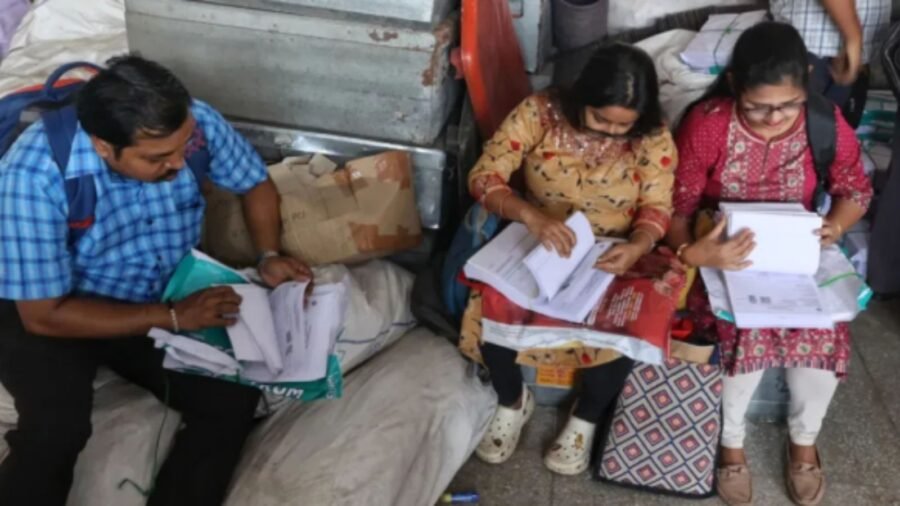
For decades, India worried about population explosion. Every Census brought alarming headlines. There were Five-Year Plans, family-planning programmes, red triangles, slogans and seminars on population stabilisation. Demographers warned us that Indians were multiplying too fast.
We need not have worried. The solution seems to have arrived from an entirely unexpected quarter: the Election Commission of India.
Advertisement
The Special Intensive Revision (SIR) of electoral rolls appears capable of achieving in a few months what decades of population policy could not. Delhi had about 1.45 crore electors before the SIR. Its draft roll has come down to about 97.5 lakh — a fall of nearly 48 lakh, almost one-third. Maharashtra has gone from about 9.78 crore electors to 7.71 crore, leaving more than 2 crore names out of the draft. Karnataka, too, has seen more than a crore names excluded at the draft stage.
Across the three phases of the SIR, more than 13 crore names have reportedly been left out of draft rolls.
Admittedly, these are not all final deletions. Claims and objections will restore many names. But why allow such technicalities to spoil a great national achievement?
Advertisement
If electoral-roll arithmetic is treated as demography, India’s population problem may already be solving itself. Perhaps we are no longer 1.45 billion people. Perhaps we have quietly slipped to 1.2 billion. Another round or two of intensive revision and the much-desired 1-billion mark may be within reach.
Think of the benefits. Water availability per capita will rise. Hospital beds per thousand population will improve. Housing shortages will decline. Teacher-pupil ratios will look healthier. The need for free rations will come down. Even per capita GDP can increase substantially without the inconvenience of increasing GDP.
The Planning Commission — had it survived — might have wanted to study the model. There is, however, a serious question hidden here.
Electoral rolls are not prepared afresh once in a generation. They are supposed to be continuously updated. There are annual revisions, Booth Level Officers (BLOs), political-party agents and elaborate procedures for additions, deletions and corrections.
If this machinery has been functioning reasonably well, how do we suddenly discover that nearly one-third of Delhi’s electorate requires exclusion from a draft roll, or that more than 2 crore names in Maharashtra have to disappear at one stroke?
Either the earlier rolls (with which EC conducted the 2024 general election) were astonishingly unreliable, or the present exercise requires an extraordinary explanation. Neither possibility is particularly reassuring.
We have seen before how massive exercises involving citizenship, identity and documentation can acquire a life of their own. The Assam NRC is an instructive example. After years of verification under Supreme Court supervision, enormous administrative effort and expenditure of about Rs 1,600 crore, the final list in 2019 excluded 19.06 lakh people.
The result, however, produced an unexpected political problem. Estimates widely circulated at the time suggested that a very large proportion of those excluded were Bengali-speaking Hindus, rather than only the Muslim migrants. The NRC authorities never published an official religion-wise break-up. But the political dissatisfaction was unmistakable. The Assam government itself questioned the outcome and sought re-verification. Seven years later, the exercise remains in limbo.
There is an uncomfortable parallel with the SIR.
Critics have suspected that the exercise would disproportionately affect Muslims, an allegation strongly rejected by the EC. But once a documentary net is cast across tens of millions of people, bureaucracy does not necessarily discriminate with the political precision that its critics or supporters may imagine. Large numbers of Hindus, too, find themselves caught in questions of residence, migration, documentation, spelling, identity and verification.
That was one lesson of the NRC. It may become a lesson of SIR as well.
Administrative exercises have a dangerous tendency to begin with categories and end with human beings. The consequences here are especially serious because electoral registration is not just another entry in another government database. It determines whether an adult citizen can participate in the fundamental democratic act of choosing a government.
Of course, the electoral roll must be clean. Dead voters should be removed. Duplicate entries should disappear. Someone who has permanently shifted should not remain enrolled indefinitely at the old address.
But accuracy has two sides. An inflated electoral roll is undesirable. An artificially depleted one is potentially far worse. A wrong inclusion can be challenged. A wrong exclusion may silence a citizen on polling day.
There is a larger principle involved. A person does not cease to exist because a BLO does not find him at home. Nor does citizenship evaporate because an old document cannot immediately be produced. The State maintains registers for people; people do not exist for the convenience of registers.
Still, if we temporarily put these constitutional anxieties aside, the demographic possibilities of the SIR remain irresistible.
Why should the Registrar General and Census Commissioner undertake the laborious exercise of actually counting everybody in the next Census? The job could simply be handed over to the EC. After all, the machinery under both organisations is the same — district administration.
A traditional Census enumerator has the inconvenient habit of counting whoever lives in the house. The newer administrative imagination offers more productive possibilities:
Absent? Population reduced by one.
Shifted? Another reduction.
Not found? Excellent progress towards stabilisation.
Form not submitted? The demographic dividend improves further.
For decades, governments tried persuasion, contraception, incentives and public education to control population growth. Nobody thought of documentary verification.
The irony, however, should not obscure the real issue. The success of the SIR cannot be measured by how many names it deletes. A large number of deletions is not evidence of efficiency, just as a small number is not evidence of failure.
The only meaningful test is whether every eligible citizen remains on the roll and every ineligible entry is removed — with due process, transparency and a genuine opportunity for correction.
The NRC taught us that citizenship can become a prolonged documentary contest. SIR should not turn voting into one.
Registers are necessary. Clean electoral rolls are indispensable. But people are more real than registers.
And if the forthcoming Census insists on telling us that India still has nearly one-and-a-half billion people, perhaps we know what to do.
Order an SIR.
The writer is former chief election commissioner of India and author of An Undocumented Wonder: The Making of the Great Indian Election


Don’t buy a lab-grown diamond before checking these 7 things
By Sohail Khan · 29 Sep
Towards a gender just Uniform Civil Code
By Sohail Khan · 29 Sep