RBI Absorbs ₹75,026 Crore Via Overnight VRRR Auction Amid Surplus Liquidity
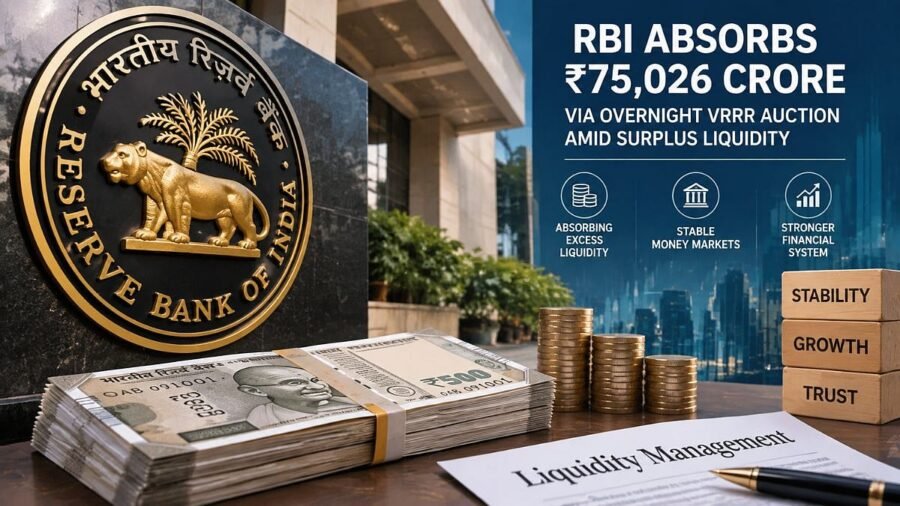
The RBI absorbed Rs 75,026 crore from the banking system through an overnight VRRR auction amid surplus liquidity. It accepted bids at a 5.24% cut-off and weighted average rate. Banking system liquidity stood at around Rs 4.45 lakh crore on September 22, with OMO sales also being used to drain excess funds.
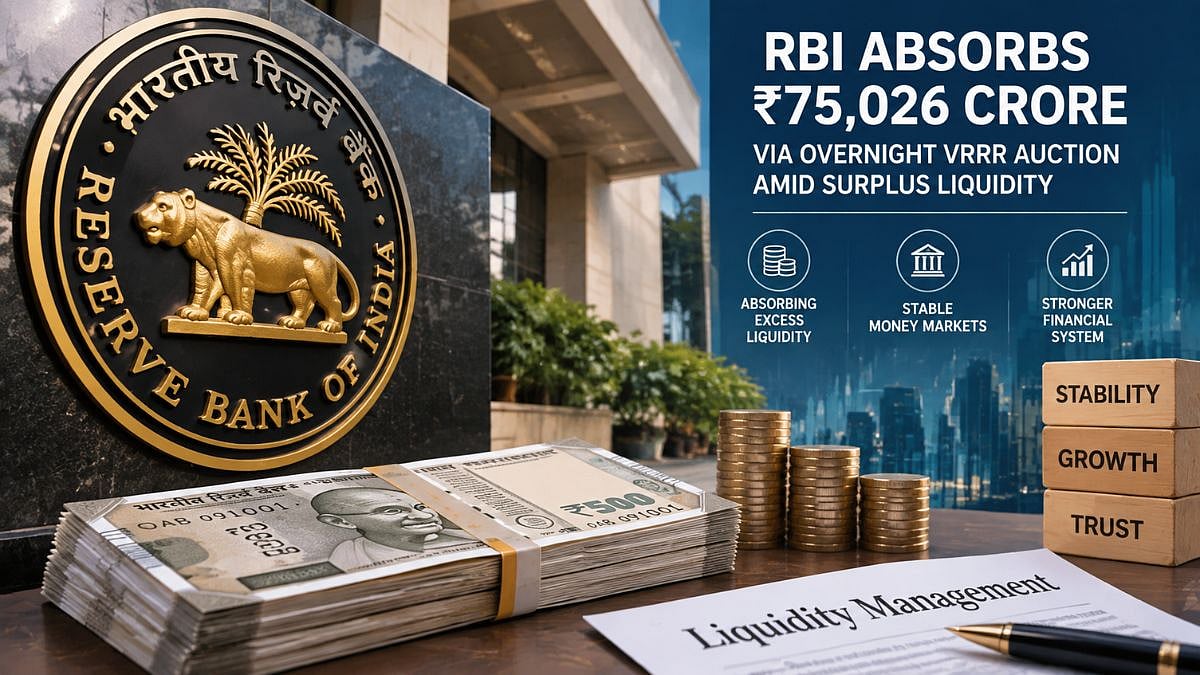
The RBI used an overnight VRRR operation to drain excess funds from the banking system amid elevated liquidity levels | AI Generated Representational Image
Mumbai, September 23, 2026: The Reserve Bank on Wednesday absorbed Rs 75,026 crore from the banking system through an overnight variable rate reverse repo (VRRR) auction amid surplus liquidity.
The central bank received bids worth Rs 87,993 crore for a notified amount of Rs 75,000 crore, but it accepted only Rs 75,026 crore, according to the notification.
The bids were accepted at a cut-off and weighted average rate of 5.24 per cent.
RBI Moves To Absorb Surplus Liquidity
`;
The RBI has been conducting various VRRR auctions since last month to absorb excess liquidity from the banking system and align overnight money market rates to the repo rate.
Currently, liquidity in the banking system is estimated to be in surplus of around Rs 4.45 lakh crore as on September 22, as per RBI data.
The central bank also conducted two open market operations (OMO) sales of government securities worth Rs 50,000 crore on September 17 and Rs 25,000 crore on September 21.
OMO Sales Drain Banking Liquidity
Under an OMO sale, banks and other investors buy government securities from the RBI, thereby draining rupee liquidity from the banking system.
The central bank had announced OMO sales totalling Rs 1 lakh crore in three tranches to manage the prevailing liquidity conditions.
The remaining last tranche of Rs 25,000 crore is scheduled for September 28.
Also Watch:
FCNR(B) Inflows Add To Liquidity
The banking system was flushed with liquidity due to heavy mobilisation of FCNR(B) deposits by banks, as the mobilisation brought foreign currency into the system, and subsequent swaps with the RBI provided rupee liquidity to banks.
Besides FCNR(B) inflows, month-end government expenditure, including payments towards salaries and pensions, also added to liquidity in the banking system.
(Disclaimer: Except for the headline, this article has not been edited by 's editorial team and is auto-generated from an agency feed.)

Add As a
Trusted Source 

Gwalior-Mumbai IndiGo Flight Likely To Operate Daily From October 27, Boosting Connectivity
By Sohail Khan · 23 Sep


Leave a Reply