PM Modi once despised ‘revdi’ culture. But even President Trump can’t resist it now
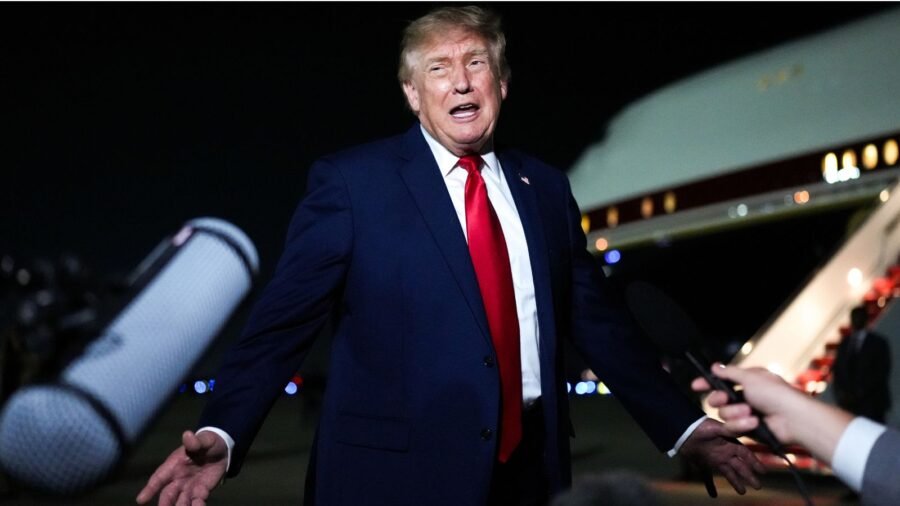
It’s not very often that an idea travels from a lower-middle-income country to the far-away rich developed world. But if it is about winning elections and staying in power, it catches the attention of even the POTUS (President of the United States of America). The humble Indian revdi whose recipe every political party here has mastered finally reached America — some 12,000 kilometres away. So what if it took a while?
Last Wednesday, Trump promised $5,000 as a “dividend” to every adult citizen in the US if his Republican party managed to retain control of Congress in the midterm elections scheduled in November. This, he said, was “because of our tremendous strength and success economically…” Indeed, the US is the largest economy in the world, although not without its blemishes, and with China right on its heels.
Advertisement
The big Trump revdi is estimated to cost the US exchequer at least $1 trillion, given that there are about 245 million citizens over 18 years, as per the US 2024 Census Bureau data. To put it in perspective, this amount is equal to almost a fourth of India’s GDP, which stands at $3.92 trillion in 2025-26.
What is important to understand, however, is whether it will encourage the poor and lower-income Americans to step out and vote. For the citizens of the world’s largest economy with a per capita annual income of $94,430 (almost 34 times India’s per capita income, $2,813), what does this $5,000 mean?
America is a rich and developed country, but that doesn’t mean every American is rich. According to the US Census Bureau’s 2024 American Community Survey, for the lowest quintile, that is, the bottom 20 per cent or one-fifth of the American population, the mean household annual income is only $17,132 a year. For this household, $5,000 means more than 100 days of its annual income. And, for the next 20 per cent of the population, it means a little more than a month’s income (their household income is $48,852 a year). Inequality is high in the US. For instance, the annual household income of the top 5 per cent of the population in the US is $5,25,113, which is more than 30 times the mean annual household income of the bottom 20 per cent of people.
Advertisement
When Trump announced this $5,000 dividend, Indian policymakers and ministers were quite amused. At least one government official and one Cabinet minister told this correspondent in jest that rich countries are moving in the direction of the developing countries.
But such is the universal appeal of a populist economic idea.
In India, Direct Benefit Transfers (DBTs) enabled by the Jan Dhan-Aadhaar-Mobile (JAM) trinity was a powerful idea of the UPA government in its second term. In fact, an influential advisor to the then Congress-led government had imagined a scenario where, with the click of a mouse, funds could be instantaneously transferred to the bank account of a voter. “And if this is done ahead of elections, imagine what the political party in power can achieve,” the advisor said with excitement and a gleam in both eyes.
Over the years, DBT-based social welfare has become a prominent feature of India’s political economy. From all regional parties to Congress to the Bharatiya Janata Party, none risk not including cash handouts to sections of the voter base in their election manifestos.
Prime Minister Narendra Modi attempted to run it down four years ago by warning against the revdi culture during the inauguration of the Bundelkhand Expressway on July 16, 2022, but his own party succumbed to the enticement of its political returns.
A key advisor to Modi, who does not wish to be named, says it used to be difficult for Cabinet ministers in the past to get the Prime Minister’s nod on any proposal involving freebies. But not so much anymore. His party units in other states made cash handouts an essential ingredient in their poll strategy. In fact, it has now become a race to the bottom between the BJP state units, regional parties and the Congress. The Sixteenth Finance Commission estimates large-group unconditional cash transfers by states were estimated to be Rs 1.96 lakh crore in 2025-26, which is approximately $20 billion. The bulk of this went to women in Maharashtra, Karnataka and West Bengal.
But revdi culture is also a political economy fallout. State failure on health, education and skilling has led parties and governments to conceive and implement schemes that offer some social safety, be it minimum income through job guarantees or cash in the hands of women, or an allowance to those who are literate but jobless.
It is still too early to say if the Americans would get an alert message for a $5,000 credit in their accounts. It’s not a done deal yet. Will the United States Congress approve such a large spend? This comes much later, says an American friend. The trillion-dollar question is whether Trump really meant it in the first place.
The writer is managing editor,

New e-commerce rules: What changes for your online shopping
By Sohail Khan · 13 Sep
Diarrhoea, white spots and 5 other surprising signs your body may be low on zinc
By Sohail Khan · 13 Sep
With peak summer looming, why is Keralam facing a power cut crisis?
By Sohail Khan · 13 Sep
Leave a Reply