Persistent antagonism towards Urdu
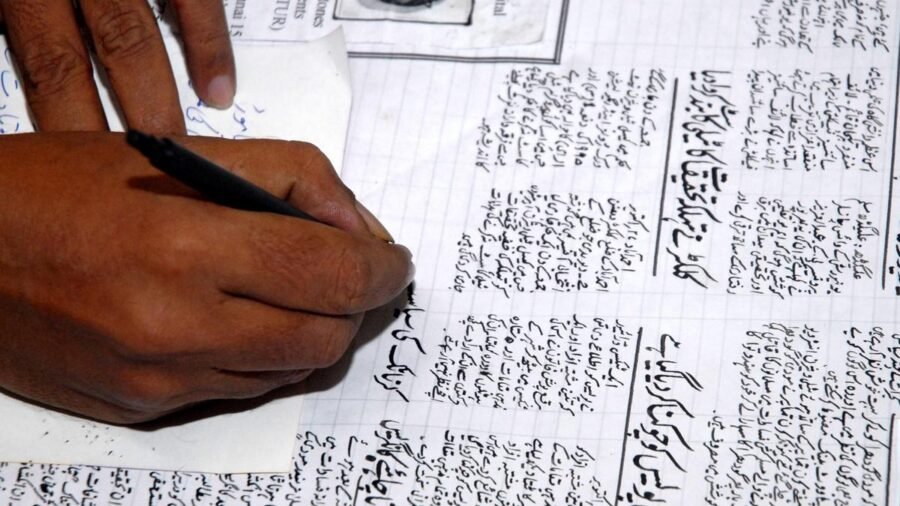
In June 2026, a group of approximately 10-15 men entered Bharat Chandra High School in Armoor, Nizamabad district, Telangana, and allegedly manhandled its 37-year-old Principal, Aamir Khan. The incident reportedly arose from the perception that Urdu was being taught at the school. However, Mr. Khan, an English teacher, was not responsible for teaching Urdu; the subject had been taught briefly by another teacher. The school’s management board, headed by a person of Hindu background, had decided to introduce Urdu as a second language following a request from the parents of Muslim students, who constitute approximately 25% of the school’s total strength.
This episode is particularly significant in light of a Supreme Court judgment in April 2025, which described Urdu as a fine expression of Ganga-Jamuni Tehzeeb. A Bench comprising Justices Sudhanshu Dhulia and Vinod Chandran observed that “language belongs to a community, to a region, to people but not a religion.” The Court upheld the use of Urdu on the signboard of a municipal council in Maharashtra and declined to interfere with the Bombay High Court’s ruling, which had found no legal prohibition under the Maharashtra Local Authorities (Official Languages) Act, 2022, against the use of Urdu.
The contrast between the constitutional-legal recognition of Urdu as a linguistic and cultural tradition and the hostility towards it highlights the contested and communal nature of the language in today’s India.
The antagonism towards Urdu is rooted in the perception that it is exclusively a language for Muslims. The establishment of Bangladesh in 1971 around the Bengali language demonstrated that Urdu is not the language of Muslims as a whole. Moreover, Urdu has historically been spoken and cultivated by Hindus, Sikhs, and others. Rakhshanda Jalil’s edited volume, Whose Urdu Is It Anyway?, brings together writings by several prominent non-Muslim literary figures, including Gulzar, Ramanand Sagar, Rajinder Singh Bedi, and Kishan Chander. Their contributions demonstrate how Urdu has historically been embedded within a diverse literary and cultural tradition. A particularly revealing case is that of Rahi Masoom Raza, the author associated with the TV serial Mahabharat. It has recently come to light that his novel Aadha Gaon (Half Village), a classic of modern Hindi literature, was originally written by him in Urdu.
Not all that different
In ordinary discourse, the difference between Hindi and Urdu is not easily noticeable. According to Paul Brass, Urdu, “in its original form, was nothing more grammatically than the spoken Hindustani of north India, particularly Khari Boli of the Delhi area, with an infusion of Persian, Arabic, and Turkish vocabulary.” This shared linguistic heritage highlights the extent to which Hindi and Urdu evolved from a common linguistic base. In 1837, Persian was replaced by English and other vernacular languages in various provinces of British India for administrative and judicial purposes. In north India, however, the vernacular language selected for official use was not Hindi, but Urdu written in the Perso-Arabic script. This linguistic policy subsequently became a source of controversy and led to the emergence of the Hindi movement.
Around this period, two publications, one by Babu Shiva Prasad and another by Madan Mohan Malviya, contributed significantly to bolstering the Hindi movement. In 1868, Babu Shiva Prasad published a memorandum on court characters, in which he highlighted the adverse effects of the use of Urdu in the North-Western Provinces and Oudh (administrative province in British India). Similarly, Madan Mohan Malviya’s Court Character and Primary Education in the North-Western Provinces and Oudh expressed concern over the detrimental impact of officially encouraging Urdu among a Hindu population. At the same time, pro-Urdu campaigns also emerged. Thus, the controversy increasingly moved beyond pamphlets and petitions, giving rise to various organised efforts.
In independent India, the Hindi-Urdu controversy continued to be a divisive political issue, particularly in north India. The persistence of antagonism towards Urdu is especially striking in a country where English, a language of foreign origin, continues to be widely valued and institutionalised across regions. In contrast, Urdu, despite its historical and cultural roots in the Indian subcontinent, continues to encounter hostility.
Shaikh Mujibur Rehman is Author of ‘Shikwa-e- Hind:The Political Future of Indian Muslims’. Views are personal
The Koran and politics of purdah
By Sohail Khan · 22 Sep
How ‘kaata wash’ helps preserve the delicate Dhakai jamdani sari
By Sohail Khan · 21 Sep
Letters to The Editor — September 22, 2026
By Sohail Khan · 21 Sep
Leave a Reply