A Malacca-Singapore model for resolving Hormuz
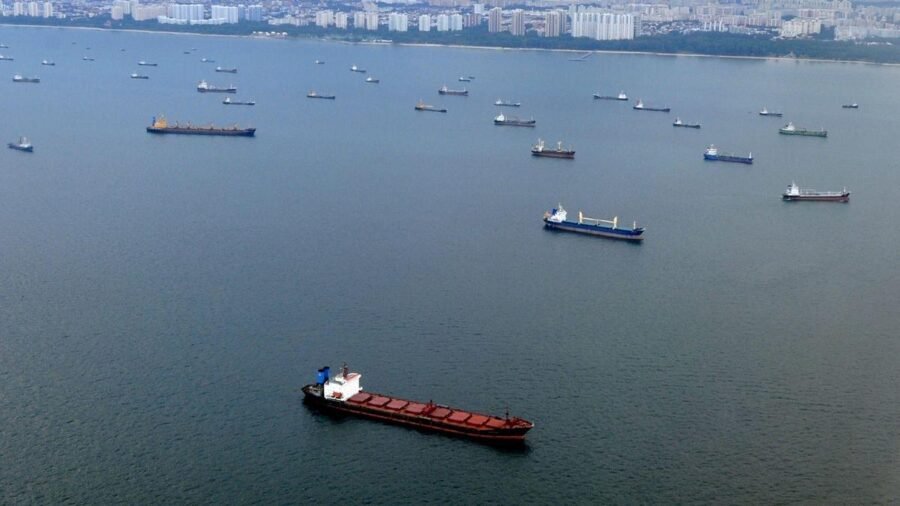
As the siege warfare continues in the Strait of Hormuz and the world suffers, it may be instructive to revisit the Straits of Malacca and Singapore.
The Strait of Malacca runs for some 800 kilometres between the Malay Peninsula and the Indonesian island of Sumatra, connecting the Andaman Sea to the Strait of Singapore, while the Strait of Singapore, some 105 km long, forms its eastern continuation and connects the Malacca Strait to the South China Sea.
A territorial turning point
The Straits were once considered “international” in the sense that they were like the high seas, over which no country had any claim. In 1971, Malaysia, Indonesia and Singapore jointly challenged this notion.
Indonesia, a newly decolonised nation, feared for the security of its individual islands if the waters between them were not considered its territory, and in 1957 declared that all waters “surrounding, between and connecting the islands” were Indonesian waters. Then Indonesian President Sukarno had an adversarial relationship with the colonial powers, and the nation was wary of big-power interference.
As the United Nations Convention on the Law of the Sea (UNCLOS)was being formulated, Indonesia insisted that its territorial waters should extend 12 nautical miles from the outermost islands. Malaysia, despite its 1963 armed conflict with Indonesia over Borneo, revised the stance it had taken at the 1958 UNCLOS conference and also announced a 12-nautical-mile territorial sea, choosing to work with Jakarta on the Straits through bilateral treaties and joint naval patrols. The two nations continue to cooperate actively to this day.
At their narrowest points, the Straits are well under 24 nautical miles wide. Once both states claimed 12-nautical-mile territorial seas, the zones met in the middle, leaving no strip of high seas or exclusive economic zone (EEZ) between them. Under the customary law of the time, this meant that the Straits were simply territorial seas, where foreign vessels enjoyed only the right of “innocent passage” — a right that Indonesia or Malaysia could suspend for security reasons and that excluded submerged submarines.
The three nations issued a joint statement in 1971 proposing a coordinating body comprising representatives of the three states to administer the Straits. Singapore, an island nation dependent on trade and shipping, did not quite agree to declaring the Straits “not international”, but did make common cause with Malaysia over the safety of navigation.
The Straits and the great powers
Japan, a major player through the Japan-funded Malacca Strait Council, offered cooperation with the three states rather than seeking an internationalised regime. The United States and the Soviet Union, otherwise rivals, were allies on this one issue — keeping the Straits under territorial waters “international” so that ships retained the right of “continued, politically uncluttered transit”.
As UNCLOS entered its final phase of formulation in the 1970s, the United Kingdom introduced the concept of “transit passage” for straits connecting the high seas or EEZs — a right of transit only in a “continuous and expeditious” manner, with no stopping or loitering, but one that applied to warships as well, going beyond mere innocent passage. Indonesia agreed to this formulation with reservations, trading its acceptance for greater security for its archipelago, which UNCLOS eventually addressed separately. Malaysia’s concerns centred on environmental safety, insurance requirements and permissible vessel draught.
In 2007, the three states working with the international community arrived at a Cooperative Mechanism building on a traffic separation scheme similar to what Iran and Oman had agreed for the Strait of Hormuz in the 1960s. A core aspect of the 2007 mechanism was for user states and industry to contribute to a fund for aids to navigation, hydrographic surveys and safety projects, administered jointly with the littoral states.
The Aids to Navigation Fund is supported through voluntary financial contributions from non-profit organisations such as The Nippon Foundation and the International Foundation for Aids to Navigation, as well as industry stakeholders and states with an interest in the safe and efficient use of the Straits. These contributions do not amount to tolls. The fund is administered on a rotation basis by a committee comprising representatives of the three littoral States and the contributors. The three littoral States — Indonesia, Malaysia and Singapore — do not impose fees, tolls or any other form of payment on ships exercising their right of transit passage.
The geographic parallel
The Strait of Hormuz is similar to the Malacca-Singapore Straits, in that the territorial waters of Iran and Oman intersect, making sections of the Strait part of their territorial waters.
In 1993, Iran, which has not ratified UNCLOS, passed a law requiring foreign warships to seek its authorisation to pass through the Strait. This continues to be a sore point today.
Persian Gulf nations have a history of both conflict and cooperation. The United Arab Emirates, for instance, was among Iran’s leading trading partners. Qatar is among the Persian Gulf nations that have supported the Iran-Oman talks. It had also mooted the Malacca-Singapore straits as a model.
Yet, even if the Gulf nations arrive at a framework they all agree on, the U.S. has shown that it may not accept it. The Malacca-Singapore issue was resolved as UNCLOS itself was being put into effect, when trade-offs were part of negotiating a convention intended to govern the world’s oceans.
A key concern in the Malacca-Singapore Straits was the safety of navigation and the environment, whereas in the Strait of Hormuz, the key issue is Iran’s security.
Iran is demanding that all nations revisit the Strait of Hormuz, and some are willing to do so. Though Iran and Oman have apparently agreed on a framework for reopening the Strait of Hormuz, the Strait has not been reopened, and the U.S. has not accepted the arrangement. The context has changed, even though there are clear parallels in the technical details.
kalyanaraman.m@thehindu.co.in

How ‘kaata wash’ helps preserve the delicate Dhakai jamdani sari
By Sohail Khan · 21 Sep
Letters to The Editor — September 22, 2026
By Sohail Khan · 21 Sep
The arithmetic of Tamil Nadu’s growth ambition
By Sohail Khan · 21 Sep
Leave a Reply