Major Rishabh Singh Sambyal on giving up marriage to serve as President Droupadi Murmu’s ADC: ‘Biggest sacrifice’

Major Rishabh Singh Sambyal, who served as Aide-de-Camp (ADC) to President Droupadi Murmu for three years, announced his retirement last month after 12 years of service in the Indian Army. In a candid chat with podcaster Raj Shamani, the former Special Forces officer shared that he had to give up the idea of starting a family to take up this job.
“I am not married. So there is a clause for the ADCs that they can’t get married… they have to stay away from the family, and I think this is the biggest sacrifice,” Sambyal told Shamani, further adding that while serving as ADC, he could not “go out as a normal human being and enjoy life”.
When asked if that made him feel lonely, he replied, “Yes, I do get lonely, but I turn that loneliness into a positive thing.”
Story continues below.
Subscribe to see fewer ads.
According to a 2026 report, the ‘no marriage’ rule for ADCs to the President is a voluntary requirement an officer is aware of at the time of appointment. “There have been instances in which some officers selected for the post have opted out. The idea behind the ‘no marriage’ rule, it is learnt, is to ensure that the officer serving the First Citizen can focus 24/7 on the job and is available round the clock,” the article mentions.
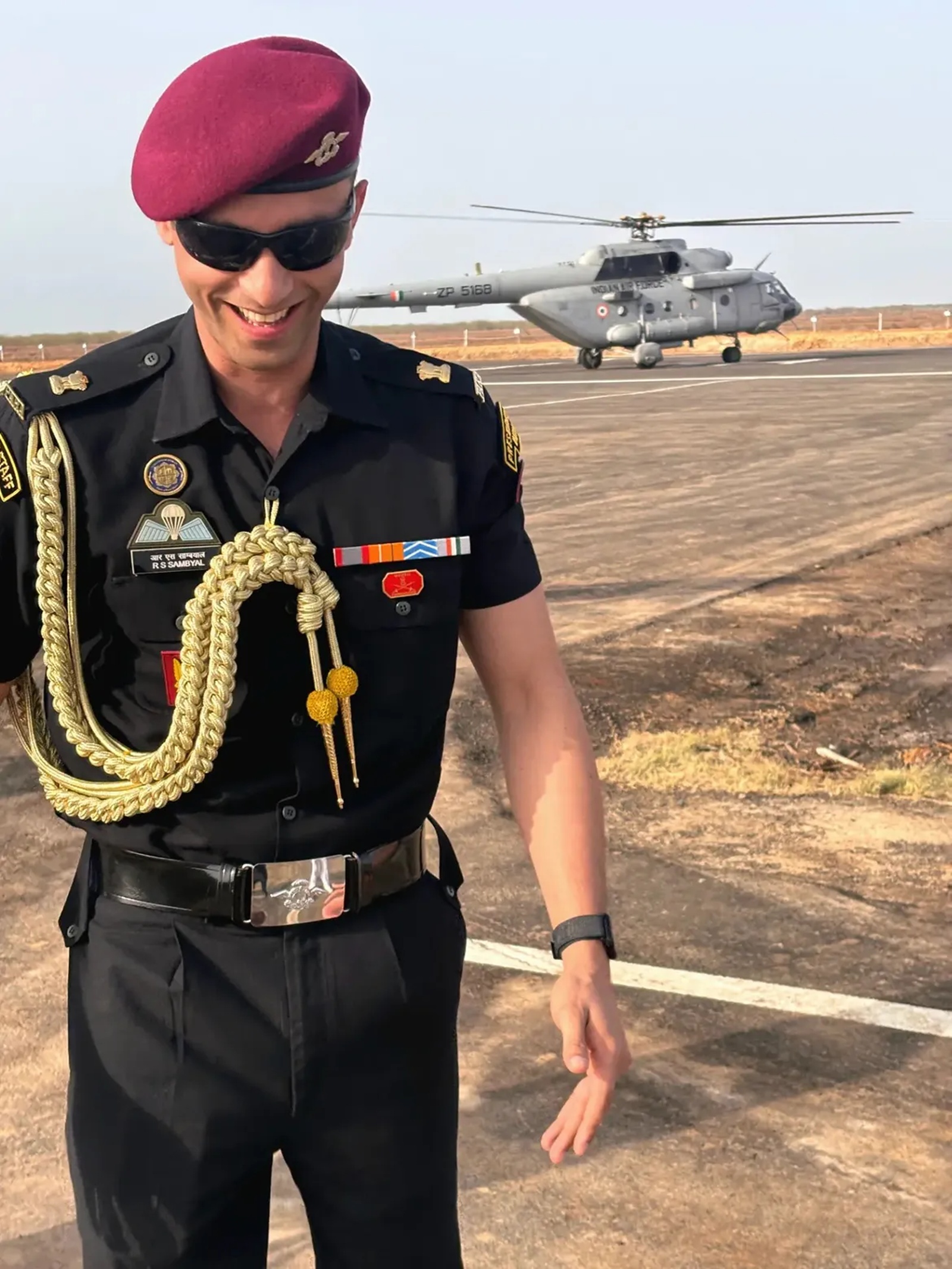 Major Rishabh Singh Sambyal recently announced his retirement. (Source: Instagram/@major_rs_sambyal)
The psychology behind sacrifice
Dr Rimpa Sarkar, clinical psychologist and founder of Sentier Wellness in Mumbai, says that when someone knowingly accepts a significant personal sacrifice—such as giving up marriage or a conventional family life—the psychological adjustment often depends on whether they see the decision as a meaningful choice rather than simply a deprivation.
According to her, acceptance does not mean that the person never feels lonely or wishes things were different. Rather, it means acknowledging the loss while also finding purpose in the life they have chosen.
Story continues below this ad
“When a sacrifice is connected to deeply held values, purpose or a sense of contribution, people can often tolerate its emotional costs better because the sacrifice feels meaningful,” she tells indianexpress.com.
Finding peace in acceptance
Dr Sarkar says finding happiness in difficult circumstances also involves cognitive reframing. “Instead of asking only, ‘What have I lost?’, a person can gradually develop the ability to ask, ‘What can I build with the life I have?’ as this does not require pretending that loneliness or disappointment do not exist,” she informs.
In fact, she believes psychologically healthy acceptance allows difficult emotions to coexist with satisfaction, purpose and gratitude. “Trying to force oneself to be positive all the time can become toxic positivity; acknowledging the difficult parts is actually an important part of adapting,” says the psychologist.
Ultimately, Dr Sarkar believes peace does not necessarily come from eliminating loneliness or getting everything we wanted. It can come from developing the psychological flexibility to say, ‘This is not the life I might have imagined, but it can still be a meaningful life’.
Story continues below this ad
“The goal is not to romanticise sacrifice, but to make sure that the person continues to have agency, connection, purpose and permission to acknowledge the emotional cost of their choice,” she concludes.

India’s high-speed highway push: What NHAI’s new design rules say
By Sohail Khan · 22 Sep
Why Nothing wants to turn its CMF sub-brand into a standalone Indian company
By Sohail Khan · 22 Sep
Keeping up with UP| Young minds: A maze every political party is struggling to navigate
By Sohail Khan · 22 Sep
Leave a Reply