India’s high-speed highway push: What NHAI’s new design rules say
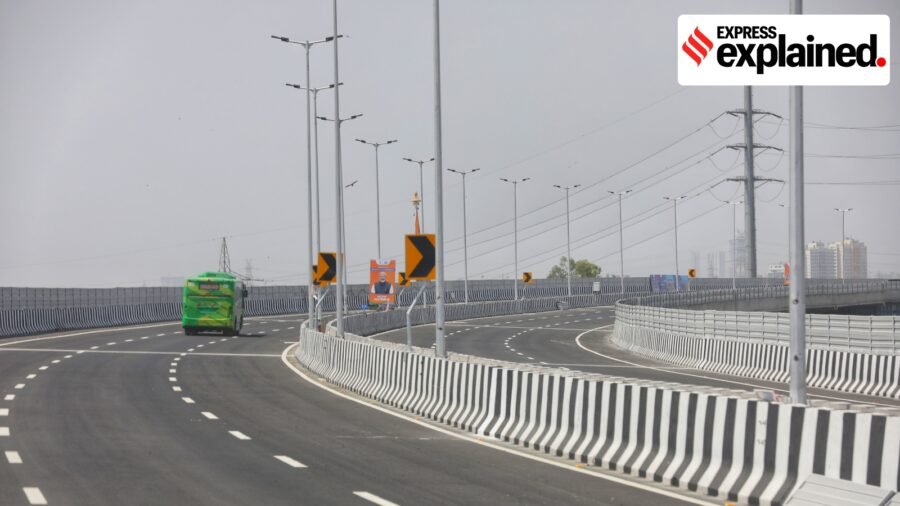
In a move to ensure uniformity and consistency in the construction of high-speed corridors, also known as access-controlled national highways or expressways, the National Highways Authority of India (NHAI) has issued detailed guidelines covering the design, standards and specifications for such projects. Until now, consultants have been preparing detailed project reports (DPRs) for these corridors based on varying standards and specifications.
The move assumes significance as India targets 50,000 km of high-speed corridors by 2036-37 under Vision 2047.
These corridors are special sections of national highways which provide uninterrupted, end-to-end travel. The total length of high-speed corridors by December 2025 stood at 3,052 km. The highway authority has mandated that traffic assessment of these projects should include existing, generated, induced, as well as diverted traffic based on proper traffic modelling.
Story continues below.
Subscribe to see fewer ads.
“Freight growth rate shall be duly analysed considering economic development. The traffic shall be validated from other secondary sources such as toll transactions. For freight traffic and determination of VDF (vehicle damage factor), data from GST portals, mining departments and other sources should be validated,” it said.
Lane, access and road signage norms
It said that when the present traffic is up to 15,000 PCU (passenger car unit), the corridor should be developed as a four-lane highway with a four-lane structure. If the traffic is between 15,000 to 25,000 PCU, the corridor should be of four-lane highway and six-lane structures, and if the traffic is 25,000-40,000 PCU, then it should be a six-lane highway with six-lane structures.
“Access should be planned with the objective that the long distance through traffic can operate at speed dictated by the flow on the main highway and not by any other factors such as interference from local traffic, access traffic or cross traffic. There shall be no at-grade intersection of any road with the project highway. Access to the project highway shall be through properly designed ramps at pedestrian locations,” said the NHAI.
It mandated that in areas characterised by frequent operation of heavy agriculture machinery, specifically harvesters and tractors with high laden farm produce, the height of underpass may be considered at 4.50 metres. The service road shall be provided in built-up and urban sections on both sides with drain cum footpath, said the authority.
Story continues below this ad
Regarding road signage and markings, NHAI said full overhead gantries carrying direction signs shall be placed 5 km and 2 km ahead of an exit, while cantilever gantries carrying advance direction signs shall be placed 1 km and 500 metres before the exit. The authority also mandated that lane and other markings be 150 mm wide, while edge-lane markings be 200 mm wide.
Barrier-less tolling and corridor protection
Since NHAI is already shifting towards a multi-lane free flow (MLFF), or barrier-less tolling system, it has also asked for provisions for the system to be incorporated into the layout of high-speed corridors.
“In order to prevent encroachment and unauthorized access on high-speed corridors, a 1 meter high RCC (reinforced cement concrete) boundary wall shall be constructed along the extreme outer edge of the ROW (right of way),” said the NHAI.
ROW, or right of way, refers to the total width of land legally acquired or owned by the government or road authority for construction, operation, maintenance, and future highway expansion.
Story continues below this ad
The authority also said that drip irrigation will be provided in the median for watering of plants and tree plantation will be made an integral part of the project design at the DPR stage.


Why Nothing wants to turn its CMF sub-brand into a standalone Indian company
By Sohail Khan · 22 Sep
Keeping up with UP| Young minds: A maze every political party is struggling to navigate
By Sohail Khan · 22 Sep
Leave a Reply