Let’s curb misuse of BNS 299, a legal relic that elevates the mob over the individual
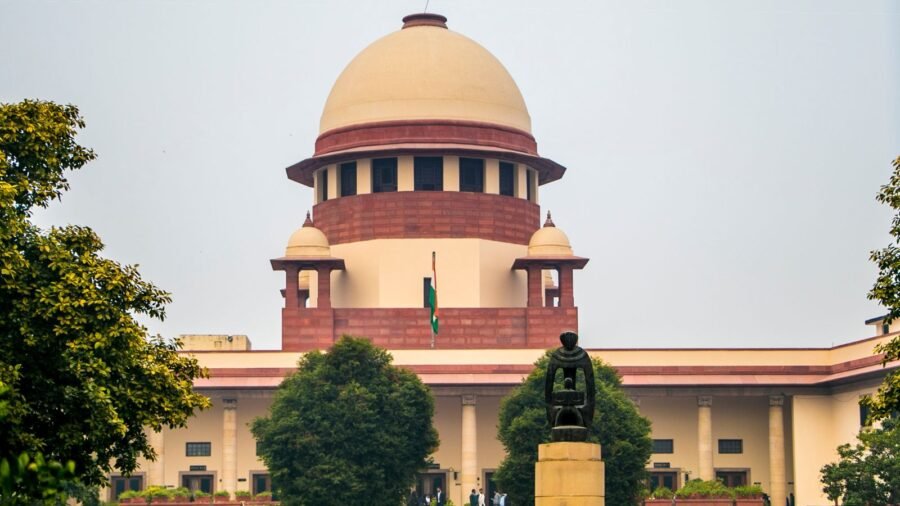
The paradox of Indian civilisation has always been the contradiction between our intellectual radicalism and our social orthodoxy. For millennia, the Subcontinent was a laboratory of boundless metaphysical inquiry, where the foundational texts of the Indic tradition openly questioned the origins of the universe, and where heterodox sceptics, materialists, and spiritual iconoclasts debated without fear of a Spanish-style Inquisition. Hindus have no concept of heresy because we did not fear the destabilising power of an idea. Yet, in modern India, this heritage of intellectual fearlessness is being systematically stifled by the misuse of a legal relic that elevates the fragile feelings of the mob over the fundamental rights of the individual. This is Section 295A of the Indian Penal Code, now re-codified as Section 299 of the Bharatiya Nyaya Sanhita (BNS).
Introduced by the British in 1927 in the turbulence of the “Rangeela Rasool” controversy (a provocative Urdu pamphlet satirising the Prophet Muhammad’s personal life had sparked widespread communal riots), Section 295A was ostensibly designed to preserve public order by penalising deliberate and malicious acts intended to outrage religious feelings. It was born out of a colonial urge to police Indian subjects deemed too volatile to handle the friction of free and provocative speech. The British have abolished their own blasphemy law, but we not only retain this colonial instrument under Article 19(2) of our Constitution, which permits speech restrictions in the interests of public order, but have allowed it to metastasise into the single most potent weapon against creative and intellectual freedom in our democracy.
Advertisement
By translating the deeply subjective and volatile concept of “emotional hurt” into a cognisable, non-bailable criminal offence, Section 299 of the BNS effectively grants a permanent “heckler’s veto” to the most intolerant, reactionary segments of our society. It creates a perverse incentive for outrage by elevating “the right to be offended” above the right to free speech. Political entrepreneurs, religious zealots, and competitive vigilante groups quickly realise that the easiest path to public relevance is to claim that their sentiments have been wounded. All it takes is one aggrieved individual to file a First Information Report (FIR) in a remote corner of the country, and the machinery of the state is instantly triggered against a writer, a filmmaker, a stand-up comedian, or a publisher — for speech that a court will often find, years later, was never malicious at all.
The alarming phenomenon of cultural self-censorship in India is starkly illustrated by the corporate capitulation of major publishers, fearful of falling afoul of BNS 299. This trend was dramatically underscored when Penguin Books India chose to withdraw distribution of Joe Sacco’s graphic novel on the Muzaffarnagar riots, echoing its earlier decision to pulp copies of Wendy Doniger’s The Hindus, and then anxiously asked for cuts to Sonia Gandhi’s memoirs that its global arm had not considered necessary in the international edition. Because none of these texts was legally proscribed, these were pre-emptive surrenders, normalising a cowardly calculus where commercial risk aversion replaces constitutional principle, leaving the Indian reader culturally deprived.
The tragedy of BNS 299 lies in the gruelling, punitive nature of the legal process itself. The law allows arrest before a trial can even establish whether malice existed. For an artist or an author, being dragged through a labyrinth of multi-city court appearances, facing jail time and enduring financial ruin, is a punishment designed to break the spirit. The inevitable consequence is a pervasive, suffocating culture of fear. When the cost of creative expression is the potential loss of personal liberty, the vast majority of creators naturally choose to pull their punches. Publishers refuse or trim sensitive manuscripts, galleries pull provocative paintings, studios quietly cancel scripts, and academics choose safer, sterile research topics. We are left with a public square sanitised of radical honesty, reduced to a bland conformity that is entirely unworthy of India’s intellectual lineage.
Advertisement
In his landmark 2008 Delhi High Court judgment quashing criminal proceedings against the self-exiled maestro M F Husain, Justice Sanjay Kishan Kaul delivered a magnificent, definitive defence of artistic liberty against the creeping tides of intolerance. Opening the ruling with a quote from Pablo Picasso (“Art is never chaste… Where it is chaste, it is not art”), Justice Kaul meticulously dismantled the obscenity and blasphemy charges by contextualising Husain’s abstract, nude depiction of Bharat Mata within India’s rich, four-millennia-old heritage of sacred, pluralistic, and erotic iconography, from Khajuraho to Konark. Sternly critiquing the “new puritanism” being waged by self-appointed guardians of cultural purity, the judgment warned that allowing a closed mind to restrict our open society would push India backward. By affirming that one disapproving viewer cannot hold the right to restrict free expression, Justice Kaul established a vital constitutional shield for creative dissent and intellectual fearlessness.
This constitutional scrutiny should move to the front of the process. Prior government sanction should be required before an FIR under BNS 299 is even registered, not after the accused has already endured an investigation and a chargesheet. Equally, multiple FIRs on the same subject, lodged in different states, should immediately be consolidated into a single proceeding. BNS 299 cases should be fast-tracked to quash frivolous proceedings. And vexatious complainants should face costs or other punitive consequences, so that the incentive structure of BNS 299 is reversed, rather than reinforced.
Those who weaponise BNS 299 to defend faith are, in reality, insulting the very traditions they claim to protect. The great Indic philosophies were forged through intense, unsparing contestation. Our texts are filled with purvapaksha, the meticulous formulation of an opponent’s viewpoint, followed by rigorous logical refutation. The gods and sages of Indian antiquity were argued and bargained with, and frequently satirised. To suggest that an ancient, resilient civilisation is damaged by an artist painting a provocative image, or a novelist writing a satirical line, is an act of shameful civilisational self-doubt.
If we seek a Viksit Bharat confident in reason and genuinely open to the future, our proud civilisation does not require the protective custody of a police inspector. It is time to curb the misuse of BNS 299.
The writer is a fourth-term Congress MP from Thiruvananthapuram

3 cups, then conversation: Shah Rukh Khan reveals coffee-fuelled morning ritual
By Sohail Khan · 16 Sep
Faster recovery, pain management: Why elite athletes are using collagen
By Sohail Khan · 16 Sep
Dear Editor, I Disagree: Dialogue at BRICS is a means, not an end
By Sohail Khan · 16 Sep
Leave a Reply