Dear Editor, I Disagree: Dialogue at BRICS is a means, not an end
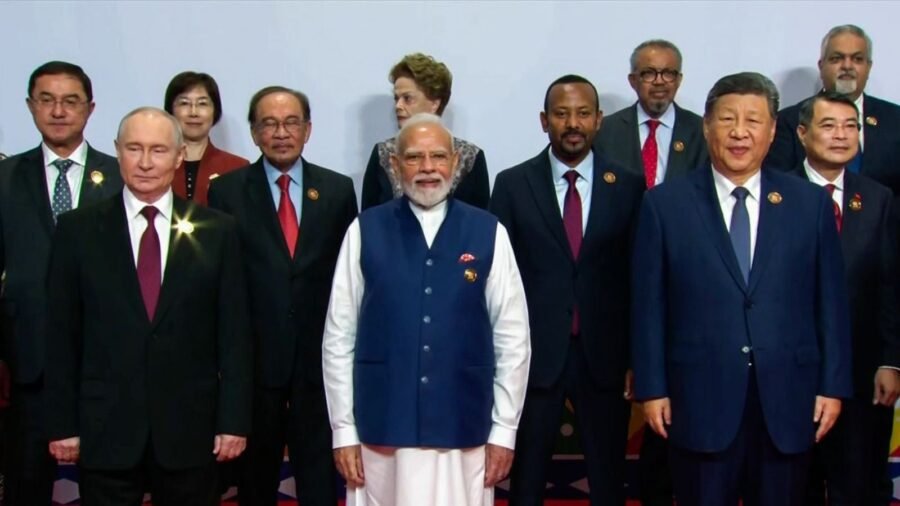
Two recent editorials — ‘At BRICS, the value of keeping difficult conversations alive’ (IE, September 12) and ‘At BRICS, more options, a win for diplomacy’ (IE, September 14) — make a persuasive case for BRICS as a useful forum for dialogue and diplomacy. But they set too low a bar for judging the grouping at a time when the international order is undergoing profound churn.
At the heart of their argument is the idea that, despite its internal differences and competing interests, BRICS remains a useful instrument of diplomacy in a fragmented world. Its expanded membership strengthens the Global South’s voice and creates greater scope for economic cooperation. It also brings together countries with competing interests, making BRICS a useful forum for keeping diplomatic channels open on difficult geopolitical questions while making conscious efforts to avoid being seen as an explicitly anti-Western or anti-American alignment.
Advertisement
But this optimism should not obscure the harder realities of international politics. States may value dialogue, but they ultimately use multilateral forums to advance their interests, manage vulnerabilities and respond to shifts in power. Dialogue is a means, not an end. What matters is whether it can help resolve disputes, moderate conflicts, produce meaningful cooperation and contribute to a more stable and rules-based international order.
John Mearsheimer argues that international institutions do not transcend power politics; they largely reflect the distribution of power and the interests of the states that create and use them. BRICS, therefore, may be less an independent force shaping international politics than a forum through which states respond to changing configurations of power and pursue converging interests.
The bonhomie between Narendra Modi and Xi Jinping at the summit, following years of border tensions and Xi’s first visit to India in seven years, should not be seen simply as a triumph of BRICS diplomacy. India and China have strategic reasons for reducing tensions amid Donald Trump’s attempt to weaponise tariffs. The rapprochement may give both countries greater room for manoeuvre in dealing with Washington, without requiring either to appear confrontational.
Advertisement
The larger question is what BRICS seeks to achieve beyond providing its members with a forum for dialogue and diplomatic options. The New Delhi Declaration is clear about the shortcomings of the existing order — unilateral sanctions, coercive measures, protectionism, tariffs and the unequal representation of developing countries in global institutions — but offers little indication of how these problems can be addressed.
Even its call for reform of global institutions leaves unanswered the question of how such reform can be achieved. As G John Ikenberry suggests, the present moment may be less about the collapse of the US-led liberal international order than a struggle over its future shape, authority and leadership. BRICS has yet to articulate what that future might look like politically, economically and institutionally.
The writer is dean, Faculty of International Studies, AMU

3 cups, then conversation: Shah Rukh Khan reveals coffee-fuelled morning ritual
By Sohail Khan · 16 Sep
Faster recovery, pain management: Why elite athletes are using collagen
By Sohail Khan · 16 Sep
Let’s curb misuse of BNS 299, a legal relic that elevates the mob over the individual
By Sohail Khan · 16 Sep
Leave a Reply