Kareena Kapoor’s strict screen-time rules for Taimur and Jeh: ‘Need to be hyper about this’

Kareena Kapoor Khan recently opened up about being the more “hyper” parent when it comes to her sons Taimur and Jeh’s screen time. At the 16th edition of Expresso, the Daayra actor shared how she and her husband, Saif Ali Khan, differ in managing their children’s use of phones and devices.
“They do not have access to phones. Taimur’s nanny has a phone, and he insists it’s his. I said, ‘It’s not your phone’. He asked if he could tell his friends that it’s his phone, but I denied. I am hyper about the whole digital thing, but then he then points out that ‘you and abba also talk on the phone’. When they are playing games all day, I literally have to snatch phones from their hands,” Khan shared during the chat.
Story continues below.
Subscribe to see fewer ads.
She further added, “Saif feels that I am too hyper and I need to relax, but I tell him that I need to be hyper about this. So, this is the only thing that we probably argue about. I just want to keep them still as small as possible…forever.”
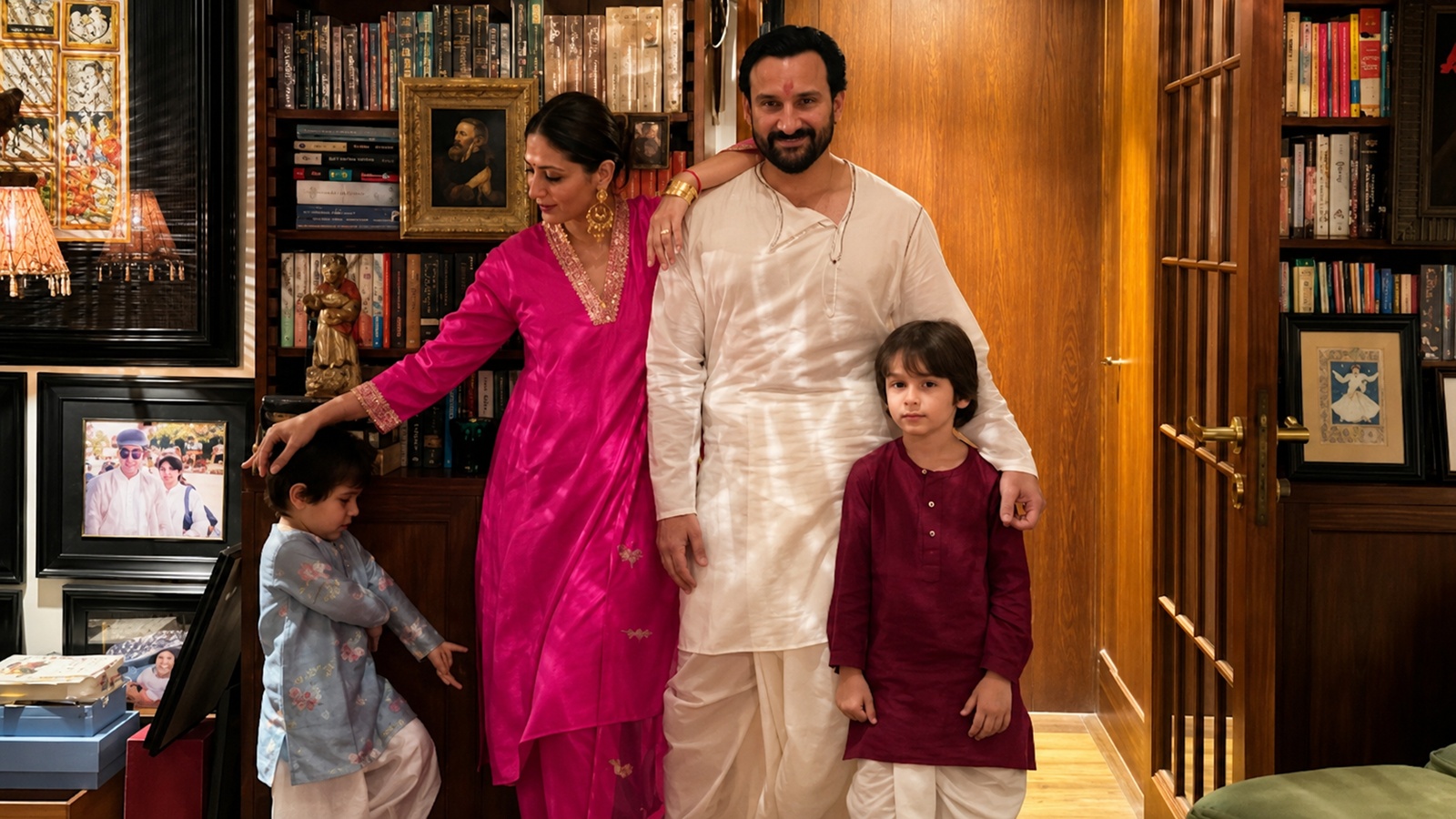 Kareena with her husband and kids. (Source: Instagram/@kareenakapoorkhan)
Does snatching away phones work?
Counselling psychologist Athul Raj says that taking screen time away as punishment often fails because it ignores the child’s regulatory state. Raj says that for many children, screens are how they downshift after sustained demand, not the cause of the problem. “Removing them during distress increases arousal and reduces capacity for reflection. The child is punished while already overwhelmed,” he explains.
Over time, he adds that this approach teaches that emotions are dangerous and lead to loss, which increases suppression or explosive release later. It also gives screens an oversized emotional value, making them harder to manage. “Consequences are most effective when they are connected to repair and responsibility. Screens need boundaries, but they are a poor tool for managing emotional behaviour,” Raj says.
So, what’s a more effective plan?
When it comes to regulating children’s screen time, Raj says fixed daily limits play a quieter but more stabilising role. “They reduce emotional load by removing repeated decision-making and negotiation. Many children regulate better when the boundary is predictable, even if they dislike it.
Story continues below this ad
“In clinical work, earned models tend to activate behaviour, while fixed limits contain emotion. Families function best with a stable baseline and limited, intentional flexibility. Screens should not become the central organiser of a child’s behaviour or motivation,” he tells indianexpress.com.

Why Canada’s new temporary study policy matters for foreign workers
By Sohail Khan · 19 Sep

Why government wants CCTV at medical stores, and chemists don’t
By Sohail Khan · 19 Sep
Leave a Reply