Houthis in Yemen are putting Mecca Pact to the test
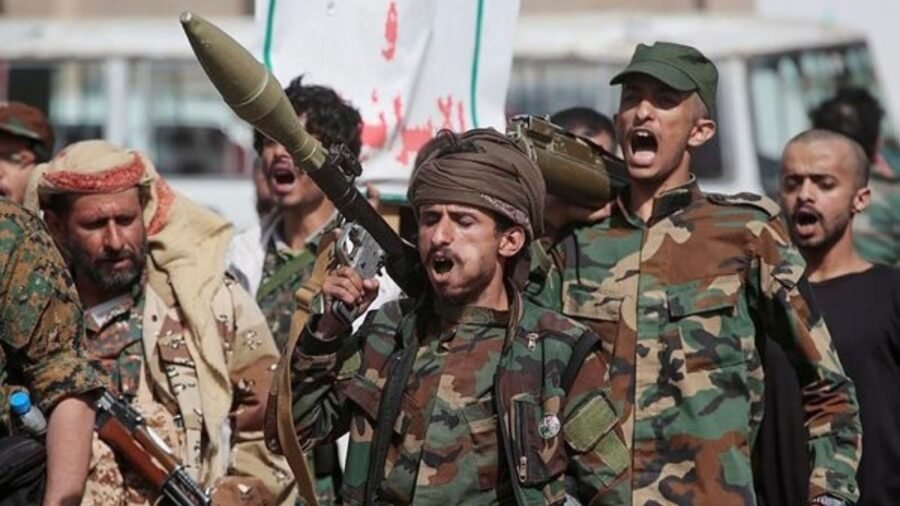
The Mecca Joint Defence Agreement (MJDA) signed between Saudi Arabia, Türkiye and Pakistan established a trilateral framework for collective deterrence and stated that an armed attack against any one of the three countries will be regarded as an attack against all three. The pact is grounded in Article 51 of the UN Charter, which recognises the inherent right of states to individual as well as collective self-defence.
Within hours of its signing on August 7, the “Islamic NATO” label began circulating. The comparison was tempting as both NATO and the MJDA invoke collective self-defence and deterrence principles, and NATO’s Article 5 famously treats an armed attack against one member as an attack against all. But while NATO has an institutional structure, established command arrangements and a long-standing bureaucracy, the Mecca pact lacks, at least for now, a NATO-like organisational structure. This is why it has failed to shield Saudi Arabia from the ongoing Houthi attacks.
Advertisement
The Saudis had intervened in Yemen in March 2015 to back the latter’s internationally recognised government against the Houthis in the civil war, which started in September 2014. The coalition’s main objective remains to stop Iran-backed militia groups from taking control of its southern border.
Yemen, for years, has been a man-made humanitarian crisis. A panel of UN experts in 2018 said that all parties to the conflict had committed violations that may have amounted to war crimes, with the Saudi-led coalition accused of blockading ports and killing thousands of civilians in airstrikes. Data compiled by the International Organisation for Migration (IOM) reveals that over 104,796 people have been displaced in Yemen as of now.
While it was anticipated that either Türkiye or Pakistan would provide military support to Saudi Arabia against the Houthis, Riyadh has resorted to Europe for security after a cold response from the US. Islamabad’s major security concern remains India, with sporadic tensions with Afghanistan’s Taliban regime. Ankara, on the other hand, has a broader security perimeter, spanning Syria, Iraq, the Eastern Mediterranean and the Caucasus.
Advertisement
But the reasons underpinning the pact’s failure are far more complex.
First, the Mecca Agreement lacks official ratification by the participating states. Second, the mutual defence terms agreed by the states are not yet legally binding. Third, Türkiye and Pakistan need to clear the Defence Pact through domestic parliamentary processes, while Saudi Arabia has to approve the pact via royal decree.
And while the varying military capacities of the three states were earlier hailed, the gap remains in bringing the disparate military capacities to fruition. In short, the Mecca pact is still shaping and not yet operational. The three countries have different strategic interests, and whether they can translate the political commitment into meaningful military coordination remains an open question.
There have been reports published by Human Rights Watch documenting evidence concluding that the Saudi-backed coalition committed serious violations of international humanitarian law and potential war crimes in Yemen. With the limitations surrounding the operationalisation challenges of the Mecca Pact, Saudi Arabia is now resorting to the European Union for defence support. However, considering the documented human rights violations in Yemen, the EU is highly unlikely to provide any direct military intervention or offensive help to Saudi Arabia. The EU’s response is balanced, demonstrating a show of diplomatic solidarity against recent Houthi strikes while maintaining an internal restriction on providing any military assistance to Saudi Arabia.
The writer is a contributing researcher with ORF who has previously taught at the University of Edinburgh

Student suicides: IITs need an early-warning system
By Sohail Khan · 19 Sep
‘Before 7pm’: Sleep expert on why you should avoid late-night workouts
By Sohail Khan · 19 Sep
Why Canada’s new temporary study policy matters for foreign workers
By Sohail Khan · 19 Sep
Leave a Reply