In German far-right party AfD’s rise, a bigger question for democracy
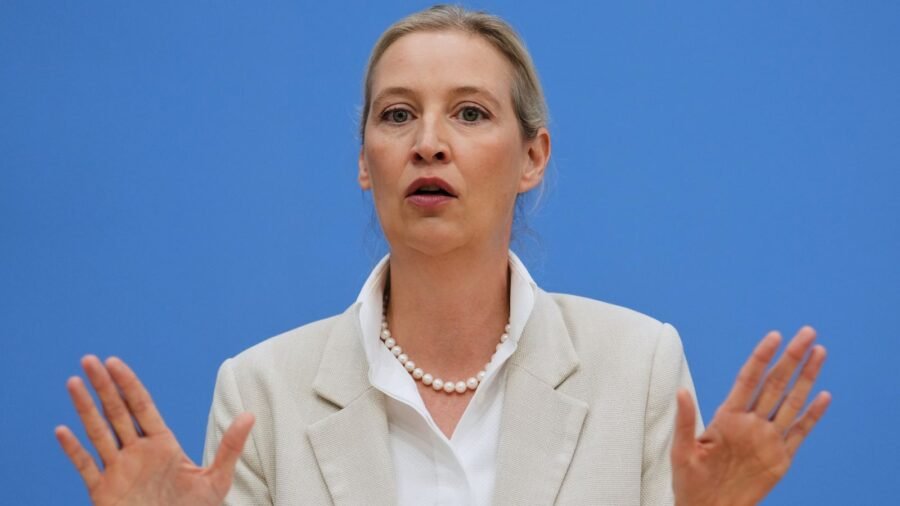
The success of the Alternative for Germany (AfD) in Saxony-Anhalt has raised the question of whether Germany’s firewall against the far right (Brandmauer) is cracking. Emerging from the devastating impacts of war, the German polity was premised on democracy’s institutional capacity to defend itself. In 2015, amidst the Syrian refugee crisis, Angela Merkel’s “Wir schaffen das (we can do this)” reflected the confidence that Germany could handle social challenges without compromising its democratic principles. A decade later, the question has shifted from whether Germany can “do this” to what happens when the political consensus around “how to do it” begins to fracture.
The AfD secured 43.8 per cent of the votes and fell just three seats short of a majority. The Brandmauer and the mainstream parties’ refusal to enter governing coalitions with the AfD may prevent it from coming to power. However, its success raises a question: What happens when the institutions of democratic containment remain intact while the political constituency for the force being contained continues to expand?
Advertisement
Emerging from the collapse of the Weimar Republic, the Federal Republic embedded wehrhafte Demokratie, or defensive democracy: Democracy should hold constitutional means to defend itself against those who threaten it. Yet such safeguards cannot prevent citizens from finding extremism electorally persuasive. The Brandmauer is meant to impede the normalisation of a politics inimical to the norms of the Federal Republic. The challenge is to maintain this consensus without appearing to deny the electorate choice. While the Brandmauer can prevent institutional normalisation, it can also augment the AfD’s claim that the established regime is determined to silence voices from the electorate that do not align with theirs.
Immigration has been a contentious issue in Germany. Saxony-Anhalt has a smaller immigrant population than Berlin, Bremen, and Northern Rhine-Westphalia, yet migration remains a topical issue. The AfD has translated these concerns into a wider debate over national identity, economic insecurity, and neglect by mainstream parties. The question, therefore, is whether the AfD’s success is contingent on migration or on such broader concerns.
The AfD’s populist claim to represent the “real” voice of the people also positions constitutional checks as barriers to the popular will. The challenge for the firewall is the contest between majoritarian and constitutional notions of democracy. Moreover, Saxony-Anhalt is part of a landscape where the party has consistently performed better than in the West, reflecting persistent economic inequality and differences in institutional representation. For many in the East, reunification has brought a sense of being treated as “second-class citizens”, and the AfD has woven these concerns into a single narrative of neglect.
Advertisement
Given Germany’s significance to Europe’s politico-economic landscape, its internal shifts have repercussions across the region. It will shape how we look at migration, the rule of law, and the future of integration in Europe. But the biggest takeaway lies in the gradually shifting frontiers of what appears politically possible. Today, despite the AfD’s big win, Germany’s democratic safeguards remain indispensable. However, the lesson is that constitutional defence alone cannot substitute for political responsiveness. To sustain the democratic centre, Germany must address the electorate’s grievances, from economic insecurity and regional inequality to migration and political distrust. Democracy must defend itself against destruction. But it must also feel like it belongs to those asked to defend it.
Srivastava is a political scientist. Buttan is a PhD scholar at TISS, Mumbai

India needs a smarter SIR. Aadhaar can help
By Sohail Khan · 14 Sep
Mehbooba Mufti writes | The 80-20 Hindu-Muslim political game is making losers of us all
By Sohail Khan · 14 Sep
Leave a Reply