I have voted for three decades. Why is my SIR incomplete?
Advertisement
Let me say first that I believe in the purpose of the exercise. The vote is a citizen’s most important right, and a roll crowded with the dead and the departed diminishes it. Working from first principles, I read the three letters as three questions. S: Has the voter shifted from his last electoral address? I: Is the record identifying him incomplete or inconsistent, a name misspelt, an age that does not add up? R: Does he still reside where the roll says he does? Take the existing record, check it, correct what is wrong. A new voter supplies proof of age and address. As simple as a, b, c.
So why has a simple, routine process become so complicated that, after persistent effort, I have not been able to “clean” my application? But wait. My application is clean. My name has not changed. My address has not changed. I am, as far as I can tell, still alive. And I have followed every step required of me.
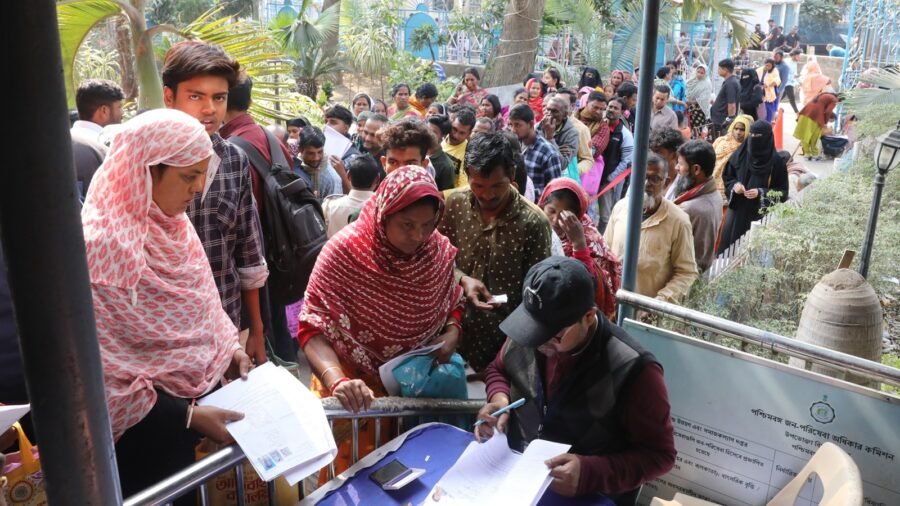
I was told to take my documents to the Booth Level Officer. After a long wait in a long line, the officer went through my papers, found nothing wrong, and told me to come back in about two weeks and stand in another line.
Advertisement
On the appointed day, the meeting was at noon, outside a school, just as six-year-olds were being picked up. About 30 of us stood, standing room only, to present applications in which no error had been found to one officer. He worked patiently through each file and then photographed it with his mobile phone. Each applicant took at least 20 minutes. The purpose was never explained since there was nothing to correct.
After 90 minutes I went up to him. Sir, I said, you have no help. Why have you called us for a second review when the first found no errors? My application was incomplete. Incomplete in what respect? The ECI and he could not tell. A simple misstatement of fact, by the state, about my own record.
He shrugged, and I sympathised with him; he is a cog, not the machine. I told him he could keep my SIR documents, since I did not care whether I voted. Walking out, I said loudly to the line: We are all sheep for accepting this, and the sheepdog is the administration. Why do we take it? I am mad as hell, and I am not going to take this anymore. Just as well, perhaps. I would not know whom to vote for anyway.
Anger is not an argument, so here is the argument.
Any process that cleans a voter list can make two kinds of mistakes. It can strike off a genuine voter or it can leave a ghost on the roll: Someone dead, departed or counted twice. No process avoids both. The design question is which mistake you fear more, and therefore where you place the burden of proof. Our criminal law answered that question long ago: Better that 10 guilty men go free than that one innocent suffer. The accused does not have to prove his innocence; the state has to prove his guilt.
For the voter, the answer should be the same, and for a simple reason. Striking off a genuine citizen takes away his vote with certainty. A ghost on the roll does harm only if someone turns up at the booth and votes in the dead man’s name, and against that there are polling agents, indelible ink and the tendered ballot. The costlier error is disenfranchisement. So the burden should sit with the state: The voter stays on the roll unless the state shows that he has shifted, died or been counted twice.
The SIR turned this on its head. Every voter had to fill in an enumeration form from scratch, as though the rolls of the past two decades did not exist, and anyone whose form did not come back was dropped from the draft roll. The last intensive revision, in 2002, did not work this way. As Nikhil Dey and Koninika Ray point out in , BLOs then started from the existing, frozen roll and went house to house to verify who had moved, who had died and who had newly turned 18. The record was presumed correct until shown to be wrong. Today, the voter is presumed absent until he proves himself present.
And when the burden is on the voter, the state need not measure its own errors. Nobody has published how many genuine voters were wrongly struck off, because nobody was asked to find out. The Chief Election Commissioner has cited “zero appeals” in 12 states as proof that the process worked. That tells us how hard it is to appeal, not how many were wrongly deleted.
More than 13 crore names have been struck off draft rolls across the country. Some of those deletions were needed. How many were not, we do not know, and under this design, we are not meant to know. I am one of the lucky ones: I can afford to stand in line for 90 minutes, and I can write about it. Most of the people in that line outside the school cannot.
Standing in that line, I was reminded of a ninth-grade classmate who, in 1962, was made to stand outside in the blistering sun as punishment. He announced, loudly: “Ask no questions, and you will be told no lies.” That was Gen Z then. Sixty-four years on, the Election Commission has made its defiance its policy. It did not answer. The ECI could not tell me what was incomplete in my application. The difference is that my classmate was being punished for something he had done.
The writer is chairperson of the Technical Expert Group for the first official Household Income Survey for India. Views are personal

Fatty liver: 6 popular hacks rated from -10 to 8 by a gastroenterologist
By Sohail Khan · 23 Sep
350 hours for Rashmika Mandanna, 500 for Shakira: The making of two showstopping looks
By Sohail Khan · 23 Sep
ExplainSpeaking: Will the Indian economy’s size triple in next 10 years?
By Sohail Khan · 23 Sep
Leave a Reply