I am from Nepal. This disaster has made preparedness personal
By Prashidha Khatiwada
For the past few days, I have watched the images coming from Nepal with a mixture of grief, helplessness and gratitude.
Advertisement
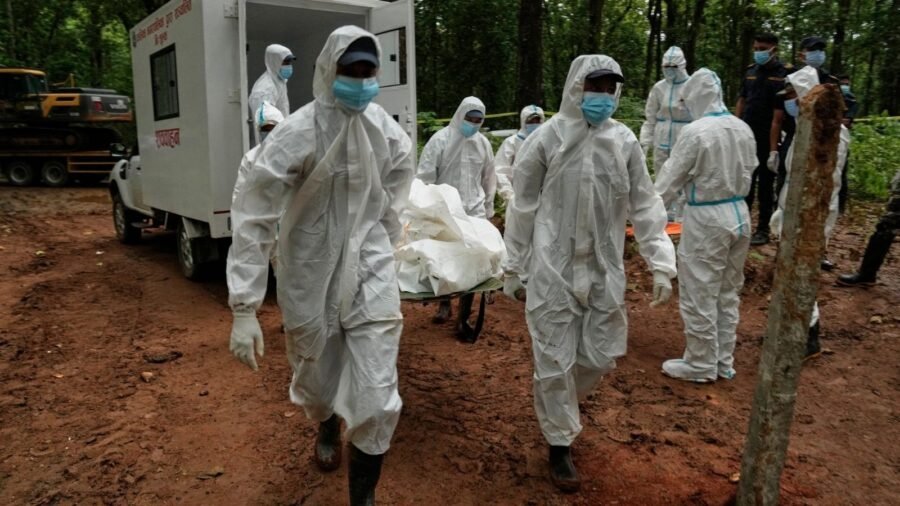
This disaster is personal. I am from Nepal, and my family lives close to the river in one of the affected areas. They are safe, but some of my relatives have lost their lives, and others remain missing. Behind every casualty figure is a family waiting for a phone call, parents looking for their children and communities that will never be quite the same again.
Amid this tragedy, there has also been extraordinary courage. Security personnel, rescue workers, local communities and volunteers have risked their lives to save others. Hundreds have been rescued from hydropower tunnels under exceptionally difficult conditions.
We owe them our deepest gratitude. But courage after a disaster cannot substitute for preparedness before one. That is the difficult conversation Nepal must now have. Rebuilding the same is not enough.
Advertisement
The rescue operation must continue with everything we have. But recovery must follow urgently. Roads need to reopen, electricity and communications need to be restored, and temporary crossings have to be provided where bridges have disappeared.
When permanent infrastructure is rebuilt, we cannot simply replace what existed before. Bridges, highways, hydropower facilities, hospitals and communities must be designed for the hazards they may confront during their lifetime.
Nepal faces earthquakes, floods, landslides, glacial lake outburst floods, glacier and rock-ice avalanches and fires. The challenge is that these hazards can interact, compound and trigger one another.
Climate change is changing glaciers, permafrost, slopes and glacial lakes across the Himalayas, creating what some scientists have described as potential “ticking time bombs”. An earthquake, extreme rainfall or avalanche can then provide the trigger. A landslide can block a river and create a temporary lake whose breach produces a flood. That flood can simultaneously destroy bridges, power, communications and road access, the very systems required for rescue.
That is the multi-hazard reality Nepal must prepare for: Not a catalogue of independent disasters, but a network in which one event can amplify or unleash another.
If these were once-in-a-million-year events, waiting for international expertise and equipment to arrive might seem understandable. They are not. Nepal repeatedly loses lives, infrastructure and years of development to disasters. Preparedness must, therefore, become bread-and-butter national infrastructure, not something assembled after an emergency. For those of us who have lost people this time, there is no rebuilding what has been taken from us. But we can make sure that, when the next disaster comes, Nepal already has the capability it needs.
Nepal already has agencies dealing with disaster management, weather, earthquakes, infrastructure and emergency response. But repeated disasters show that having institutions in separate areas is not enough. What Nepal needs is a national multidisciplinary institution for multi-hazard resilience, bringing scientific, engineering, technological and operational capability together towards one mission: Reducing the loss of life and infrastructure from the next disaster.
I see this as five essential capabilities. Like five fingers, each has a different function, but their strength comes from working together.
First, we need the minds to understand and reduce risk.
Nepal’s geologists, seismologists, hydrologists, climate scientists, engineers, remote-sensing specialists, data scientists and emergency-response experts need to work together — these include Nepalese experts overseas and the next generation of researchers. Their job should go beyond studying hazards. Knowledge must become continuously evolving multi-hazard maps, engineering requirements, land-use decisions and practical measures that reduce vulnerability before hazards become disasters.
Second, we need the eyes and ears to see what is developing.
Satellites should work alongside seismic instruments, river gauges, weather stations, cameras and ground sensors monitoring glaciers, glacial lakes, unstable slopes and critical infrastructure. But collecting data is not enough. It must arrive reliably and be analysed rapidly so that, when something abnormal is detected, we can ask within minutes: What is happening? What might happen next? Where could it go? Who and what are exposed?
Third, we need the hands: To act.
A warning saves nobody if it does not reach people, is not understood or cannot be acted upon. Communities must understand their risks, know how to respond and be prepared to act before outside help arrives. Nepal also needs specialist teams with the engineering capability, training and equipment to respond immediately. If people are trapped underground, are tunnel-rescue specialists and equipment ready? If a bridge disappears, are temporary crossing systems available? If electricity and communications fail, can independent emergency systems activate? We should not be discovering what expertise and equipment we need while people are waiting to be rescued.
Fourth, we need the connections, because Nepal cannot do this alone.
India, China and other countries, international universities, research institutions and hazard-monitoring agencies should become permanent partners. The Himalaya itself tells us why: Earthquakes, rivers, weather systems, glaciers and landslides do not recognise political borders. Nepal should share observations, undertake joint research, and participate in joint training and rescue exercises. But international cooperation should strengthen Nepal’s own capability, not become a substitute for it.
Fifth, we need the backbone: Sustained government commitment.
None of the other four fingers can function without long-term funding, scientific independence, advanced facilities and the authority to turn knowledge into action. The institution’s findings must influence where we build, how we build, what infrastructure we strengthen, what equipment we stock and where development should simply not occur. After every major disaster, we must ask what worked, what failed and what was missing, and ensure those lessons change what we do before the next one.
Nepal already has many of these capabilities. The challenge is to bring them together. Five fingers can work alone, but together they form a strong fist.
The writer is a sessional lecturer at the University of Melbourne


Don’t buy a lab-grown diamond before checking these 7 things
By Sohail Khan · 29 Sep
Towards a gender just Uniform Civil Code
By Sohail Khan · 29 Sep