Assam-made Chinese pu’er tea cakes auctioned at ₹12,000 a kg
GUWAHATI
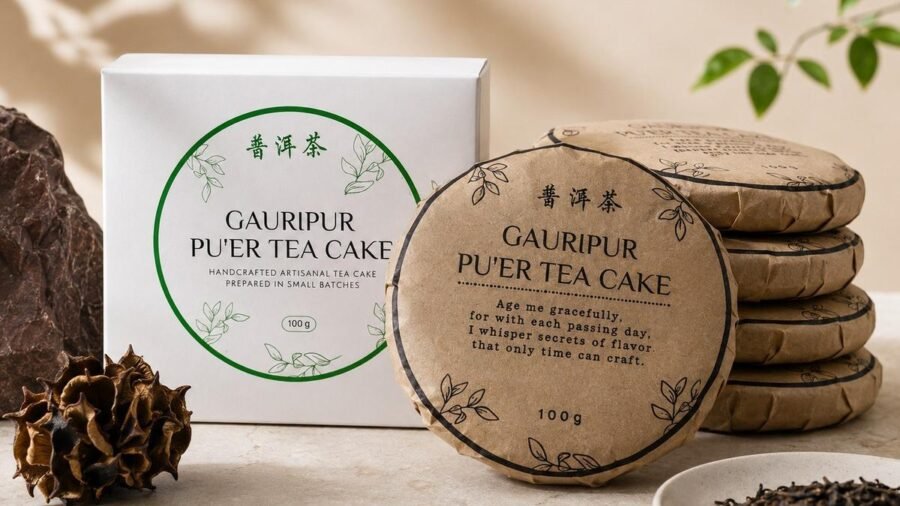
Assam-made pu’er tea cakes, traditionally produced in China’s Yunnan province, fetched ₹12,000 per kg at the Guwahati Tea Auction Centre (GTAC), paving the way for varieties such as the ‘phalap’ prepared by the Singpho community to be auctioned.
A 5-kg batch of pu’er tea from Gauripur Tea Industry in eastern Assam’s Golaghat district was sold at the GTAC on Friday (September 25, 2026). Assam Tea Traders bought the lot through brokers J. Thomas & Co. Pvt Ltd.
GTAC was the second auction centre to sell pu’er tea after the same producer sold a lot at the Jorhat Tea Auction Centre in 2023 at ₹9,000 per kilo.
Aparaj Saikia of Gauripur Tea Industry said his firm began producing the Sheng-style pu’er tea, which takes a week from plucking leaves to processing and compressing into circular cakes.
“Sheng style is faster than the Shou style, which requires ageing for three to four years and controlled post-fermentation techniques. We adapted the Chinese style with the assamica variety of tea leaves found naturally in Assam,” he told .
“Our process is entirely handmade, and it began with small batches for personal consumption before the commercial launch three years ago,” Mr Saikia, a member of the North Eastern Tea Association (NETA), said.
Traditionally pressed into cakes or bricks, pu’er develops its distinctive character through fermentation and ageing. It has a deep, rich and smooth taste, with earthy and woody flavours, sometimes accompanied by subtle leathery or sweet notes.
“The pu’er auction is a milestone for Assam tea, which has been experimenting beyond the conventional black and green teas. It points to immense possibilities, creating higher-value products from tea resources in the State,” NETA advisor Bidyananda Barkakoty said.
“This opens the auction doors for phalap tea, the traditional tea of the Singpho community, particularly in the Margherita region of Tinsukia district. Phalap is traditionally packed in bamboo and aged to give it a distinctive earthy, woody and smoky character, somewhat similar to pu’er, or pu-erh,” he said.
A few days ago, the Assam government increased the subsidy on the production of orthodox and other speciality teas from ₹10 to ₹15 per kg, effective from financial year 2026-27.

Dental doctor dies after childbirth in Tiruvuru, kin stage protest
By Sohail Khan · 26 Sep
51-member Madhya Pradesh delegation to visit Karnataka under Yuva Sangam
By Sohail Khan · 26 Sep

Leave a Reply