A partnership forged in India’s industrial south
August 15 carries a rare resonance in Asia. This year, India marked 79 years of freedom from British rule, and South Korea 81 years of liberation from Japanese rule — different journeys, the same date. The real question: are the two nations ready to turn a promising relationship into a substantially more significant strategic partnership?
The answer may lie in India’s industrial corridors — in Chennai’s car plants, Sriperumbudur’s electronics lines, Bengaluru’s research labs, Sri City’s South Korea enclave, Hazira’s howitzer programme, and Thoothukudi’s emerging shipyard ambitions. This partnership’s future is being built in India’s industrial south, not just announced at summits.
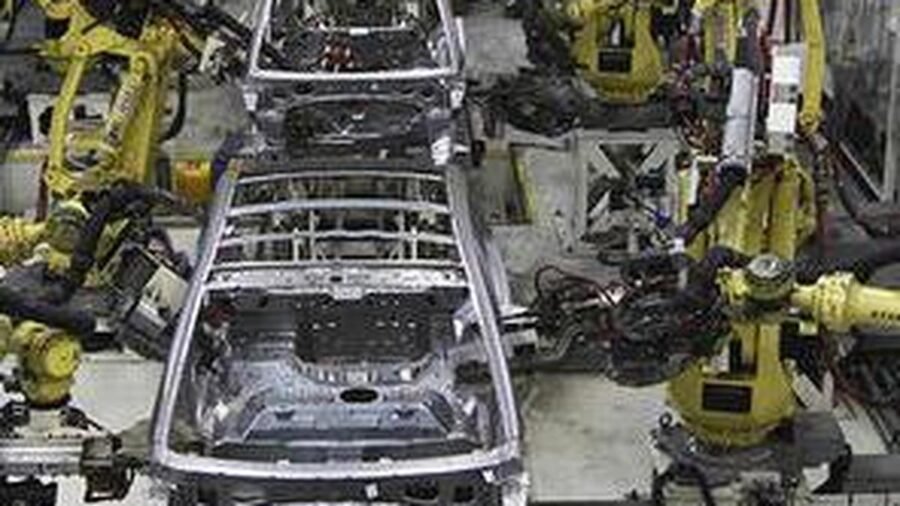
Hyundai’s journey in Tamil Nadu is the perfect example. Since 1996, Hyundai has manufactured in Tamil Nadu, and this year, the company reaffirmed Chennai’s centrality to its India story: a ₹45,000-crore commitment through 2032, with the State formally declared Hyundai’s flagship EV hub for the country. The plant that once assembled the Santro for a newly liberalising India now anchors Hyundai’s electric future, and Tamil Nadu now accounts for over a third of India’s automobile output. Samsung followed a similar path. Its Sriperumbudur facility, established in 2007, has grown alongside a wider network of suppliers and manufacturing partners.
Bengaluru tells a quieter but equally significant story. Samsung’s R&D institute there is the company’s largest outside South Korea itself, over a thousand engineers building the AI and software that go into Galaxy phones sold worldwide, alongside two decades of university research partnerships across the city. This is South Korean innovation jointly built in India.
A few hours away, Sri City in Andhra Pradesh is placing a more considered stake. LG, Samsung, Hyundai Mobis, and Seoul Semiconductor already operate there, and this year, the State pitched South Korean firms directly in Seoul and Busan; on a dedicated “Korea Enclave”, a ready-to-use industrial township built specifically for South Korean manufacturers chasing alternatives to China-based supply chains.
And then there is Thoothukudi, the latest and most ambitious piece. HD Hyundai, South Korea’s shipbuilding giant, has signed with the Tamil Nadu and Union governments an agreement for a proposed $4-billion shipyard on the coast. It is explicitly tied to India’s goal of ranking among the world’s top shipbuilding nations by 2047.
President Lee Jae-myung’s state visit to India in April this year was the first visit by a South Korean President in eight years. The visit produced a pronouncement to accelerate negotiations to upgrade CEPA. The economic motivation is considerable in bilateral trade for both countries. Yet the headline number hides an important imbalance. The Indian trade deficit is considerable but likely to shrink with continued negotiations and better understanding between the two governments and their trade.
The journey is no longer only a trade story. In October 2025, Indian and South Korean Navies exercised together for the first time. In May 2026, the two Defence Ministries signed their first cybersecurity pact. That same month, an Indian howitzer built jointly with a South Korean firm in Gujarat showed what defence co-production between the two countries can look like. Fewer still know that an Indian diplomat chaired the UN commission that oversaw Korea’s first elections in 1948, three years before the Korean War began.
That last point matters more than it might seem. What is missing from the India-South Korea relationship is not substance; it is visibility. The two countries, which share an Independence Day calendar and now a fast-growing industrial partnership, have simply not told that story loudly enough to their own populace and the world — Indians and South Koreans can create dreams together based on mutual strengths and shared vision.
There is a temptation to treat the coincidence of August 15 as a sentimental footnote. But India and South Korea are no longer just trading partners. From Chennai’s assembly lines to Thoothukudi’s drawing boards, they are becoming co-builders of each other’s future. What this partnership needs now is not another summit announcement, but the recognition that something substantial has already been built, and is worth building further. Both nations understand the value of sovereignty, resilience, and the ability to determine their own future. That is where their potentially powerful convergence exists and they could build the next generation of technology, industry, and strategic capability together.
The writer holds a Ph.D. from Manipur University and brings over two decades of professional experience spanning national security, diplomacy, and strategic affairs. He is an honorary co-guide to Ph.D. scholars at the SRM Institute of Science and Technology, Chennai. His academic interests include Southeast Asian geopolitics, India-Myanmar relations, India’s strategic culture, Indo-Pacific security, and India’s expanding role in regional and global affairs. The views expressed are personal.


Don’t buy a lab-grown diamond before checking these 7 things
By Sohail Khan · 29 Sep
Towards a gender just Uniform Civil Code
By Sohail Khan · 29 Sep