6 looks, over 1800 hours: Kareena Kapoor channels vintage cinema in Ritu Kumar’s latest collection
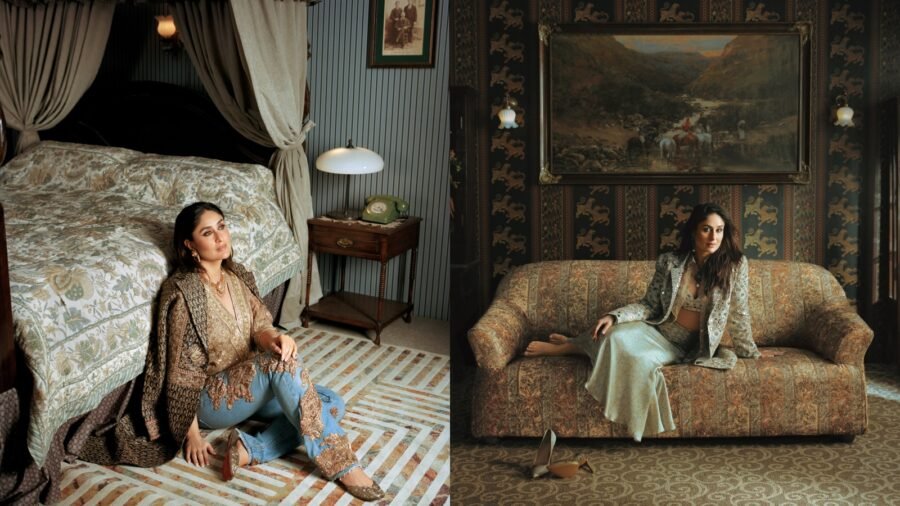
Kareena Kapoor Khan stunned in Ritu Kumar’s new couture collection, drawing from vintage cinema, archival textiles, and India’s rich craft traditions. Inspired by the black-and-white era of Indian cinema, the collection reinterprets silhouettes through a contemporary lens.
According to the label, the collection brings together Jamawar weaves, Chintz florals, Farrukhabad block prints and embroidery traditions from different regions of India. Through the six-look collection, the house combines traditional techniques with contemporary silhouettes, which took 1800 hours in total.
Styled by Rhea Kapoor, the Jab We Met actor stunned in these ensembles: from the Mehroz cape and Phulkari bodysuit to the Jamawar gown. Take a look.
Story continues below.
Subscribe to see fewer ads.
Mehroz cape and Phulkari bodysuit
The first look — the Mehroz Cape and Phulkari Bodysuit — features a silk organza cape inspired by the Gulmohar tree and Jamawar motifs. Persian floral jaals, Mughal paisleys and appliqué work are paired with a Phulkari bodysuit featuring zardozi, aari-tikki and resham embroidery, along with crystals and metallic sequins.
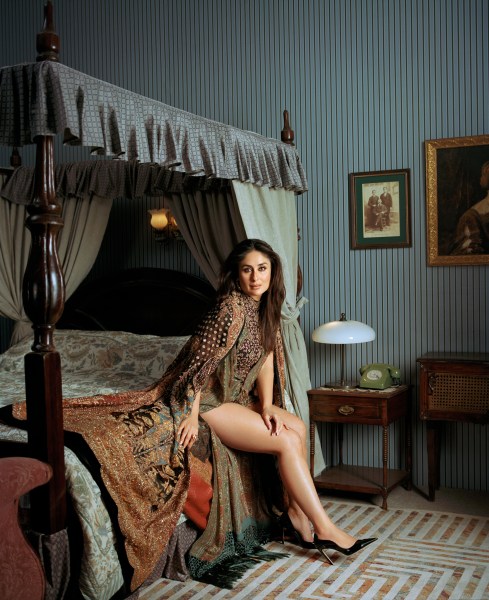 Kareena Kapoor Khan in Ritu Kumar’s Mehroz cape and phulkari bodysuit
Rajwadi blouse, Chogha jacket, and denim
The second look combines a gold-embroidered Rajwadi blouse with a Chogha-inspired printed jacket and handcrafted denim. Inspired by royal textiles of Rajasthan and the Chogha silhouettes of the Awadh courts, the jacket features nakshi, kasab and tikki embroidery, while the denim incorporates zardozi patchwork.
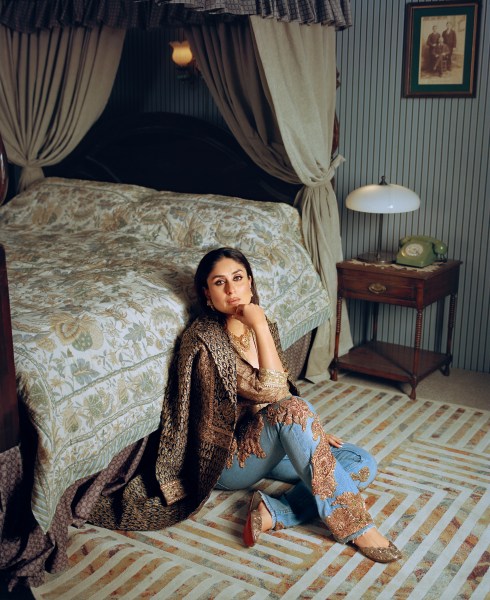 Kareena Kapoor Khan in Chogha-inspired printed jacket and handcrafted denim for Ritu Kumar
Pitch-patch saree with shirt and embroidered corset belt
A printed silk organza saree forms the third look. Inspired by Farrukhabad block prints, Jamawar textiles and Persian floral motifs, it is paired with a shirt and an embroidered corset belt inspired by meenakari. The ensemble involved more than 550 hours of handcrafted aari and zardozi embroidery.
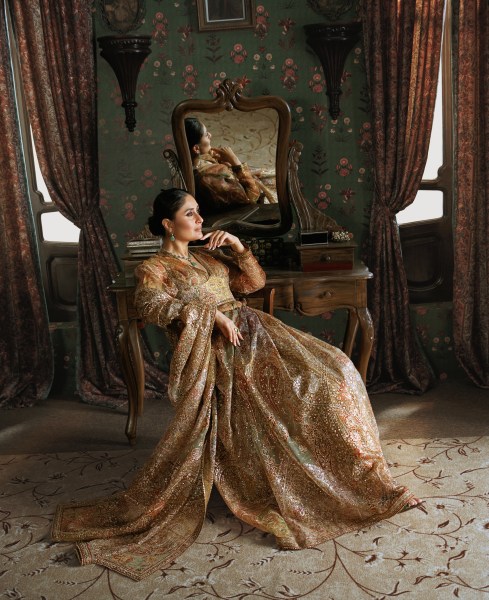 550 hours of handcrafted aari and zardozi embroidery
Jaisalmer jacket and skirt
The Jaisalmer Jacket and Skirt, the fourth look, draws from Rajasthan’s architectural heritage. Traditional block prints are reworked into contemporary silhouettes, with aari, tikki and zardozi embroidery adding detail. The ensemble involved more than 600 hours of artisanal work.
Story continues below this ad
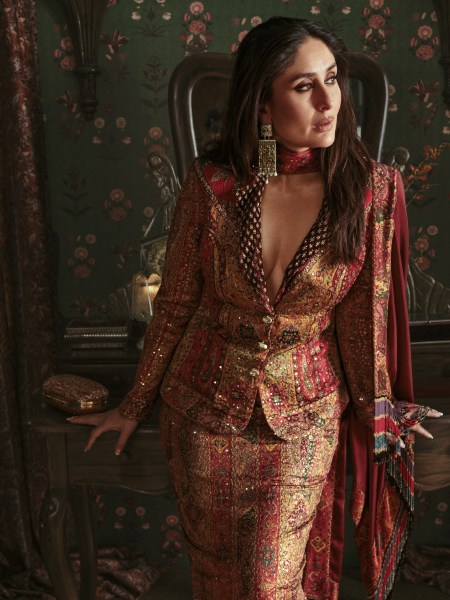 The ensemble features aari, tikki and zardozi embroidery
Mirror jacket, printed shirt, bustier, and skirt
The fifth look takes inspiration from the mirror-work traditions of Kutch, Gujarat. A mirror-embellished jacket is layered over a sheer printed shirt, bustier and skirt, with mukaish embroidery and hand detailing requiring more than 700 hours of craftsmanship.
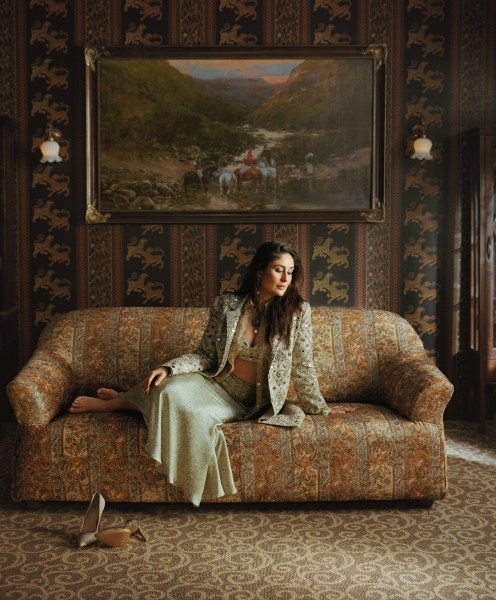 Kareena Kapoor in Ritu Kumar’s new collection
Jamawar gown
The last look is a Jamawar Gown, a contemporary interpretation of the Jamawar saree. Digitally printed paisley motifs are combined with embroidery on silk satin and presented in a fluid silhouette.
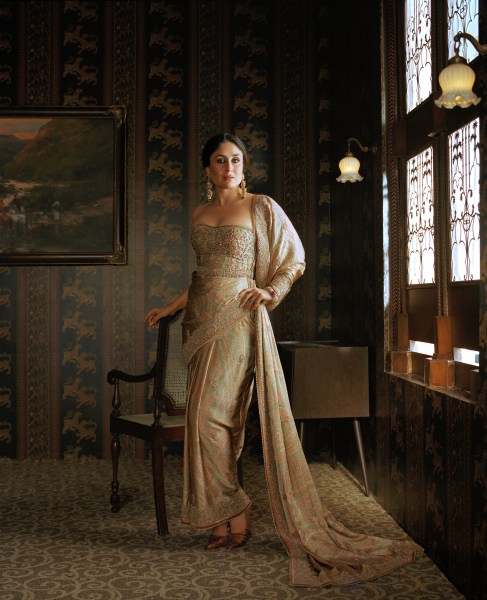 The look features digitally printed paisley motifs
In an interaction with Diet Sabya, Ritu Kumar opened up about her association with Kareena. “Kareena has been with us on and off as a customer. And the last time I did any work for her was when she was getting married. I redid a very old deal for her,” the Padma Shri awardee said.
Talking about the Indian fashion industry and handlooms, Ritu said, “When I started, there was no such thing as an Indian fashion industry. There were no NIFTs, there were no ramp, and there was no way of communicating. This is the only country in the world where crafts are being appreciated and being worked on while rest of the world, they all have gone into museums.”
Story continues below this ad
“But it took me many years to understand how to take it forward to the next generation, who do not necessarily wear saris every day. They want clothes, that clothes have to fit. You just can’t take it and make it into a kind of handbag square. These are handlooms. It doesn’t work like that. I would like them to retain that appreciation and take it forward. Whatever way is more comfortable for their lifestyle, because that will change,” she added.

Don’t tilt your head back: The surprising trick to swallowing capsules easier
By Sohail Khan · 12 Sep
No fire & brimstone: Delhi pushes back against making BRICS a geopolitical bloc
By Sohail Khan · 12 Sep

Leave a Reply