Amid West Asia war, BRICS’s call on energy flows, infra protection reflects its dilemma

The New Delhi Declaration adopted at the 18th BRICS Summit on Saturday underscored energy security and the protection of critical energy infrastructure as a key focus area for the grouping. The declaration called for stable energy markets, uninterrupted supplies, and protecting important energy infrastructure.
This comes amid the ongoing West Asia conflict, where major oil and gas producers including Iran, Saudi Arabia and the United Arab Emirates — all BRICS members — have been impacted by attacks on energy production and supply infrastructure. Attacks on Iran’s infrastructure came from US and Israeli forces, while Saudi Arabia, UAE, and other Gulf countries seen as US allies were hit by Iran and Tehran-backed non-state actors in the region. For instance, the US struck Iranian oil tankers earlier this week, while Tehran-backed Houthi militia attacked and damaged oil and gas infrastructure in Saudi Arabia.
Moreover, energy infrastructure in Russia — a BRICS founding member — has also been damaged amid its war with Ukraine. Top global oil and gas importers China and India are founding members of the grouping. The call for protection of energy infrastructure and unimpeded flow of energy globally are appeals India has repeatedly made over the past several months.
Story continues below.
Subscribe to see fewer ads.
The West Asia conflict has severely constrained global energy flows as vessel movements through critical maritime chokepoint of the Strait of Hormuz have reduced to a trickle. Prior to the war, which is now in its seventh month, the narrow waterway between Iran and Oman accounted for a fifth of global crude oil and liquefied natural gas (LNG) flows. The disruption has led to supply tightness and elevated energy prices globally, particularly impacting countries like India, which have heavy reliance on energy imports.
In a sense, the emphasis on free flow of energy and protecting critical energy infrastructure is significant because a large part of the energy crisis is unfolding within BRICS itself. The New Delhi Declaration, therefore, represents a dilemma as well as a test for the multilateral grouping.
‘Energy infra security, market stability, undisrupted flow’
“We recognize that energy security is a crucial foundation for social and economic development, national security and the welfare of all nations. We highlight the need to enhance energy security by ensuring energy market stability and maintaining undisrupted flows of energy from diverse sources, strengthening value chains, ensuring resilience and protection of critical energy infrastructure, including cross-border infrastructure,” the New Delhi Declaration said.
While the declaration does not mention any individual attack on oil infrastructure or name any country, its message on energy security reflects the risks that the global energy market is grappling with — disruption of supply routes, attacks on energy installations, and threats to shipping. BRICS member countries also expressed “deep concern” over the escalation in the West Asia conflict, calling for “maximum restraint, as well as avoiding actions that could further aggravate the situation”. It also urged for international cooperation for smooth flow of energy, international trade, and supply chains.
Story continues below this ad
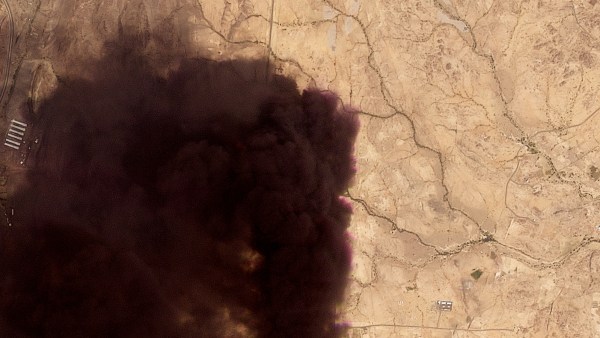 A plume of black smoke rises from a Saudi Aramco oil refinery on Tuesday, Sept. 8.
“Furthermore, we urge to ensure the protection of civilians and civilian infrastructure in accordance with the purposes and principles of the Charter of the United Nations in their entirety and interconnectedness, including respect for the sovereignty and territorial integrity of the States. We encourage increasing efforts, through dialogue and diplomacy, towards a long-term understanding that will contribute to lasting peace, security and stability in the region. We stress the need to work together to maintain smooth flow of global trade, supply chains and energy, in accordance with applicable international law,” the declaration said.
The BRICS New Delhi declaration comes at a time when fresh escalation in the West Asia conflict has pushed oil prices over $100 a barrel to the highest levels seen in nearly three-and-a-half months. The $100 threshold was breached on Wednesday, and Brent futures continued to trade above that level till Friday, closing at about $105 per barrel, the highest since May.
Dilemma and a test for BRICS
Saudi Arabia has temporarily shut its East-West oil pipeline after multiple attacks on the crucial network on Thursday. The pipeline is one of the most important Hormuz-bypass routes for exporting Saudi Arabian crude. Apart from attacks on the pipeline system itself, Iran-backed Houthi forces have tightened their grip around the Bab el-Mandeb and Red Sea shipping route, which could further reduce oil flows, particularly from the world’s largest exporter Saudi Arabia.
 The East-West pipeline. (U.S. Energy Information Administration)
Riyadh has relied upon this route for its oil exports amid the effective halt in shipping via the Strait of Hormuz, a critical chokepoint and the main outlet from the Persian Gulf. Saudi Arabia, Iraq, Kuwait, Qatar and the UAE have traditionally depended heavily on it to reach global markets, particularly top energy importers China and India. Now, in addition to the continued disruption in vessel movements through the Strait of Hormuz, the expanding West Asia conflict is putting the other chokepoint in the region — Bab el-Mandeb — under pressure.
Story continues below this ad
Against this backdrop, the West Asia crisis has created an internal dilemma for BRICS, as some of the grouping’s members find themselves on different sides of the conflict, according to analysts. Iran is an oil producer and a principal party to the conflict, while Saudi Arabia and the UAE are major oil exporters and US allies who have been targeted by Tehran. China and India are large energy importers with their own strategic interests and preferences in West Asia, while other BRICS countries are also growing energy consumers and industrial economies.
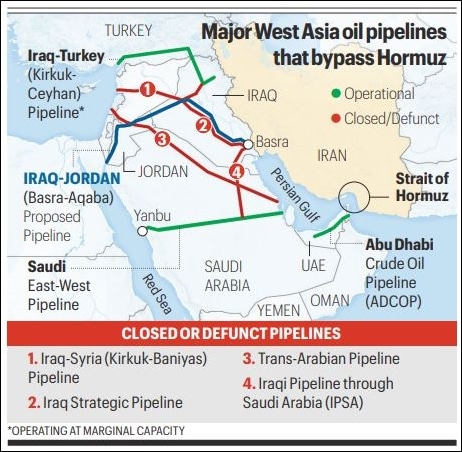 In a bid to bypass the Hormuz chokepoint, Gulf countries have been scrambling to ramp up infra.
It is no surprise then that the declaration avoids assigning blame for specific attacks on energy infrastructure and even the shipping disruption in the Strait of Hormuz . Instead, it focuses on principles that can be universally agreed upon — restraint, protection of civilian infrastructure, respect for sovereignty, uninterrupted trade and energy flows, and resilience of supply chains.
It remains to be seen if the New Delhi declaration can go beyond semantics and have any meaningful impact on the safeguarding energy infrastructure and normalising energy flows given the opposing sides that its West Asian members have in the regional conflict. The declaration does create a basis for cooperation, but the West Asia crisis is testing whether BRICS can manage geopolitical and economic shocks when its own members have differing positions and stakes.


Dark wood is back: How to use the trend without making your home feel heavy
By Sohail Khan · 12 Sep
‘I get drunk messages between 2 and 4 am’: Bhuvan Bam on how his comedy helps people cope
By Sohail Khan · 12 Sep
Leave a Reply