Why India is keenly tracking Meta’s $17.1 bn settlement over social media addiction
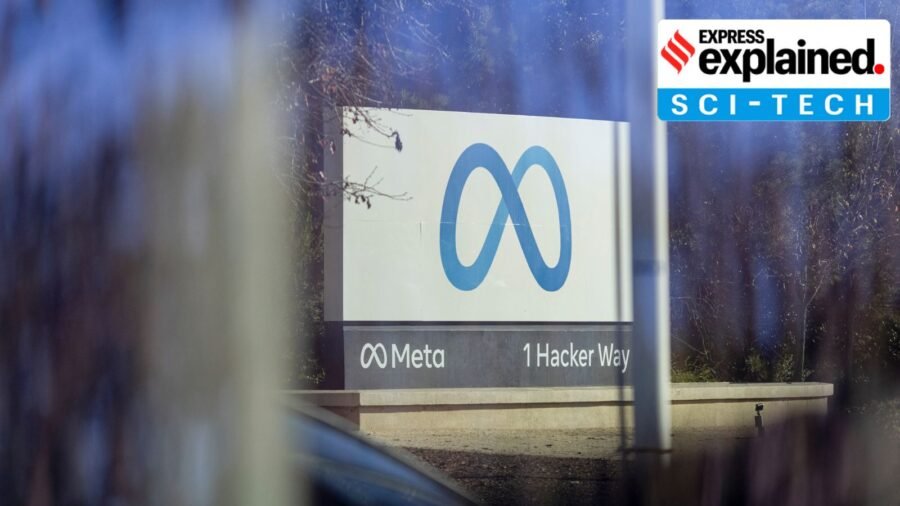
Indian regulators are closely studying Meta’s recent settlement with US states over allegations that Instagram and Facebook were designed in ways that made them addictive for children, as concerns around young users’ exposure to social media increasingly enter policy discussions in India.
The settlement is being examined at a time when the Centre is weighing a range of possible interventions around children’s access to social media, including age-based restrictions, limits on the hours they can use such platforms and stronger parental consent requirements. These discussions are still at an early stage, however.
But the US case could offer Indian policymakers a blueprint that instead of relying only on platforms’ voluntary safety features, regulators have secured enforceable restrictions on how one of the world’s largest social media companies can design and operate its services for minors.
Story continues below this ad
The settlement could consequently feed into the wider debate in India over how much responsibility should rest with platforms themselves – rather than parents or children (which has effectively been tech companies’ pitch so far) – for limiting potentially harmful or compulsive use.
The broad interest is not only in the payout, which is up to $17.1 billion, but also in the product-level changes: daily usage caps, overnight restrictions, stronger age assurance and parental controls. Several of these ideas are also being discussed in India.
What Meta agreed to
The case was brought by a bipartisan coalition of US state attorneys general, who accused Meta of designing Facebook and Instagram to encourage compulsive use by children and teens, concealing the risks, and collecting personal data from children under 13 without the parental consent required under US law.
Under the agreement, users below 18 will face a default combined two-hour daily limit across Instagram and Facebook, which can be lifted only with parental permission. Access will be blocked by default between midnight and 6 am, notifications muted during school hours, like counts and cosmetic-procedure filters restricted for minors, and age-assurance systems strengthened. An independent auditor will oversee compliance.
However, Meta has not admitted wrongdoing.
A key witness
Story continues below this ad
One of the most consequential witnesses was Arturo Béjar, a former Facebook engineering director and later Instagram consultant who worked on safety and well-being.
Béjar told the court that Meta’s top-down culture made meaningful safety changes difficult unless senior leadership, including Mark Zuckerberg, backed them. He alleged that safety was often an “afterthought”, and said tools such as “Take a Break” and “Quiet Mode” were ineffective because users could ignore them.
The settlement came after Instagram head Adam Mosseri had begun testifying and before Zuckerberg, who was expected to be called as a witness, took the stand. It therefore cut short what could have become a direct public examination of Meta’s senior leadership over child safety.
A pre-Big Tech era law gives legal ammo
A key part of the states’ case rested on the Children’s Online Privacy Protection Act (COPPA), a US federal law enacted in 1998, years before Facebook, YouTube, Twitter, Instagram, Snapchat or TikTok existed.
Story continues below this ad
That relatively old privacy law became an important legal lever against Meta. The states alleged that Meta knew children below 13 were using Facebook and Instagram but continued collecting their personal information without meeting COPPA’s parental notice and consent requirements.
COPPA gave regulators a more concrete statutory route than the broader allegation that social media products are addictive. Establishing that a recommendation system or a particular design feature caused depression, anxiety or compulsive behaviour can involve complex and contested questions of causation.
But, through COPPA, the question could be narrowed down to aspects like whether a company collected children’s personal information without fulfilling obligations specifically imposed by law.
The Indian view
India has discussed a graded model rather than a blanket ban for social media use by those below the age of 18. The Centre is considering separate restrictions for children aged 8-12, 12-16 and 16-18, as it explores the need for a new law to better protect children on the Internet. Discussions have included fixed daily usage windows, restrictions on log-ins in the evening or at night, and parental-consent requirements.
Story continues below this ad
The thinking is that younger children should face tighter restrictions without treating a 17-year-old and an eight-year-old identically. The government has also indicated that the legislation would follow wider consultations.
The US settlement gives Indian policymakers a working example of time limits, night-time controls, age assurance and parental overrides being imposed through an enforceable legal instrument rather than left to platform discretion.
Why the settlement could affect the wider industry
Meta has designed the settlement to put pressure on its main competitors in the US. Part of the payout is contingent on other large platforms agreeing to comparable safeguards, while Meta has publicly called on TikTok and YouTube to adopt the same framework.
That is relevant to India, where platform-wide consistency is already part of the policy debate. Meta has argued here that restrictions should apply across the many apps teenagers use, warning that curbs on a few services could push children to less regulated platforms.

Light on truth: on the Tamil Nadu G.O. and RTI
By Sohail Khan · 29 Sep
Tackling food loss and waste — India’s opportunity
By Sohail Khan · 28 Sep
Revisiting the farmer question
By Sohail Khan · 28 Sep