The Gen Z that wasn’t at Jantar Mantar
There was something unusually photogenic about Gen Z at Jantar Mantar. Young, articulate, angry and, crucially, quotable. They understood that a placard must travel beyond the barricade, that irony survives Instagram better than ideology, that a 15-second clip can outlive a 15-page manifesto. The internet fell in love. Here, finally, was a generation refusing the ancient Indian instruction to the young: wait your turn.
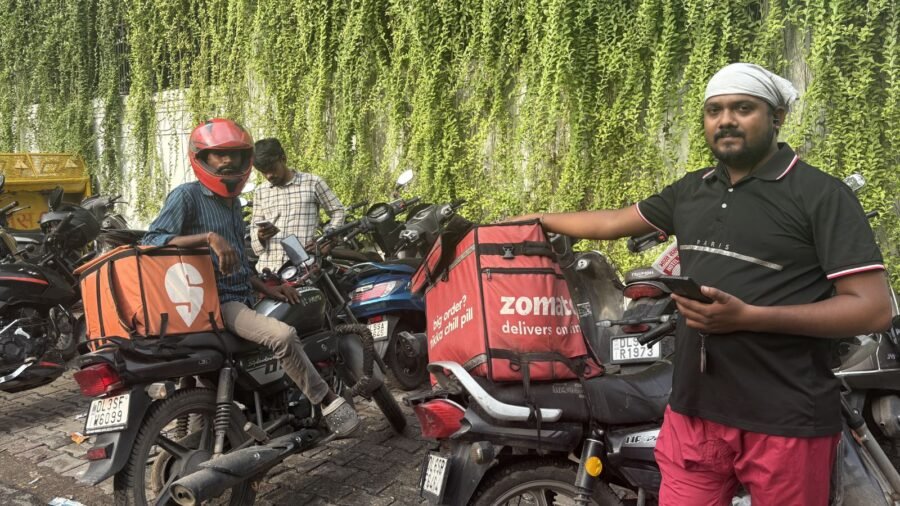
But there was another Gen Z missing from the photographs. He was probably delivering dinner to someone watching the protest on their phone. He is 22, owns a motorcycle financed by debt he doesn’t fully understand, and is called a “partner” by an app that can deactivate him without ever meeting him. His boss is a rating. His office has no ceiling and his hours have no edges. When it rains, his incentives rise, because the city has learnt to price his risk more precisely than his labour.
Advertisement
There is a rather elegant cruelty in calling this freedom.
Outside the building stands a 24-year-old security guard, working 12 hours to protect a lifestyle he can see but not enter. Somewhere in a village is a 21-year-old with a smartphone, a degree that may not be worth what his family paid for it, and aspirations his father never had. He can watch a Stanford lecture for free and has no idea what job he will do next year. We have solved access to Stanford lectures more efficiently than access to jobs. His imagination has migrated. His life chances have not gone with it.
“Gen Z” assumes that a liberal-arts student in Delhi, a warehouse packer outside Gurugram and a UPSC aspirant in Bihar share something meaningful because they were born within the same 15 years. They do.
They share visibility without access.
Advertisement
India has never lacked inequality. What has changed is the technology through which inequality is experienced. For most of history, comparison was constrained by what you could see or plausibly imagine. The farmer knew the landlord lived better. He did not begin breakfast watching the landlord’s holiday in the Maldives.
The smartphone removed the constraint. It did not create inequality. It abolished the rationing of comparison.
Sociologist Robert Merton gave us the “reference group”: The people against whom we evaluate our lives. Digital culture has spectacularly enlarged it. A Bihari farmhand can now compare his life with a Dubai apartment, a Seoul influencer and a Silicon Valley engineer’s Sunday brunch, all algorithmically delivered with greater reliability than his crop forecast.
The Indian middle class once had the decency to envy the neighbour. Gen Z has been given the entire planet.
Arjun Appadurai wrote of the “capacity to aspire”: Not merely wanting a different future, but knowing the routes by which one might reach it. Richer families have always given their children a thicker map. Mentors. Networks. Capital. Second chances.
Now the capacity to imagine has been democratised at internet speed. The capacity to navigate towards those imagined futures has not. We have mass-produced aspiration without mass-producing its scaffolding.
The sneaker, the café, the startup vocabulary, the gym-built body, the holiday photograph are no longer simply possessions. They are signifiers in a national grammar of having arrived. Consumption has become biography. Which makes exclusion more intimate. You are not simply unable to buy something. You are continuously shown the version of yourself you have failed to become.
Our parents compared themselves with the neighbours. This generation compares itself with a curated planet and loses by design, because the feed presents the 95th percentile as normal life.
Desire travels at 5G speed. Social mobility still takes the passenger train.
For two decades, India has spoken of its “demographic dividend”, as though youth were an asset that pays out automatically. Perhaps the metaphor was wrong.
A young population is better understood as a loan, capital advanced against a future that has to be built to repay it. Education must lead somewhere. Work must accumulate into a career. Savings must eventually create security.
Loans, unlike dividends, can default.
The gig economy makes this contradiction particularly visible. The old industrial bargain was crude but legible: Sell your labour, and time would slowly convert into standing. Seniority. Pension. Perhaps a slightly better chair.
The platform economy removed the mechanism by which time accumulates into entitlement and replaced it with the language of entrepreneurship. You are a “partner” whose hours convert mainly into more hours, dressed up as autonomy. Capitalism has always been good at naming things. The gig economy may be its copywriting department at peak form.
But when the economic route to status narrows, another economy becomes important: the economy of dignity.
If a young person cannot acquire status through work, they may seek it elsewhere. Religion can provide it. Masculinity can provide it. Nationalism, caste, and an online tribe can provide it. So can the dream of becoming an influencer or political foot soldier.
Frustrated mobility makes symbolic status unusually valuable. A young man may not be able to change his salary, but he can change his avatar. He may have little control over the algorithm allocating his deliveries, but enormous certainty about who he is and where he belongs. A society that cannot offer its young enough ladders should not be surprised when identity begins to look like one.
None of this was visible in the crowd at Jantar Mantar. That is precisely the point.
The protesters possessed something rarer than anger: A vocabulary for it. Anger translated into a placard is anger that has already found an audience. Most anger never gets that far.
There is the rider waiting at the gate. The guard beside it. The graduate refreshing an examination-results page. The warehouse worker chasing a target set by a system he cannot see. The young woman in a small town whose smartphone has expanded her universe while her family still negotiates the circumference of her actual life.
Are they unhappy? Perhaps happiness is too frivolous a diagnostic. The more important question is whether they believe the future is negotiable.
Every generation can tolerate hardship when hardship looks like a corridor. The trouble begins when it starts looking like a room.
Which leaves us with the question Jantar Mantar may really have asked. Was this an unusual eruption of Gen Z anger, or merely the part of it that had acquired a language and a camera?
The young people there had completed an important journey: From disappointment to language, from language to anger, from anger to demand. Millions of their contemporaries may still be somewhere between the first two.
We have spent years celebrating young India because it is connected, ambitious and impatient. We may discover that the third adjective was the important one.
Perhaps the question after Jantar Mantar is not why this Gen Z was so angry. It is how much more Gen Z anger we haven’t heard yet.
Jantar Mantar gave the microphone to one Gen Z. The rest are still delivering the microphone to our door.
The writer is a senior advisory professional

Why GNIDA, NOIDA were denied ‘secured creditor’ status in Shubhkamna case
By Sohail Khan · 21 Sep
Inside Blairquhan Castle, where Jyotika and Suriya celebrated 20 years of marriage
By Sohail Khan · 21 Sep
Iran, Venezuela and Russia: US policy has shaped India’s energy choices for two decades
By Sohail Khan · 21 Sep