Tamil Nadu can lead India on revenue reform
Tamil Nadu’s decision to establish a high-level Revenue Augmentation Committee could prove more important than simply finding additional resources for the State Budget. It offers Tamil Nadu an opportunity to do something no Indian State has yet systematically attempted: modernise the way revenue itself is defined and managed.
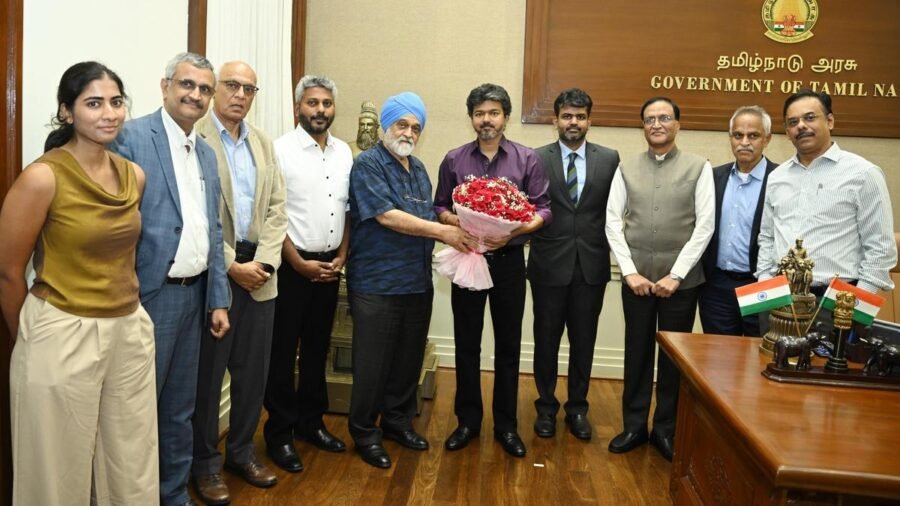
The committee, chaired by Montek Singh Ahluwalia, has been asked to recommend measures to strengthen own-tax and non-tax revenues, improve buoyancy, plug leakages, and increase fiscal self-reliance. Tamil Nadu has been one of India’s stronger performers in economic growth and social development. Sustaining these achievements — and the public services and investment that underpin them — will require a sustainable revenue base.
Tamil Nadu used to be one of India’s fiscally better-managed States. Its own-tax revenue reached 9.3% of Gross State Domestic Product (GSDP) in 2002-03, after exceeding 10% in the early 1990s. Yet non-tax revenue has remained a weakness: only 7% of total revenue came from non-tax sources.
The 15th Finance Commission’s work explained how the earlier advantage for own-tax revenue eroded. A study prepared for the Commission found own-tax revenue falling from close to 9% of GSDP in 2006-07 to 6.4% in 2016-17, with tax buoyancy below one in eight of the 14 years examined. More recently, Tamil Nadu’s own-tax revenue was budgeted at around 6.2% of GSDP in 2024-25, compared with 6.9% in Karnataka and 8.2% in Telangana.
The committee will therefore address a structural problem. But before asking how Tamil Nadu can raise more revenue, it should ask a more fundamental question: what counts as government revenue?
Defining revenue
This distinction has become blurred in Indian public finance. “Resource mobilisation” often encompasses taxes and user charges alongside borrowing, official loans, green and municipal bonds, blended finance, and asset monetisation. These may all provide resources, but they are economically very different.
The International Monetary Fund (IMF)’s Government Finance Statistics Manual (GFSM 2014) provides a clear framework. Government revenue consists of taxes, social contributions, grants and other revenue, including fees and charges, dividends, interest, royalties, and rents. Borrowing is different. A market loan or bond provides cash today while creating a financial liability. It is financing, but not revenue. Nor does selling an existing asset generally create revenue. It exchanges one asset for another. While recurring lease payments, royalties, concession fees, rents, and dividends may constitute as genuine non-tax revenue, proceeds from outright asset sales generally do not.
This matters because a government can appear to have mobilised substantial “resources” without improving its underlying capacity to finance public services. Borrowing and asset sales can finance investment or ease temporary financing constraints but they cannot permanently finance a structural gap between recurrent expenditure and revenue.
Tamil Nadu should therefore use this committee to become the first Indian State to explicitly adopt international standards for defining and presenting government revenue. This would complete an unfinished reform agenda. Fiscal deficit and financing measures need to be consistent with international practice, accompanied by fuller reporting of arrears, guarantees, off-budget borrowing, and public-enterprise finances. Otherwise, conventional cash accounts can give an incomplete picture of fiscal trends.
India’s public financial management weaknesses are concerned with not simply how much governments raise or spend, but how comprehensively fiscal transactions are defined, classified and reported. Indian States conventionally divide revenue into own-tax revenue, own non-tax revenue, shares in central taxes, and grants from the Centre. These accounts should increasingly be reconcilable with internationally accepted classifications.
Tamil Nadu need not abandon its existing system. It could publish a supplementary GFSM along with its Budget, separating revenue and transactions in assets and financing.
Sustainable revenue
Having defined revenue correctly, the committee should concentrate on raising it sustainably. The first priority should be better tax administration rather than simply higher rates. Linking GST information with registration, vehicle, property, and other administrative databases can reduce evasion and improve buoyancy without increasing the burden on compliant taxpayers.
Second, non-tax revenue deserves greater attention. User charges should be periodically reviewed against costs. Royalties, licence and concession fees, and rents and returns from public assets should similarly be reviewed. State-owned enterprises should generate predictable returns through better governance and transparent dividend policies — not exceptional dividends to fill annual budget gaps.
The inherited lesson is clear: borrowing to finance recurrent expenditure raises debt, interest burdens, and reduces fiscal space for development. Revenue reform cannot therefore be separated from expenditure efficiency, liabilities and fiscal risks.
Thus, Tamil Nadu, by becoming the first Indian State to adopt international standards for defining and presenting government revenue, could establish a benchmark for other States and the Union government.
Anoop Singh is Distinguished Fellow, Centre for Social and Economic Progress (CSEP), former member of the 15th Finance Commission, and former Asia Pacific Director, International Monetary Fund

Kochi Is changing the way it dates, talks about sex and relationships
By Sohail Khan · 26 Sep
Post-World War II norms cannot fix today’s problems
By Sohail Khan · 26 Sep
A bronze medal, quiet gains in table tennis
By Sohail Khan · 26 Sep