Post-World War II norms cannot fix today’s problems
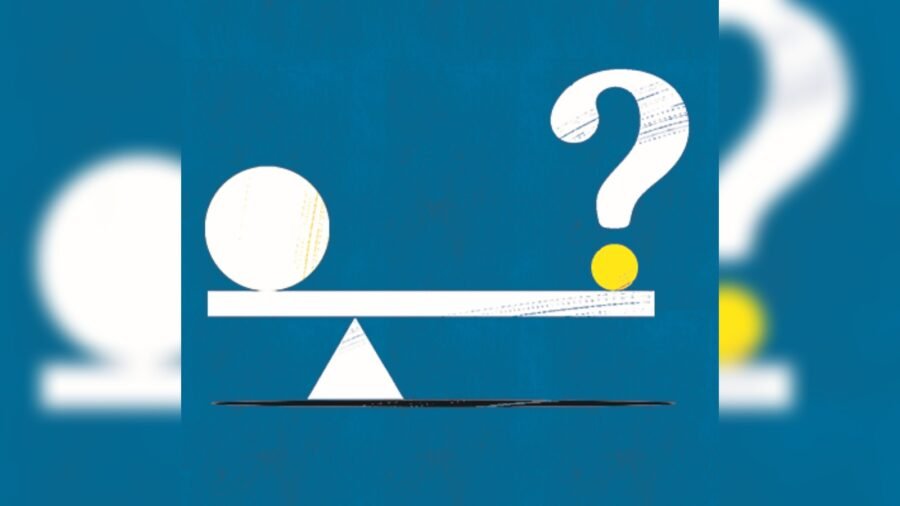
In an interview to the media while in Delhi to attend the BRICS summit earlier this month, António Guterres, the UN Secretary-General, made some startling admissions about the multilateral organisation he heads. “As the superpowers are divided, the Security Council is paralysed. There is no way to put order in the world,” he confessed, adding that the Council “does not correspond anymore to the world of today. It creates a problem of legitimacy, and it creates a problem of effectiveness,” he confessed. Guterres described the “need to readjust the power systems and mechanisms of governance in the world to the reality of today’s world instead of the reality of 1945” as a “hard battle” and insisted that what the UN needs is not a simple reform but “an overhaul”.
These were extraordinary confessions. Last year, at the 80th UN General Assembly session, Guterres was combative, describing the UN as “a moral compass, a force for peace… a guardian of international law”. His statements in Delhi a year later were not just the frustrated farewell sentiments of an official demitting office at the end of this year, but the dawning of the reality that the system created after World War II was no longer working. No better illustration of this reality is required than the fact that Chinese President Xi Jinping has travelled to the White House in Washington, DC, but wasn’t at the prestigious annual congregation of world leaders.
Advertisement
China pundits interpret it as Xi’s way of presenting his country as an equal to the US by spending exactly as much time in the US as President Donald Trump did in May this year during his visit to Beijing. But the fact is that Xi found spending time in DC more useful for his country than a visit to the UNGA’s 81st session. Many other prominent world leaders chose to stay away from the session this year. They included German Chancellor Friedrich Merz, Italy’s prime minister Georgia Meloni, South African President Cyril Ramaphosa, Egyptian President Abdel Fattah al-Sisi, Russian President Vladimir Putin, Indonesian president Prabowo Subianto and several others. Indian Prime Minister Narendra Modi, too, did not attend for the second successive year.
None of these leaders is against global multilateralism. But they all feel that the current structure is unsuitable for the present times. Modi said so two years ago, cautioning the 79th UNGA session in 2024 that the global institutions were losing relevance, adding that “reform is key to relevance”. S Jaishankar, India’s External Affairs Minister, was more forthright at the 80th session last year, pointedly asking if the UN had “lived up to expectations”.
Trump, who opened the session on September 22, also came down heavily on various UN bodies like the International Criminal Court and UNESCO. “There is no global government,” he insisted, and warned that the UN must “stop imposing the far-left agenda of globalist bureaucrats who nobody ever elected”. The US’s lack of faith in multilateralism became clear when Secretary of State Marco Rubio said on the sidelines of the UNGA that the current international system is unable to deliver. The US, “at least as long as President Trump is in office”, will always act in its own interest, “not in the interest of the international order”, he declared, categorically stating that “We will never put the international order above the interests of the US.”
Advertisement
Reform at the UN is long overdue. But the problem is that, as pointed out by Jaishankar last year, the process for reform itself is an obstacle. John Bolton, former NSA of the US, was more candid in saying that any move to amend the UN Charter itself would face a veto roadblock. That brings us back to the outgoing Secretary-General’s comment: Not reform, but overhaul.
In the middle of World War II, when the League of Nations had completely become dysfunctional, two Western leaders, Franklin D Roosevelt of the US and Winston Churchill of Great Britain, came together to proclaim the Atlantic Charter in 1941. That served as the foundational document for the creation of a new multilateralism under the UN four years later. At a time when that West-dominated system is faltering, we need the statesmen from the Global South to come forward to build a new system — an Indo-Pacific Charter — the basis for which should be the recognition of multipolarity.
The writer is national vice-president, BJP and president, India Foundation

Kochi Is changing the way it dates, talks about sex and relationships
By Sohail Khan · 26 Sep
A bronze medal, quiet gains in table tennis
By Sohail Khan · 26 Sep
Rupture in Election Commission: How dissent has played out in the poll panel in the past
By Sohail Khan · 26 Sep
Leave a Reply