Systemic institutional dysfunction delaying roll-out of key defence equipment
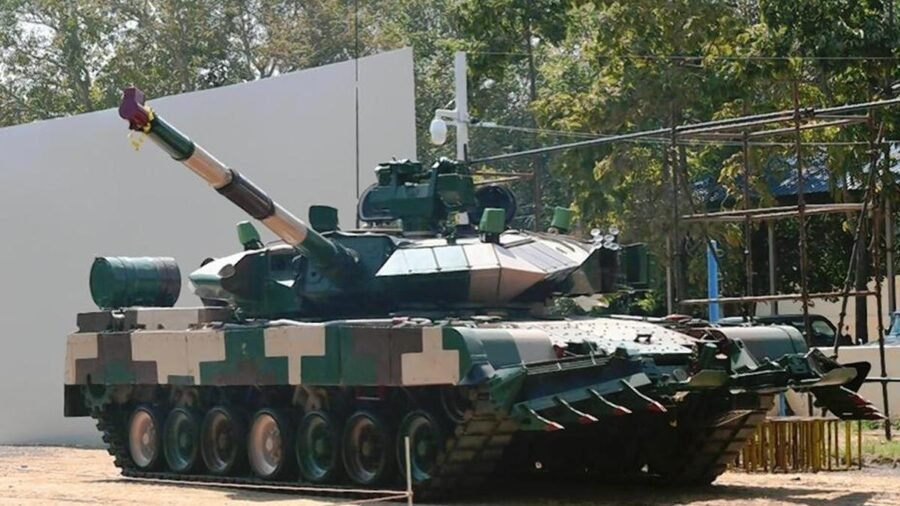
The defence sector in India is growing. The nation has produced ₹1.54 trillion worth of defence equipment, seen a 25-fold increase in exports, and won 92% of domestic defence contracts, reports the Rubix Industry Insights: Defence May 2026 edition. However, a combat-proven indigenous tank has been delayed for five years, not for a lack of capability but because of institutional shortcomings that have made government reforms difficult to implement.
The Arjun Mk 1A is not an ordinary procurement. Since 2004, the Indian Army has deployed 124 Arjun Mk 1 tanks, which have consistently outperformed imported options, according to media reports. An unsettling finding from a 2014 Comptroller and Auditor-General report was that though the Arjun’s benchmarks were deliberately set higher than those of the Russian T-90, the domestic tank performed better on crucial factors such as firepower, mobility, and survivability.
According to the CAG Report, 2014, the Arjun won despite this disadvantage. “DRDO delivered the upgraded tanks 21 days ahead of schedule,” Ravi Kumar Gupta, former Director of Public Interface at the DRDO, said in an interview. The DRDO was given two years to develop 15 significant upgrades and 72 modifications after the Defence Acquisition Council approved two regiments of the Mk 1A in 2010. “The Army trials took three years, more than the whole development cycle of DRDO,” Mr. Gupta said. The delays show a system designed to obstruct, not to help.
This matters, operationally. Pakistan displayed aggressive military posturing along the border during Operation Sindoor. Less than five kilometres from Indian border towns in Rajasthan, Pakistan has strengthened bases. The SAMHO missile, intended for Arjun Mk 1 A, has a maximum range of 5 km, ideal for this threat geography. The capability is there. There is a need. What’s lacking is execution.
According to media reports, the Defence Ministry contracted the Heavy Vehicles Factory in September 2021 for 118 Arjun Mk 1A tanks, with delivery anticipated to start in 2024. By July 2026, no units had been delivered. Mr. Gupta blamed the delay on a series of bureaucratic blunders. The requirements for indigenous content were increased from 40% to 50% under the Defence Acquisition Procedure, 2020. “Delays increased the cost of imported components,” he said. “It was a good decision taken for Atmanirbhar Bharat, which backfired. Then, in October 2021, the ordnance factories were corporatised. The Heavy Vehicle Ordinance Factory is now AVNL (Armoured Vehicles Nigam Ltd.). The procurement indent was deemed invalid upon revalidation. “Now it requires a purchase order,” Mr. Gupta said. Without this order, the AVNL cannot purchase the Power Pack from MTU in Germany. The MTU closed production line after 11 years of delays.
Today, those 124 operational Arjun Mk 1 tanks lack an integrated capability that DRDO has successfully tested and proven: the SAMHO missile. The DRDO’s Cannon Launched Missile Development Programme produced the SAMHO, a gun-launched anti-tank guided missile with a range of 1.5 km to 5 km. Trials started in September 2020 at the Armoured Corps Centre and School in Ahmednagar, according to Defence Ministry records. Between 2022 and 2024, numerous successful demonstrations were conducted at both minimum and maximum ranges, according to DRDO officials. The capability is proven, tested, and operationally available.
But these 124 tanks come without one. The missiles are launched from the tank’s main 120mm gun, eliminating the need for a separate launcher and additional operational costs. It would be quicker and cheaper to upgrade the existing fleet than wait for new deliveries, according to Defence officials. The Arjun’s dual-capability gun, conventional and guided munitions from a single platform, is a cost-efficiency advantage that is not being exploited, defence sources said.
The Tejas aircraft program also suffered delays, with General Electric halting engine production. The pattern points to systemic institutional dysfunction because there is operational need, tested systems, and demonstrated capability. What is missing is institutional coordination. India celebrates defence export records even as its own combat-proven, tested, and indigenous platform, the Arjun, remains underutilised. The problem is not that India cannot produce a defence capability. The question is: Why does it not use the capability it already has?
Aaisha Sabir is an independent journalist reporting on border security, conflict and minority rights. She has reported from Manipur, Lakshadweep, Bangladesh, and Sri Lanka.

Light on truth: on the Tamil Nadu G.O. and RTI
By Sohail Khan · 29 Sep
Tackling food loss and waste — India’s opportunity
By Sohail Khan · 28 Sep
Revisiting the farmer question
By Sohail Khan · 28 Sep