Sports education must drive India’s athlete development
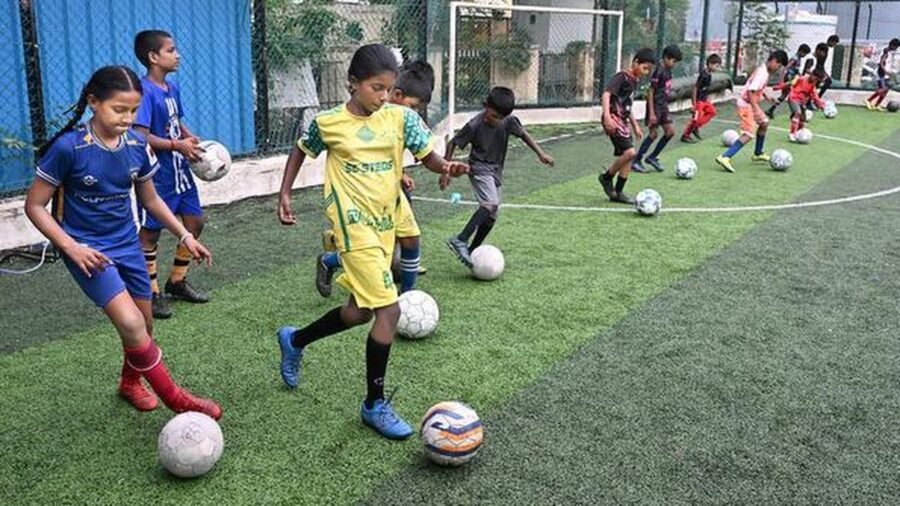
India’s sporting story tends to be measured in medals, stadiums, and budgets. The more decisive story is happening somewhere quieter: in classrooms, performance labs, and treatment rooms, where the people who shape athletes are being shaped themselves. That story is sports education, and it remains the most underdiscussed force shaping India’s sporting future.
Sports education is not coaching by another name. Coaching teaches a skill. Sports education builds the system around that skill. It is the science that trains the body, the psychology that trains the mind, and the ethics, leadership, and management that hold a programme together once talent alone stops being enough.
Sport, when taught well, also becomes a genuine tool for building character, resilience, and future leaders, not just better performers. It also trains the professionals who support athletes, the trainers, analysts, and administrators working alongside them.
A nation can have excellent coaches without having sports education at all. Coaches produce athletes. Sports education produces something larger. It is the system of training, science, and professional development that keeps generating athletes and the coaches to guide them.
Across different types of talent, age groups, and stages of development, athletes rarely realise their full potential in isolation. Their progress depends on the ecosystem around them, not just talent. A coach who understands sports science matters. So does access to injury prevention and psychological support. Nutrition and performance analysis matter too, but only when they shape decisions instead of simply logging them.
Above all, it depends on institutions patient enough to think in years rather than seasons. Time and again, the difference between athletes who fulfil their potential and those who fall short is less about innate ability than the quality of the system supporting them.
India’s challenge
This is India’s larger challenge. The country is not short of talented athletes or dedicated coaches. What it lacks is an education system built to produce the professionals modern sport now requires, not just coaches, but the scientists, analysts, and administrators working alongside them. When these professionals are educated to work together, athletes perform better, and sporting excellence becomes sustainable rather than episodic.
This is exactly why sports education cannot be left to any single institution or Ministry to solve. It sits at the intersection of policy, parenting, and institutional decision-making.
Policymakers determine how public funds flow toward sports infrastructure and training. Parents determine what a child’s early sporting life looks like and how seriously it is taken. Schools and universities determine what gets taught, and to whom. Of these three, the policy layer is currently showing the clearest signs of movement.
In this year’s Union Budget, the Ministry of Youth Affairs and Sports’ allocation rose from ₹3,346 crore to ₹4,479.88 crore for FY 2026-27. KPMG has flagged this as one of the most significant year-on-year increases the Ministry has seen.
But policy alone cannot teach a school to take sports as seriously as mathematics, or a parent to value a sports psychologist’s input as much as a report card. Parents need to start seeing sport as a genuine career and education path, not a phase a child eventually grows out of.
Policymakers need to widen their view of investment too. Money has to go toward technology, infrastructure, and people, not athletes alone. That cultural shift, as much as the financial one, sits outside any single budget line.
Two priorities deserve particular attention.
The first is scientific literacy. This spans biomechanics, exercise physiology, and sports psychology, along with the strength, conditioning, and recovery systems built on them. KPMG’s 2025 review of India’s sports business found that training centres and high-performance facilities have only recently begun building this capacity.
A single coach once handled it all; now the work increasingly splits across performance analysts, psychologists, and conditioning specialists, though this shift is still early, not yet the norm. India’s sports technology sector reflects the same direction. It was valued at $501.3 million in 2025 and is projected to reach $1.5 billion by 2034. That is real capital moving into tools that sports education must now teach people to use.
But the more important change ahead won’t be about how much data these tools collect. It will be about how intelligently that data gets used to understand performance, identify injury risk before it becomes an injury, personalise training, and sharpen decision-making at every level.
Tools like ball tracking, Hawk-Eye, and DRS have carried the sport this far. Many of these systems will evolve as AI-powered technologies become faster, more accurate, and more affordable, changing how performance and decision-making are supported.
The second is professional pathways, the deliberate training of coaches, analysts, and administrators as distinct careers rather than informal apprenticeships.
India’s sports analytics market, still valued at just $56.55 million in 2025, is projected to grow nearly fourfold to $199.31 million by 2034. This growth is driven by demand for professionals fluent across sport, data, and physiology at once. Meeting that demand cannot be left to experience alone. It requires institutions that treat these as teachable, structured careers.
The list of careers is also changing shape. Sports education can no longer train students to become only coaches, physiologists, or sports managers. It has to train people who understand AI, data analytics, and technology just as fluently as they understand biomechanics and the business of sport.
A further transformation will be felt beyond athletes and coaches altogether, in how the sport itself is watched and experienced, and in the spaces where it is played.
AI will not stop at performance and training; it will reshape fan engagement too, changing how audiences follow and connect with sport in real time. India’s future stadiums and sporting venues will need to be built for that change.
Role of data
Data will shape how these venues are designed from the start, not bolted on once construction is finished. Athlete performance and spectator experience will be treated as one design problem, not two separate ones. Sustainability and accessibility will need to be part of the first drawing, not a fix added later. A stadium should no longer be thought of as simply a place where a match happens. It should function as an intelligent ecosystem in its own right.
Even so, none of this dismisses coaching instinct, which remains irreplaceable. Data and infrastructure can support the system, but instinct was never meant to carry the entire weight of athlete development alone, and India is approaching the point where it must not have to.
India has set its sights on hosting the 2036 Olympics. Reaching that ambition will depend less on how many stadiums are built between now and then. It will depend more on whether sports education finally becomes the foundation it was always meant to be. That foundation should produce stronger athletes, and just as importantly, the coaches, scientists, and administrators capable of carrying that strength forward, generation after generation. If India starts building that foundation now, the next decade could be the one in which the country stops merely participating in global sport and starts helping shape where it goes.
(Aazaz Khan is the Director of Somaiya Sports Academy, Somaiya Vidyavihar University)

Light on truth: on the Tamil Nadu G.O. and RTI
By Sohail Khan · 29 Sep
Tackling food loss and waste — India’s opportunity
By Sohail Khan · 28 Sep
Revisiting the farmer question
By Sohail Khan · 28 Sep