Rs 22,006 crore claim, Rs 6.5 crore payout: Why NCLT’s Subhash Chandra order puts lens on insolvency framework
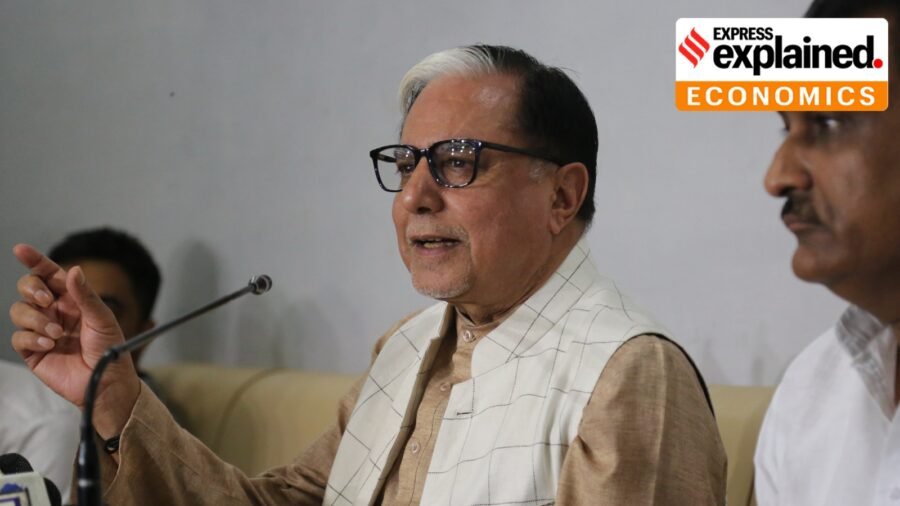
The National Company Law Tribunal’s latest order in the personal insolvency proceedings against Zee Group founder Subhash Chandra has produced an unexpected outcome — creditors with admitted claims of Rs 22,006.57 crore will receive just Rs 6.5 crore under the approved repayment plan.
That works out to a recovery of roughly 0.03%, leaving creditors with a 99.97% haircut. In banking parlance, a haircut refers the percentage reduction in the value of an asset used as collateral to protect the lender from potential losses.
The August 25 order raises fundamental questions about the personal insolvency framework and the extent to which creditors can be compelled to accept an almost microscopic recovery.
The big haircut
Story continues below this ad
Against admitted claims of Rs 22,006.57 crore, Subhash Chandra’s approved repayment plan provides for only Rs 6.5 crore. The difference — more than Rs 22,000 crore — represents claims that will not be recovered under the plan. “Lenders are effectively being left with very little,” said a banking source.
The scale of the write-down makes the case an unusually stark test of India’s insolvency regime. The central question is not merely whether creditors approved the plan, but whether such an extreme recovery can be justified when the amount owed runs into tens of thousands of crores.
Personal insolvency
The proceedings concern personal guarantees given by Chandra for borrowings of Essel Group-linked companies.
When a promoter gives a personal guarantee for corporate loans, the lender can, subject to the applicable legal process, pursue the guarantor when the underlying borrower defaults.
Story continues below this ad
Chandra’s insolvency proceedings were initiated in 2024 following a petition by Indiabulls Housing Finance. The case, therefore, goes beyond Zee Entertainment Enterprises. It concerns Chandra’s personal liability arising from guarantees linked to corporate debt. It should not be confused with separate corporate insolvency proceedings involving companies associated with the Essel Group, or with regulatory proceedings involving Zee Entertainment and its executives.
Breaking the deadlock
The August 25 order was not the result of a straightforward, unanimous decision. A two-member NCLT bench had earlier delivered a split verdict on the repayment plan.
With the members divided, Nilesh Sharma, judicial member of the NCLT, acted as the third member to resolve the disagreement.
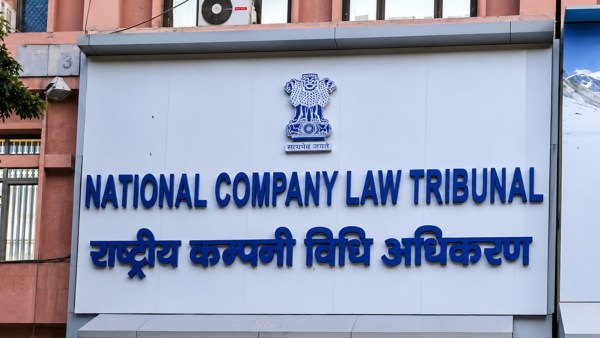 The tribunal concluded that the approved repayment plan could provide a better outcome than simply pushing the matter into bankruptcy. (NCLT website)
The third member ultimately sided with approval of the repayment plan. Creditors had mounted strong objections, particularly over the extraordinarily low amount they were being offered. But the tribunal concluded that the objections did not provide sufficient legal grounds to reject the plan.
Story continues below this ad
The tribunal examined the available financial information and concluded that the approved repayment plan could provide a better outcome than simply pushing the matter into bankruptcy. In other words, the logic was pragmatic: Rs 6.5 crore may be better than an even smaller recovery from liquidation or bankruptcy.
Creditors objected
The creditors’ objections centred on the extraordinarily low recovery and questions surrounding Chandra’s financial position. Creditors also questioned whether the debtor’s assets and financial affairs had been examined deeply enough, including whether a forensic investigation should have been conducted.
The tribunal, however, did not accept the argument that a forensic investigation was an essential precondition for approving the repayment plan. The NCLT also emphasised the importance of the commercial decision of creditors. Where creditors have voted on a plan in accordance with the Insolvency and Bankruptcy Code, the tribunal does not ordinarily substitute its own commercial assessment for that decision.
The repayment plan had secured the required support from creditors, with the plan reportedly receiving about 80.81% of the voting share. Once the requisite majority of creditors approves a repayment plan and the tribunal sanctions it, individual dissenting creditors cannot simply walk away from the process and demand a different settlement.
Lesson for lenders
Story continues below this ad
The case exposes a reality of lending to promoters. A bank may have a claim running into thousands of crores and still recover virtually nothing if the underlying assets and enforceable guarantees do not support the debt. A personal guarantee can strengthen a lender’s position, but it is not the same thing as cash sitting in a bank account. Its ultimate value depends on the guarantor’s legally available assets and the insolvency process.
For banks and financial institutions, the case is therefore a warning about the quality — rather than merely the existence — of promoter guarantees.
The order does not mean that Chandra has been declared free of all legal or regulatory scrutiny. Nor does it extinguish or decide unrelated proceedings involving Zee Entertainment or other Essel Group entities. It is also separate from SEBI’s proceedings involving Zee Entertainment and Punit Goenka.
For creditors, however, the order is an almost total destruction of value.
Story continues below this ad
For the insolvency system, it is a stark demonstration of the difference between the amount a lender is owed and the amount it can realistically recover.
The case leaves behind an uncomfortable question: when Rs 22,000 crore can effectively be settled for Rs 6.5 crore, is the insolvency system delivering resolution? Or merely putting a legal stamp on an enormous creditor loss?

Light on truth: on the Tamil Nadu G.O. and RTI
By Sohail Khan · 29 Sep
Tackling food loss and waste — India’s opportunity
By Sohail Khan · 28 Sep
Revisiting the farmer question
By Sohail Khan · 28 Sep