Ram Madhav writes | Do we really need a definition for ‘dimagi Naxal’?
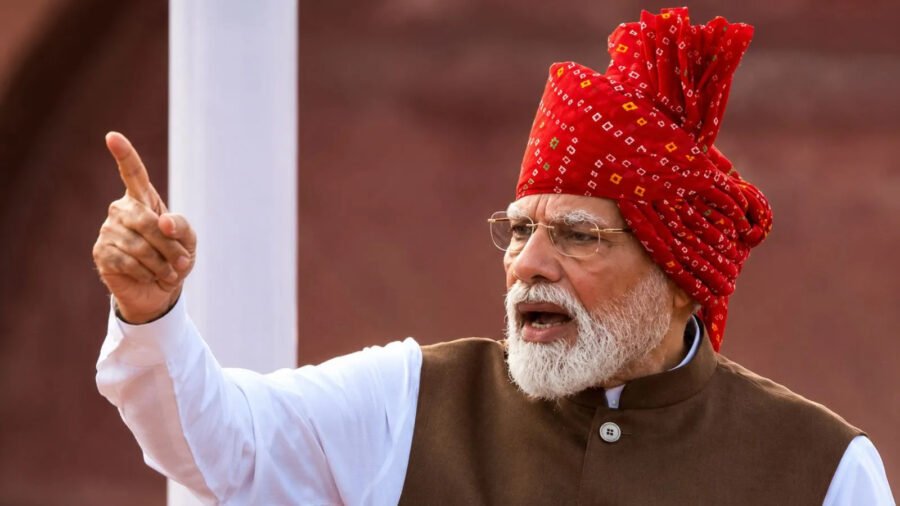
Prime Minister Narendra Modi has an enviable knack of getting under the skin of his adversaries. In his address from the Red Fort ramparts on Independence Day, he said that while his government had succeeded in eliminating armed Naxals, “We need to identify these ‘dimagi Naxals’, isolate them, and bring the youth together for a developed country”.
His “dimagi Naxals” invocation became the proverbial cat among the pigeons. There was indignation in certain sections. Their discomfiture was further compounded by the commentaries of the overzealous supporters of the government on social media. Congress leader P Chidambaram was the first to betray this unease. “I am proud to be a dimagi Naxal,” he declared on X, inviting catcalls and criticism that the Congress is the party of dimagi Naxals. The Editors Guild jumped in, complaining about the portrayal of some journalists as dimagi Naxals. All in all, the PM’s phrase seems to have rattled a section of Lutyens’ elite.
Advertisement
A certain amount of ambiguity that allows polemics to go on is harmless and enjoyable. In the past. too, expressions like “urban Naxals” and “Khan Market Gang” were invoked, eliciting heated debates. While no one defined what exactly those references meant, wise people drew their conclusions.
My intention is also not to explain what the PM meant, but only to provide the context. Maoism or Naxalism is not just a militant programme. It is a well-developed ideology that spawned several movements across a number of countries. Mao had himself championed it in China while the Sino-Soviet rift in the 1950s and ’60s led to the emergence of this major theoretical tradition, soon absorbed by revolutionary theorists, poets, philosophers, and eventually, insurgent groups. In Cuba, Che Guvera led this Maoist ideology of guerrilla warfare while leaders like Chairman Gonzalo in Peru and Jose Maria Sison in the Philippines led it in their countries. In our own neighbourhood, Pushpa Kamal Dahal ‘Prachanda’ ran a Maoist war through his “Prachanda Path”, which was a theoretical fusion of protracted people’s war with urban mass uprisings.
In India, we have had our own intellectual torchbearers of this movement like Charu Majumdar, Kanai Chatterjee and Kanu Sanyal, who were the founders of Naxalism not just as a guerrilla movement but also as an ideological bulwark against the democratic state. In Independent India, the Naxal movement emerged as the most potent threat to the state apparatus. Over the decades, it has succeeded in building a strong overground movement with the help of academics, journalists, authors and other public intellectuals. While the armed Naxal cadre indulged in ruthless and senseless violence across rural and tribal areas, the urban civil support system provided the intellectual shield for their actions.
Advertisement
It is interesting to recall what the Union Home Ministry of the UPA government told the Supreme Court in 2013 in the Kishore Samrite vs Union of India matter. “The ideologues and supporters of the CPI (Maoist) Party in cities and towns have undertaken a concerted and systematic propaganda against the state to malign it through disinformation,” it said, crucially adding that “these ideologues… are in many ways more dangerous than the cadres of the ‘People’s Liberation Guerilla Army’.” The affidavit also stated that the Maoist strategy “is to mobilise certain targeted sections of the population, especially the urban population, through the ‘mass organisations’”. These mass organisations operate “under the garb of human rights NGOs” and are “generally manned by ideologues, who include academics and activists”, the UPA government contended.
Whether the Modi government defined who the “dimagi Naxals” are or not, the UPA government’s affidavit took pains to do that categorically by telling the apex court that the ideological line these forces profess is “to overthrow the democratically elected parliamentary form of government in India through a combination of armed insurrection, mass mobilisation of certain sections of the society and tactical partnerships”.
Looking around, we see this mindset continuing to appear in various forms even today, in the allusive call of a senior opposition leader in the wake of the Gen Z revolt in Nepal or remarks by an intellectual on the future of democracy in India.
Where is the need to define “dimagi Naxals”?
The writer is president, India Foundation and national vice-president, BJP
Light on truth: on the Tamil Nadu G.O. and RTI
By Sohail Khan · 29 Sep
Tackling food loss and waste — India’s opportunity
By Sohail Khan · 28 Sep
Revisiting the farmer question
By Sohail Khan · 28 Sep