On dignity in political discourse
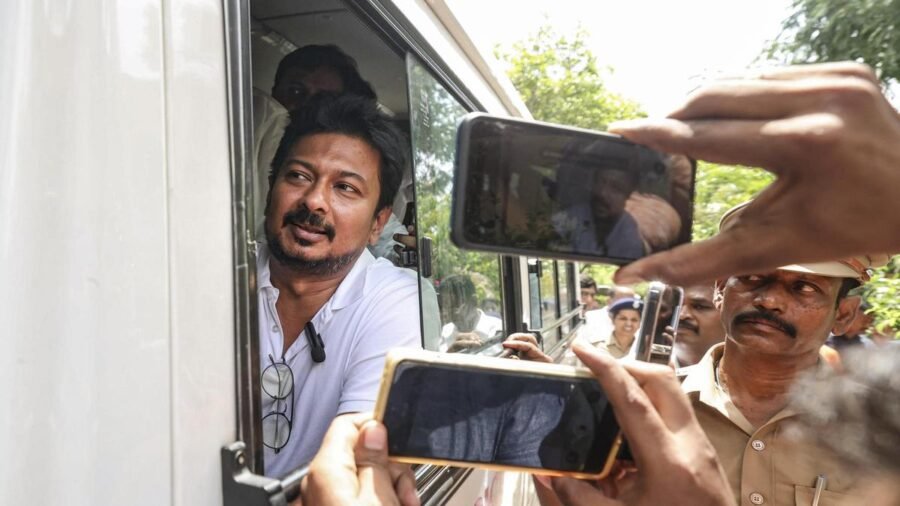
A double-entendre remark made by the Leader of Opposition in the Tamil Nadu Assembly Udhayanidhi Stalin during a Cauvery-dispute rally in Thanjavur sparked widespread outrage, leading to his brief arrest on grounds of insulting the modesty of a woman. As the incumbent leader of the Opposition, and the head of the Dravida Munnetra Kazhagam (DMK) youth wing, his comments are condemnable not only for their undignified nature, but also for the misuse of the influence he wields in shaping public discourse around women. In doing so, he has reopened a long-festering wound of misogyny that has repeatedly stained the DMK’s political legacy.
A return of personality politics
However, these remarks cannot be looked at in isolation. They ought to be situated within a rapidly shifting political landscape in Tamil Nadu; one that is characterised by the revival of personality politics. The entry of the Tamilaga Vetri Kazhagam (TVK), led by actor-turned-politician C. Joseph Vijay, alongside the awakening of a formerly apolitical youth have accelerated this shift. Fused with the advent of social media, online platforms are being deployed to harvest allegiance through curated reels centring individual appeal and charisma, thus changing the field and nature of political battles. Consequently, constructive ideological debates are being replaced by personal attacks from party supporters. In many online spaces, demands for accountability are frequently met with abuse. Intense display of fandom and unquestioning loyalty towards individual leaders have cordoned the ability to enter into meaningful dialogue based on ideological stances, policies, and governance. As a result, remarks similar to those made by the DMK leader are demanded, and even rewarded. As social media acquires the power to shape political outcomes, its patterns of incentivisation also shape the contours of morality. Thus, a witty comeback or a snarky comment might garner more eyeballs and promise greater popularity than significant political action.
While Tamil Nadu is no stranger to personality politics, having had its share of colossal leaders who became the very representation of the Dravidian parties, the definitive distinction at present is the consistent legitimisation of a vocabulary that blurs the lines between the personal and the public, as opposed to treating it as an outlier. As the Chief Minister and the Leader of Opposition swap personal remarks on the floor of the Legislative Assembly, drawing on their personal brands of charisma and quick-wit, notions of grace retire to the sidelines. For supporters and party workers, the arrival of a new era of politics is made loud and clear: nothing is off-limits within the current ambits of morality, and engagement with contentious personal affairs do not happen by accident, but by design.
Yet, this design stands in sharp contrast with the ideological anchors of self-respect and dignity in public life that ushered the DMK into political prominence. It arose from a social movement that centred justice and worked towards disrupting entrenched hierarchies through a universal approach to respect and dignity. Positioning these ideals as not only personal choices but as political ethics to disrupt oppressive social structures, these values went on to shape the emancipatory politics that the DMK eventually undertook. Therefore, this controversy is not just about one offensive remark. Instead, it raises a larger question about whether the DMK, in adapting itself to an increasingly personality-driven political field, has begun to abandon the very ideals that once defined the Dravidian movement. While reinvention is necessary for every political party, doing so at the expense of foundational values is morally hypocritical and strategically suicidal.
A time for reflection
Mr. Udhayanidhi Stalin must take accountability for his words. And the DMK must mend the ways that have reflected the misogyny ingrained in the party’s internal functioning. Its language needs to embody the dignity that it espouses. As for its larger strategy in responding to a rapidly shifting political landscape, a reconsideration of its current approach is crucial. While it might be tempting to play by the new rules of the game, rejecting them and reclaiming its stature as a party with a grand political legacy might be the way ahead.
Is Udhayanidhi’s arrest a moment of reckoning for TN politics | Above the Fold | Aug 4, 2026
Is Udhayanidhi’s arrest a moment of reckoning for TN politics | Above the Fold | Aug 4, 2026
Upholding its ideological prowess alongside a political culture shaped by dignified statesmanship is not only a moral imperative but may hold the key to its continuous relevance as a distinct political force. As for citizens, larger questions about the State’s political culture and the ways in which dignity can assert its position in public life ought to become significant preoccupations.
Maya Karthikeyan is Senior Researcher at Project DEFY.

COP31 hosts Australia and Türkiye face the fossil-fuel question
By Sohail Khan · 28 Sep
Rishi Sunak, Ro Khanna, Dinesh D’Souza: united by colour; divided among white nationalists
By Sohail Khan · 28 Sep