Maharashtra’s anti-conversion law could criminalise compassion
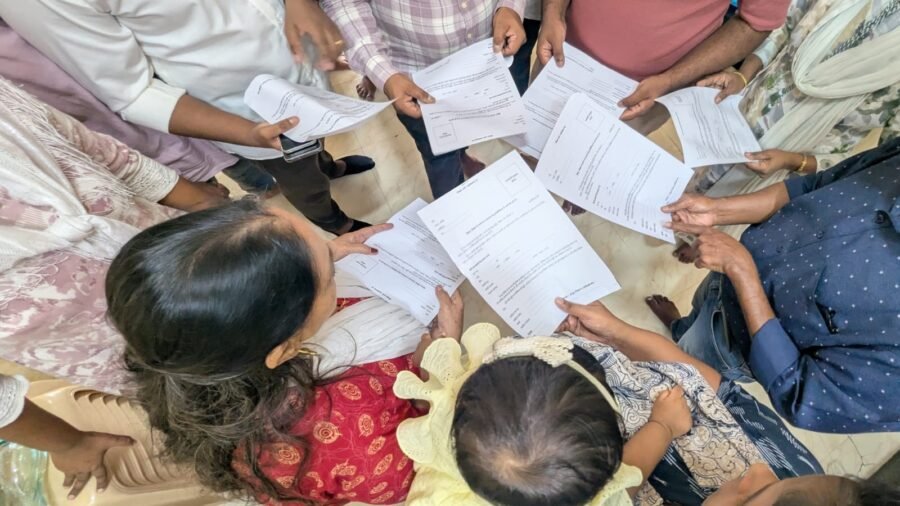
The Freedom of Religion Act, better known across the country as the anti-conversion law, appears to lend itself to allegations of conversion by force, fraud, or inducement. Such a law cannot be shown as required because nowhere in the country has anyone provided data on large-scale conversions. The Bharatiya Nyaya Sanhita can address criminal acts of conversion by illegal means. The new Maharashtra law is dangerous because it makes the offence non-bailable and the onus is on the accused to prove innocence — on par with the UAPA, which is an anti-terror law. We have seen how such laws, including the PMLA, have been allegedly misused to create a situation where the judicial process is the punishment — persons facing such an accusation remain in jail for years, without anything being proved against them. The new Maharashtra law is even more problematic because accusations can be made by third parties or by family members of the person who, in fact, may have converted of her/his own free will as per the Constitution. Inducement too has not been clearly defined, potentially bringing under it any educational, medical or other social services.
Christian groups, especially from the Catholic Church, have been, for decades, providing some of the best education in the country (certified so by government agencies like the UGC), excellent medical facilities and other social services — many of them in the country’s remotest parts. This flows from the Commandment to Love given by Jesus. I have been involved in higher education for 28 years and have served, through teaching and administration, thousands of Indians from all faiths and cultures. Our institutions also give financial help to deserving students and patients without religious restrictions. In fact, often the officials disbursing such funds on behalf of the institution are from varied faiths.
Advertisement
However, the Maharashtra law can be used to criminalise all such activities. People with ulterior motives can use the law to make allegations which could result in a punishing process for the accused. It is important to note that those who make unjustified allegations go scot-free. Why does the law not include such a safety clause: If the allegation is found false, the accuser will face a jail term?
Several marriages today are inter-religious. The Catholic Church, in some parts of the country, has recorded 30-40 per cent inter-religious marriages. It allows this and does not require the partner of another faith to convert to marry a Catholic. It appears that the State has not taken note of this reality of inter-religious marriages. This law seeks to deter inter-religious marriages through a public declaration weeks before the event. False allegations of an attempt to convert can easily arise.
In Mumbai and its suburbs, there have been attacks by non-state actors on prayer meetings held in private halls or homes. Small communities of evangelical Christians have borne the brunt of such intrusions and, curiously, the police have confirmed that FIRs have been filed mainly against those attacked — indicating the apparent impunity with which the attackers function. These prayer groups are now attempting to protect themselves against unjust accusations by asking for a declaration to be signed by those who come for the meeting — hardly necessary if law and order is impartially enforced. In the Christian tradition, prayers for healing are a normal part of worship. It is common to pray by laying one’s hands on the head of the community member in need of any type of healing. These may be extended to people of other faiths too, if they so ask. The new anti-conversion law could call this too into question.
Advertisement
This law can disrupt not only the freedom of a person to choose the religion s/he wants to profess but also all humanitarian activities for the most disadvantaged communities — those who cannot pay for private education, good health and other social services. Are the disadvantaged in Maharashtra to be left to fend for themselves or to merely depend on doles?
The writer is former principal, St Xavier’s College, Mumbai

Light on truth: on the Tamil Nadu G.O. and RTI
By Sohail Khan · 29 Sep
Tackling food loss and waste — India’s opportunity
By Sohail Khan · 28 Sep
Revisiting the farmer question
By Sohail Khan · 28 Sep