‘If boys can wear shorts at home without being judged, why can’t girls do it?’
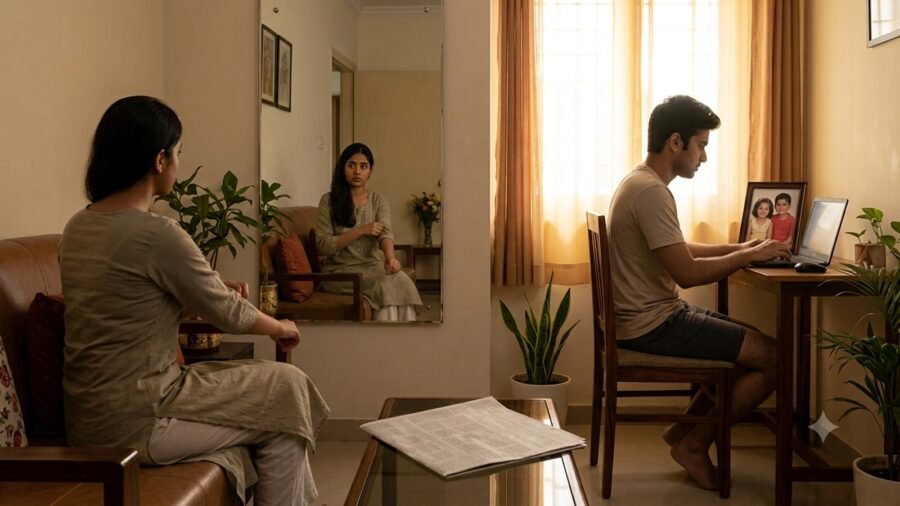
I have lost count of how many times teachers pulled girls at my school aside and reprimanded them over the state of our uniforms. At morning assembly, it was common to see girls fidgeting with their skirts, pulling them down to cover their ankles, fixing their hair or wiping off the lip gloss. I don’t remember the boys being policed as often. What I do remember is the air thick with tension as we stood silently in line, waiting for the inevitable reprimands, punishments and comments to begin.
I can still taste the fear as I write this piece more than a decade later.
When jewellery brand GIVA’s Rakshabandhan advertisement featuring Kriti Sanon sparked backlash over her choice of clothing (an ivory co-ord set with a bralette and wide-legged bottoms), BJP MP Kangana Ranaut took to Instagram to share her thoughts. “Why would you tie your brother a rakhi in your bikini/undergarments? Where are all your styling options? Ha ha the advert looks intentionally creepy!”
Story continues below this ad
And I don’t think I’m alone in saying that the comment, and the moral policing embedded in its subtext, did not sit well with many of us.
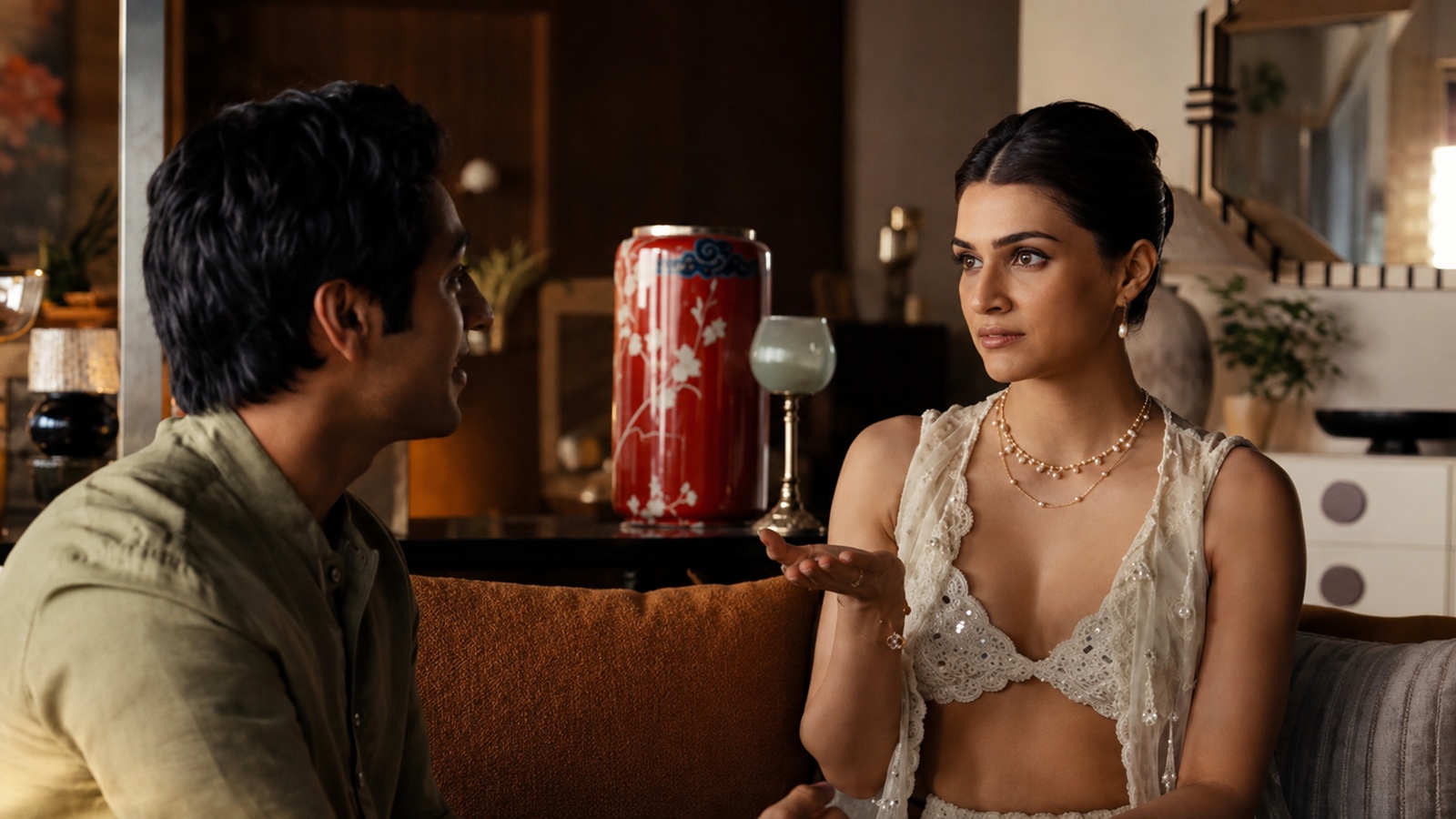 Kriti Sanon’s GIVA ad that sparked backlash. (AI ehanced image)
Being forced to keep a constant check
Manvi Maurya recalled an incident whose impact she carries with her to this day. At a family gathering, a relative had once asked if her outfit was too revealing. The PR and Business Development Executive at Alliance Public Relations Pvt Ltd. was wearing a sleeveless dress, and it was the first time in her life she felt self-conscious, especially about her clothing choices.
Growing up, she noticed a double standard at home. The comments didn’t extend to her brothers or male cousins, who could wear similar clothes without the same judgment. “If I’m wearing shorts around the house and a family member unexpectedly drops by, I’ll immediately feel that I should have changed out of my shorts and put on more suitable clothing,” she told indianexpress.com.
Sakshi Singh, a Delhi University student, also shared a similar vivid memory of her and her friends being scolded by school teachers for the “length of their skirt”. However, during our conversation, she pointed out that men often freely take a dip in water bodies, flaunting their bare chests. According to her, men are “always judged by their social status and salary, irrespective of their dressing sense and aura”.
Story continues below this ad
Madhuri Nailwal, a Mumbai-based communications specialist, said this goes beyond just choosing clothes. “If you wear a short dress, you are told how you should sit — not with one leg over the other, not with your legs apart, and to constantly be conscious of how you are sitting and looking,” she pointed out.
Nidhi Agrawal grew up “morbidly obese” and was told she could wear clothes of her choice only after losing weight. “I lost all the weight and still get shamed for wearing clothes of my choice that challenge their old-school thoughts,” the management associate at P D Hinduja Hospital & Medical Research Centre, Mumbai, said.
How a woman’s relationship with her body changes
Dr Komal Manshani, clinical psychologist at Max Healthcare, Delhi, said that as time passes, a woman watches her brother move through the world with far fewer questions about what he is wearing, where he is going, or how his choices reflect on the family. And as she grows older, the scrutiny follows her into the workplace and home.
Janvi, Clinical Psychologist, Maarga Mind Care, Gurgaon, explained that when parents focus on a daughter’s clothing choices while giving her brother greater freedom, the message the child receives is not necessarily just about hemlines or clothing. She said psychologically, it can communicate whose body is perceived as something that needs to be monitored, managed or controlled.
Story continues below this ad
“When these messages are repeatedly reinforced, girls may begin to internalise the idea that their bodies are subject to other people’s scrutiny and judgment, often before they have the vocabulary to question it,” she told indianexpress.com.
Over time, Janvi said, this contributes to self-objectification and self-surveillance, where a person begins to view and evaluate themselves from an outside observer’s perspective. She shared that their attention can shift from ‘How do I feel?’ to ‘How do I look?’ and research has associated these patterns with “greater body shame, appearance-related anxiety and, in some individuals, vulnerability to disordered eating”.
Nailwal said these constant comments can make one uncomfortable in their own body. “You start avoiding certain clothes altogether, not necessarily because you don’t like them, but because you have been made conscious of how others might perceive you,” she said. “You become conscious of your body, your movements, and even whether what you’re wearing might make someone else uncomfortable”.
Janhvi added that such a mindset can also affect a child’s sense of bodily autonomy and agency.
Story continues below this ad
“When a child is repeatedly told what she can and cannot wear, particularly when her male sibling is given greater freedom, she may internalise the message that her own preferences carry less weight than other people’s comfort, approval or perceptions,” she explained.
In the longer run, she said this may later manifest as “difficulty asserting boundaries, second-guessing their choices or seeking external validation before trusting their own judgment”. While these outcomes are not inevitable, Janvi reiterated that repeated experiences of unequal control can shape how a person learns to relate to themselves and their choices.
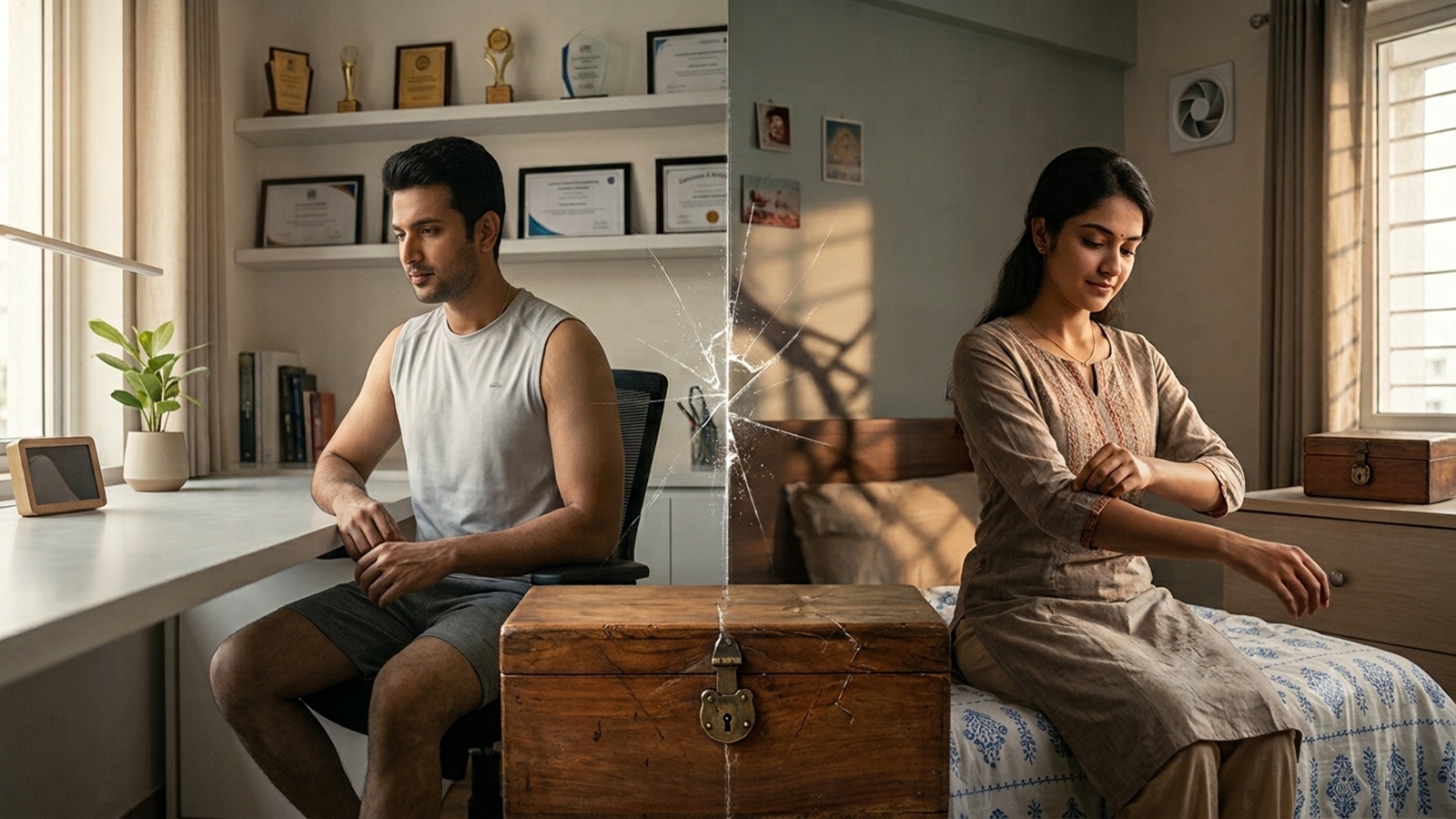 How double standards at home impact a girl’s self worth. (AI generated)
And so does her relationship with her sibling…
Janvi said the underlying message can become one of differential trust: one sibling is perceived as capable of making their own decisions, while the other is viewed as someone whose safety and behaviour need to be managed by the family. “This can contribute to frustration, perceived unfairness and resentment within sibling relationships,” she said.
Delhi-based teacher Vishakha Singh agreed. Singh said such expectations often originate from “common discussions about clothing” and later develop into perceptions of self-confidence and body image. This view needs to change. “Protecting girls does not mean limiting their actions and requiring them to take responsibility for what others do. Both girls and boys should enjoy the same freedom and undergo similar education on respect, limits, and responsibility,” she added.
Story continues below this ad
Maurya said there shouldn’t be a distinction in comfort based on gender. “If boys can wear shorts at home without being judged, why can’t girls do it? After all, it’s just a body and shouldn’t be a reason to judge anyone’s personality or decisions,” she shared.
Janvi argued that addressing this disparity requires looking beyond the siblings themselves and examining the family structures and unequal rules that shape their lives. “In adulthood, some women may need to consciously unlearn these internalised messages and relearn self-expression, agency and comfort with their own choices. And repair can begin when families acknowledge the disparity rather than dismissing it as being just about clothes,” she added.
However, Dr Manshani said she wouldn’t place all the responsibility on individual parents. “Often, they are passing on fears and cultural conditioning they themselves inherited,” she said.
As the recent Kriti Sanon controversy brings this tension into focus, the expert said that we need to learn to debate cultural sensitivity without making a woman’s clothing a measure of her character or values. Dr Manshani also asked a crucial question: “Why does a woman’s body so often become a site on which family honour, morality and culture are negotiated?”
Story continues below this ad
Janvi said the way forward lies in conversations about autonomy, trust, and fairness that can help validate a woman’s experience while also helping siblings understand how differently they may have been treated.
“Addressing the underlying pattern, not merely the specific clothing restriction, can therefore be important both for rebuilding self-image and for repairing sibling relationships,” she concluded.

Light on truth: on the Tamil Nadu G.O. and RTI
By Sohail Khan · 29 Sep
Tackling food loss and waste — India’s opportunity
By Sohail Khan · 28 Sep
Revisiting the farmer question
By Sohail Khan · 28 Sep