How ebola and conflict feed on each other in Democratic Republic of Congo
In June this year, after a 52-year gap, the blue-clad Leopards of the Democratic Republic of Congo (DRC) participated in the FIFA World Cup. The young Brian Cipenga shocked the England team with an opening goal and followed it up with a celebratory back-flip. Few football fans at that time would have realised the travails that the DRC football team would have undergone to reach this incredible sporting milestone.
DRC is the second largest country in Africa and the 11th largest in the world. It has a population of around 116 million and is extremely well-endowed in terms of natural resources. It is the world’s largest producer of cobalt and the second largest supplier of copper. Nevertheless, since its independence from Belgium in 1960, it has witnessed political instability and civil strife and is one of the poorest countries in Africa.
Advertisement
Since 2021, in eastern DRC, there has been a raging conflict between the M23, an armed rebel group and government forces. Over the last few years, the M23 militia, led by ethnic Tutsis and backed by Rwanda, which the latter denies, has gained vast swathes of territory in the North Kivu and South Kivu provinces, including the provincial capitals of Goma and Bukavu. The conflict has resulted in the death of thousands of civilians and displacement of more than 5 million people, triggering a regional humanitarian crisis. The two Congolese provinces are bordered by Rwanda and Uganda and are mineral-rich. In the last few days, after a meeting in Switzerland and mediation by Qatar, the DRC government and M23 have agreed on a road map to begin peace negotiations.
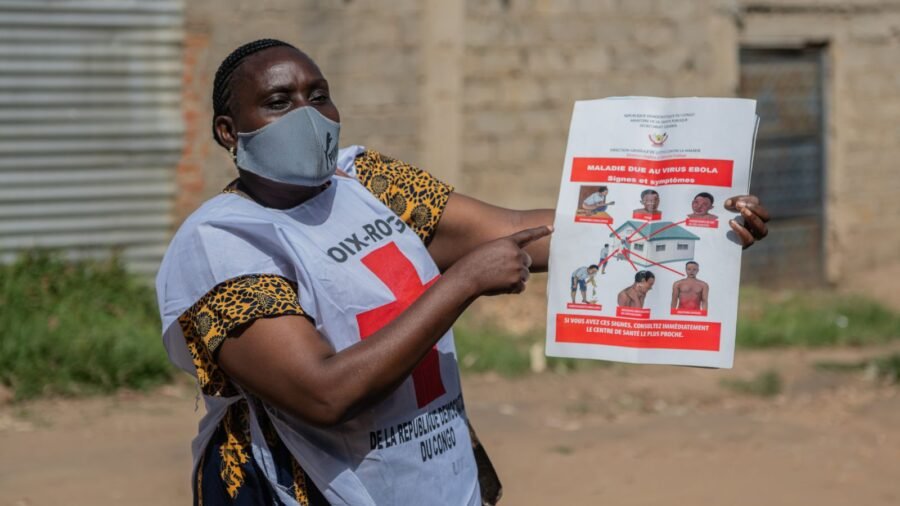
Meanwhile, in mid-May 2026, news broke of a new and deadly strain of the Ebola virus, the Bundibugyo strain, that emerged in the two eastern Congolese provinces of Ituri and North Kivu, resulting, in the last 100 days, in over 5,500 cases and over 2600 deaths in six provinces. While this is DRC’s 17th Ebola epidemic, it is the fastest-growing outbreak, with a case fatality rate of around 48 per cent. It is also spreading to Uganda. Experts feel that this outbreak, given that the virus does not yet have a licensed vaccine, may surpass that of the Ebola epidemic of 2014-2016 that affected West Africa. More than 60 frontline health workers have died caring for the sick.
Most of the deaths in DRC are happening outside of medical centres, in communities, indicating delayed detection. The issue is complicated as the epicentre of the epidemic, Ituri, has been in the conflict zone for decades, resulting in a neglected public health system. Further, among some communities there is mistrust and suspicion of health workers, particularly foreign health workers who are viewed as representatives of an extractive and exploitative system. Frontline health workers have also been the target of attacks by relatives of the dead for denying the bereaved an opportunity to participate in traditional funeral rites, which are suspected to be super-spreader events.
Advertisement
On 17 May, the WHO declared the situation to be a Public Health Emergency of International Concern and has subsequently stationed over 160 health experts in the DRC. African Centres for Disease Control and Prevention (Africa CDC) and partners have also deployed experts to help in surveillance, established laboratories and treatment centres and delivered essential supplies. NGOs and individual countries, developed and developing, including India, have contributed. Nevertheless, the global response, particularly that of the West, to the current Ebola crisis is muted compared to the overwhelming response of the world to the West African Ebola outbreak ten years ago. This is attributed to several factors, including the dismantlement of USAID, the withdrawal of the US from the World Health Organisation (WHO), the reluctance of the media consequent to Covid-19 to focus on gloomy stories, as well as general donor fatigue.
In late May, 2026, India supplied 45 tons of essential medical aid for distribution to eastern DRC through the Africa CDC’s Eastern Africa Regional Coordinating Centre in Uganda. The supplies included diagnostics, therapeutics, infection prevention and control materials. India also pledged an amount of USD 10 million at a virtual African Union (AU) summit to support Africa-led Ebola preparedness, response and recovery efforts.
While much of India’s developmental partnership has been bilateral and at the governmental level, it might be useful to encourage triangular cooperation initiatives with the involvement of the Indian private sector. Local capacities could be strengthened through training programmes and internships of African medical professionals and biotechnologists in Indian R&D centres and vaccine manufacturing companies, with funding shared between major Indian private sector companies operating in Africa and the Government of India.
Thus, the recent exhortation by Africa CDC’s head Dr Jean Kaseya that “Africa’s health security be built first on African soil, with African capacities for the long term financed by African governments, their partners and the private sector” is timely.
As the Covid-19 experience has shown, an epidemic anywhere could become a worldwide pandemic if the global community does not come together. For the campaign against Ebola to be successful in DRC, the roadmap for peace will also have to roll out in tandem.
The writer is former High Commissioner of India to Kenya and former Permanent Representative of India to the UN Environment Programme
Light on truth: on the Tamil Nadu G.O. and RTI
By Sohail Khan · 29 Sep
Tackling food loss and waste — India’s opportunity
By Sohail Khan · 28 Sep
Revisiting the farmer question
By Sohail Khan · 28 Sep