From Vikramarkudu to Irumudi: Ravi Teja and the father who fights for his daughter
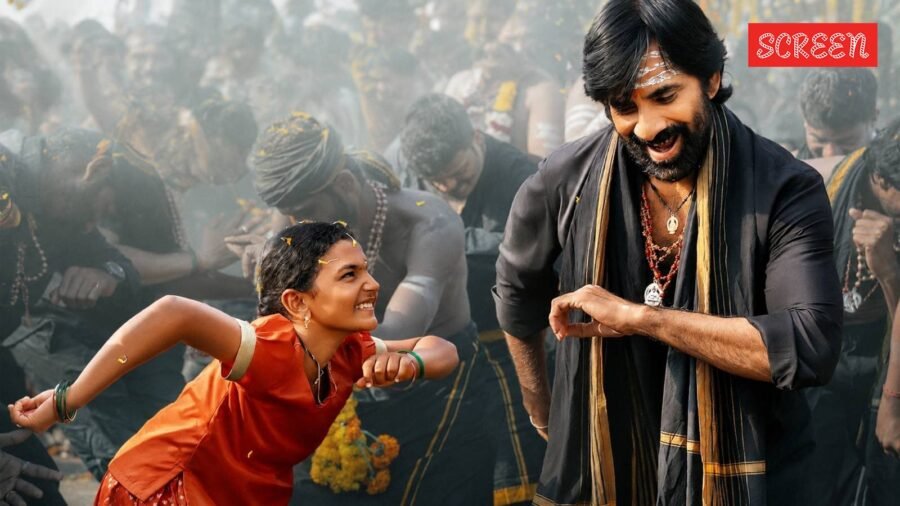
Ravi Teja has played cops, gangsters, con men, thieves and vigilantes across 77 films and 25 years. He has danced, fought, cracked jokes and delivered mass dialogues. But if you ask most Telugu audiences to name the one Ravi Teja moment that genuinely moved them, a surprising number will point to the lullaby “Jo Laali” from Vikramarkudu, where a petty thief sings a child to sleep because she believes he is her father. Twenty years later, with Irumudi releasing on Friday, he is back in the same emotional territory. Different story, different director, different stakes. But the same trope: A father, a daughter, a threat and a man who has to become better than he is.
In 2006, SS Rajamouli took one of Telugu cinema’s most hyperactive, loudest leading men and asked him to hold a child in his arms. The result was Vikramarkudu, a film that should not have worked as well as it did. Ravi Teja played a dual role: Vikram Singh Rathod, an honest, fearless police officer, and Athili Sathi Babu, a shameless petty thief who lies, cheats, steals and has no redeeming quality anyone can point to. Then a little girl shows up and calls him “Daddy.” She refuses to leave and the man who spent the first half of the film making you laugh at his pathetic life spends the second half making you believe he would die for this child.
The soulful lullaby “Jo Laali”, composed by MM Keeravani, became one of the most beloved father-daughter songs in Telugu cinema. Baby Neha, who played the little girl, became an instant audience favourite. And Ravi Teja, the ‘Mass Maharaja’, who was known for his comedy timing and physical energy, proved he could break your heart if the script gave him the room.
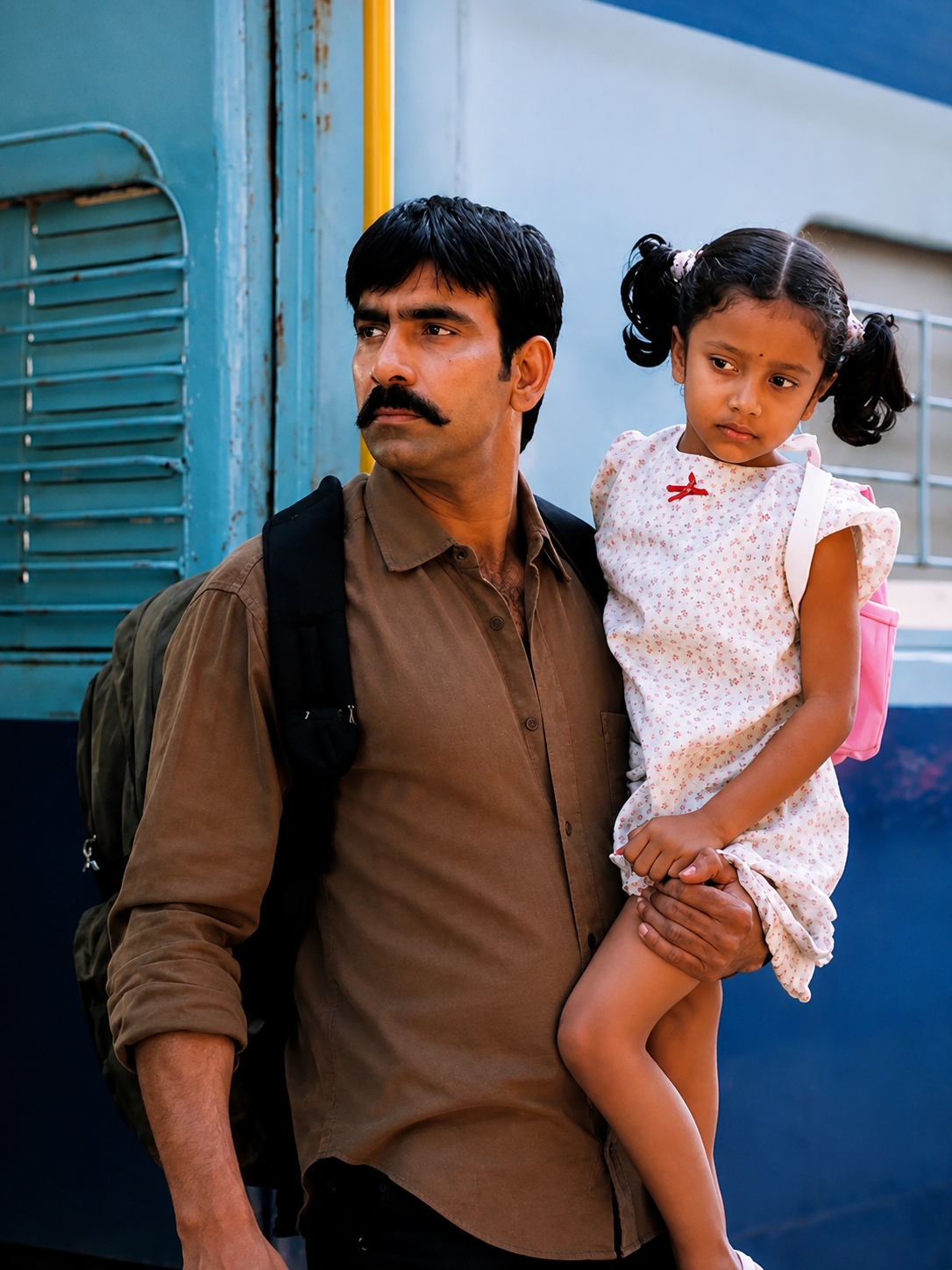 Ravi Teja and Baby Neha in a still from Vikramarkudu.
Vikramarkudu went on to become a blockbuster and ran for over 175 days in multiple centres. It was later remade in Hindi as Rowdy Rathore, starring Akshay Kumar, in Tamil as Siruthai, starring Karthi, in Kannada as Veera Madakari, starring Sudeep, and in Bengali as Bikram Singha, starring Prosenjit Chatterjee.
Twenty years later, the same trope returns
Now, in 2026, Ravi Teja is back with a child. Irumudi, directed by Shiva Nirvana and produced by Mythri Movie Makers, places the actor in a role that shares unmistakable DNA with Vikramarkudu but operates in a completely different emotional register.
In Vikramarkudu, the father-daughter bond was accidental. Athili Sathi Babu did not choose to be a father. A child simply showed up, mistook him for her father, and his life changed. The emotion came from a bad man becoming good because of a child’s unconditional trust.
Story continues below this ad
In Irumudi, the bond is real from the start. Ravi Teja plays Trinadh, a devoted father to his young daughter Mani, played by child artist Baby Nakshathra. There is no dual role. There is no mistaken identity. There is no comedy-to-emotion pivot. Instead, the film begins with a man who already loves his daughter more than anything, and then systematically breaks him down. A tragedy pushes Trinadh into alcoholism and violence. His daughter begins to fear him. When she asks him to stop drinking, he undertakes the 41-day Ayyappa Deeksha as a way to reclaim himself, wearing the sacred mala and committing to the pilgrimage to Sabarimala.
And then, just as in Vikramarkudu, the violence catches up. Young girls in the village begin to disappear. Trinadh’s daughter is threatened. The man who was trying to find peace through devotion is forced to fight.
The same question, asked differently
The emotional architecture of both films is fundamentally the same: what will a flawed man do when his daughter is in danger
Vikramarkudu answered that question with spectacle, with Ravi Teja in a police uniform, with whistle-worthy mass moments and with a climax that turned a thief into a hero. Irumudi, from what the trailer and early reports suggest, answers it with something different. Trinadh is neither a cop nor a man with a hidden identity. He is just a man, an alcoholic, an absent father, trying to hold his life together long enough to keep his child safe.
Story continues below this ad
The child’s role in both films serves the same narrative purpose: she is the reason the hero transforms. In Vikramarkudu, Baby Neha’s innocent attachment to a man she believed was her father was the catalyst for Satya’s redemption. In Irumudi, Baby Nakshathra’s simple request to her father to stop drinking pushes Trinadh to change for the better, ultimately leading him to confront the violence around him.
Ravi Teja and children on screen
What is interesting is how rarely Ravi Teja has returned to this territory between these two films. In a career spanning over 25 years and over 60 films, the father-daughter dynamic has not been a recurring theme in his filmography the way action, comedy and mass entertainment have. He has played fathers before, but rarely has the child been the emotional centre of the story the way it was in Vikramarkudu and the way it appears to be in Irumudi.
His recent filmography tells the story of a different kind of actor. Eagle, Mr. Bachchan, Mass Jathara, Bhartha Mahasayulaku Wignyapthi, all of these were action-driven or comedy-driven vehicles where Ravi Teja was the centre of the film in the traditional ‘Mass Maharaja’ mode. None of them asked him to be vulnerable or gave him a child to protect and a personal demon to fight simultaneously.
Story continues below this ad
Irumudi does both. And the fact that the trailer has already drawn comparisons suggests that the trope works for Ravi Teja in a way it doesn’t for most action stars. He has the physical presence to be convincing in a fight, but he also has the oddly tender quality that made “Jo Laali” believable 20 years ago. Most Telugu action heroes can protect a child on screen. Teja is one of the few who can make you believe the child changed him.
Irumudi releases in theatres on Friday, in Telugu and Hindi. Twenty years after Vikramarkudu, Ravi Teja is singing to his daughter again. The song is different and the demons are real this time. But the father is the same.
Veteran actor Sowcar Janaki hospitalised in Chennai
By Sohail Khan · 20 Aug
‘Was repeatedly slapped by monk during guerrilla shoot in Haridwar’: Vinay Forrt
By Sohail Khan · 20 Aug
Leave a Reply