From schooling to skilling
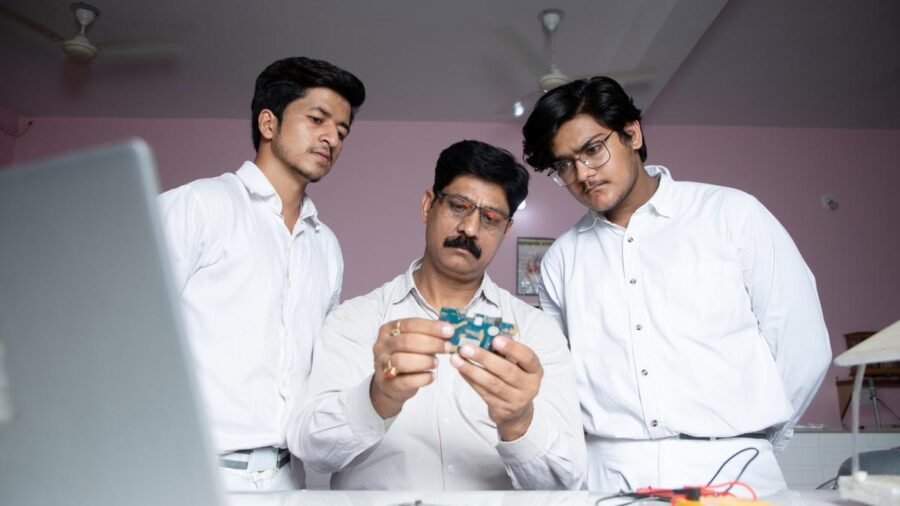
India stands at a critical juncture in its development journey towards Viksit Bharat, 2047. Young people are central to this journey. About 28.3% of India’s population, or nearly 40.1 crore people, falls in the 15-30 age group, show official figures. This large youth population is a major economic opportunity. However, a demographic dividend does not automatically become a development dividend. It depends on whether young people acquire the education, skills, and capabilities needed to participate productively in the economy.
The human capital investment theory, associated with economists such as Theodore Schultz and Gary Becker, views spending on education and skill development not merely as consumption expenditure, but as an investment with intergenerational benefits and returns. It enhances productivity, employability, and lifetime earnings and contributes to economic growth. As economies become more technology-driven and innovation-led during its structural transformation, the quality of human capital increasingly determines competitiveness, labour productivity, and income growth. School education, complemented by relevant and demand-driven skilling, therefore, provides the foundation for India’s human capital.
Education, skills, and opportunities
The Periodic Labour Force Survey, 2025 provides important insights into the education and skilling profile of India’s youth. Youth aged 15-30 have an average of 10.8 years of education, while 43.6% have completed Class 12. Among those who have completed Class 12, 46.3% are pursuing higher education, reflecting expanding educational opportunities and rising aspirations.
The next challenge is to ensure that years spent in education translate into strong learning outcomes, capabilities, and productive skills. Only about 5.1% of young people have received formal vocational or technical training. This highlights the need to strengthen the transition from school to higher education, vocational training, and employment.
This is central to the transformation envisaged under the National Education Policy (NEP), 2020, which has shifted the focus from access (enrolment) alone towards quality, learning outcomes, competencies, and skills, while mainstreaming vocational education alongside general education. The government is supporting this transformation through Samagra Shiksha and PM SHRI, with emphasis on quality, experiential learning, and improved learning environments.
Skill development has been introduced in the early phase of schooling. The National Curriculum Framework for School Education (NCF-SE) integrates skill education at the middle and secondary stages. Pre-vocational exposure, 10 bagless days, internships, project-based learning, Kaushal Bodh, and Lok Vidya give students opportunities for practical learning and exposure to the world of work. Under Samagra Shiksha, vocational education has been expanded to government-aided schools, while the hub-and-spoke model allows students from nearby schools to access vocational infrastructure and training. At the secondary and senior secondary levels, skill courses are aligned with the National Skills Qualifications Framework (NSQF), with 138 job roles/skill subjects approved for Classes 9-12. These measures are creating multiple pathways from school to higher education, skills and employment.
From education to employment
The value of these investments becomes clearer when viewed against youth labour-market participation. Among youth aged 15-30, the labour force participation rate is 48.3%, with male participation at 67.1% and female participation at 29.1%. The worker population ratio is 44%, compared with 61.4% for males and 26.2% for females. The gender gap highlights significant untapped potential and the importance of strengthening education, skilling and employment pathways, particularly for young women.
The youth labour force also has varied educational backgrounds. While about 24% have undergraduate and higher qualifications, substantial shares (about 67%) have education up to the higher-secondary level. A major challenge is that only about 7% of them have received formal skill training. This calls for a flexible learning ecosystem that allows young workers to upgrade qualifications, acquire job-relevant skills, reskill, and continue learning alongside employment.
The PLFS, 2025 unemployment data point to an education-employment and skills mismatch. Unemployment rises from 1% among illiterate youth to 13.7% among those with undergraduate and higher qualifications. This suggests a gap between the capabilities supplied by the educated workforce and those demanded by the labour market, particularly among higher-educated youth.
At the same time, the role of skilling is encouraging. Unemployment among youth with formal skilling is 3.1%, compared with 4.9% among those without skilling. Among graduates and above, it falls from 17% without skilling to 9% with skilling. The evidence points to a complementary relationship: education builds the foundation of human capital, while relevant skills enhance its labour-market value.
Education and earnings
Education also has benefits that extend beyond employment and income. It expands people’s capabilities, enables informed choices, improves access to economic opportunities, and supports greater social and economic inclusion. Quality education can, therefore, help individuals overcome inherited disadvantages and participate more fully in economic and social life.
Its economic returns are visible in earnings. Among young regular and salaried workers, average monthly earnings rise from ₹10,545 among illiterate workers to ₹26,013 among those with undergraduate and higher qualifications. Earnings increase from ₹12,279 at the middle level to ₹13,410 at the secondary level and ₹14,307 at the higher-secondary level, before rising to ₹18,183 for diploma holders.
Overall, workers with undergraduate and higher qualifications earn about 2.5 times more than that by illiterate workers, while diploma holders earn about 72% more. With average monthly earnings at ₹18,141, the evidence underlines the economic value of higher and job-oriented education and reinforces the importance of improving its quality and relevance.
Changing labour market
As technology, digitisation and new forms of production reshape the labour market, education must increasingly be complemented by relevant skills. PLFS, 2025 shows that across workers of all ages, those with vocational or technical training earn 5.6% more among regular/salaried workers, 0.9% more among the self-employed and 15.4% more among casual workers engaged in activities other than public works than those without such training. The advantage is particularly visible at lower and middle levels of education.
This highlights the importance of vocational education in bridging the gap between schooling and employment. The objective is not to create separate academic and vocational tracks, but to provide multiple, flexible and connected pathways from school to higher education, skills and productive employment.
Building human capital
The evidence reinforces the government’s continuing focus on moving school education from access towards quality, learning outcomes, competencies, and employability. Through Samagra Shiksha and PM SHRI, the foundations for better learning are being strengthened, alongside the expansion of vocational education through pre-vocational exposure, bagless days, and NSQF-aligned skill courses.
The larger objective is to ensure that every child not only enters school but also learns well, develops relevant capabilities, and has enabling pathways to further education, skills, and productive work. This is consistent with the NEP 2020 vision that no child should lose the opportunity to learn and excel because of circumstances of birth or background.
India’s young population offers a historic opportunity to convert the demographic dividend into a growth dividend. By creating integrated composite schools (up to Class 12), strengthening the quality of school education and connecting learning with relevant skills and economic opportunities, the government is laying the foundations of a more capable, skilled and productive workforce. Investment in school education is, therefore, an investment not only in India’s children but also in its productivity, competitiveness in global landscape, and the realisation of Viksit Bharat, 2047.
Ram Singh is Joint Director, Department of School Education and Literacy, Ministry of Education, New Delhi. Views are personal

Light on truth: on the Tamil Nadu G.O. and RTI
By Sohail Khan · 29 Sep
Tackling food loss and waste — India’s opportunity
By Sohail Khan · 28 Sep
Revisiting the farmer question
By Sohail Khan · 28 Sep