Ecostani: FSSAI’s ‘weak’ label warning is welcome but will it reduce the intake of bad food?
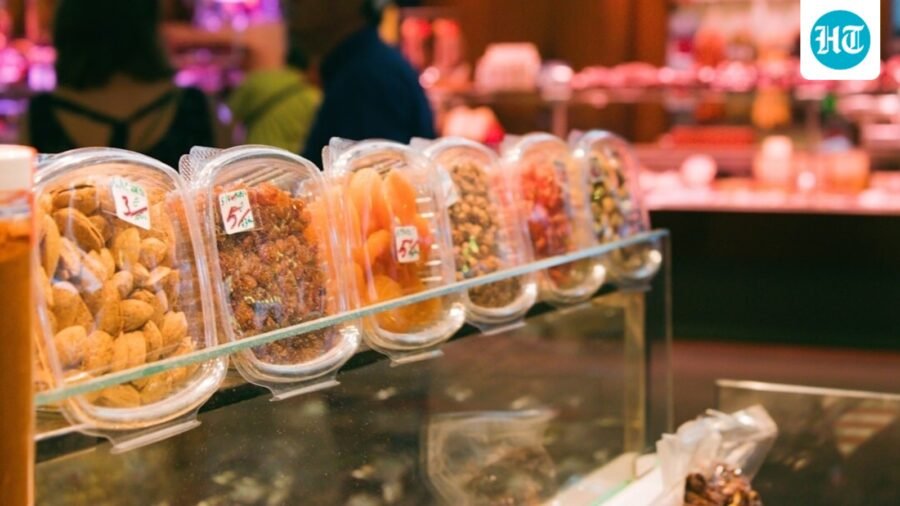
The warning will apply only to products having two of the three nutrients above the threshold level
Published on: Aug 31, 2026, 14:45:02 IST
Prefer HTon Google
Share via
Copy link
The Food Safety and Standards Authority of India (FSSAI)’s front-of-the-label warning for harmful ingredients in processed food and beverages is a welcome first step.
However, the decision — delayed by over 10 years since the first draft was formulated — might not achieve much because it will only cover less than 20% of the processed food market. Worse, the new warning will consider only added sugar, fat and salt, not the total content of these ingredients in the packet. Single ingredient food products naturally rich in fats, sugar and salt such as ghee and oil will be exempted from the warning labels.
The warning will apply only to products having two of the three nutrients above the threshold level as per the Indian Council of Medical Research Dietary Guidelines, 2024 in the first phase.
“FSSAI's red hexagonal warning label is a step forward, but the 'two or more' threshold is a massive loophole. A product with high sugar carries no warning if it is low in fat and salt. That is not public health; that is regulatory capture. Further, the definition of HFSS is critical to include total sugar and fats,” said Arun Gupta, one of the petitioners in the Supreme Court who pushed FSSAI to come out with the warning label.
In the second phase, FSSAI proposes to cover high doses of one of these nutrients. However, it has not specified when the second phase will be enforced.
At most, the food industry should get a year to implement the second phase as most multinationals have already adopted front-of-the-packet red hexagonal warnings internationally.
The ICMR guidelines quote the National Nutrition Survey 2019 to state that 56.4 percent of the total disease burden in India is due to unhealthy diets. It stated that the upsurge in the consumption of highly processed foods laden with sugars and fats, coupled with reduced physical activity, and the limited access to diverse foods, exacerbate micronutrient deficiencies and the overweight/obesity problems.
Research indicates that unhealthy, highly processed, high-fat, sugar and salt (HFSS) foods have become more affordable and accessible than healthier alternatives, and are fast replacing healthy food, leading to health problems in among the younger generations.
Despite available studies and research, FSSAI has missed a golden opportunity to proactively check the increasing consumption of HFSS in India, especially among children and youngsters.
Studies indicate that HFSS potentially harm children more than adults because these foods impact their growing organs such as the heart. Children can become addicted to a higher intake of sugar and salt, which results in the early onset of diabetes and heart issues, and may create dietary imbalance in their bodies.
The authority considered but did not adopt the more consumer-friendly front-of-the-label warning mechanisms issued by the European Union, which are based on the nutrition score (A to E) of the food product, or the one in Mexico, which is based on possible harm to the human body.
The FSSAI opted for — the decision was taken only after the Supreme Court threatened to take action against the delaying tactics seemingly adopted by the FSSAI — a softer norm for the food industry as exemptions would leave several food products outside the warning label purview.
Primarily, the government does not want to introduce a mechanism that could impact the FMCG sector, one of the country’s biggest job creators and a key driver of the economy. Industry has repeatedly claimed that stringent labelling norms could hurt the industry badly, especially smaller companies.
The labels are based on FSSAI's food safety norms, which are more lenient than the European or American standards, as the latter do not allow several harmful chemicals.
For instance, as Reuters reported last week, the fizzy drink, Fanta, in India contains higher sugar and synthetic colours compared to the low sugar and natural colour ingredients in Europe. Similarly, Maggi noodles in India has higher salt content and contains Palm oil compared to sunflower oil in Europe. The same product but two sets of quality standards? Why this double standard?
The proposed red warning on the front of the packets may not be there on Fanta or Maggi because of the lax FSSAI standard. Some beverages and food products having high sugar and salt may get a warning such as a poor-quality ketchup or a biscuit.
Having being critical of FSSAI, I would like to say that at least, the new warning is a start. There is ample evidence from across the world that the front-of-the-packet warning labels result in lower consumption of food products containing high sugar, fat and salt.
In countries such as Chile, Mexico and Israel, the consumption of bad nutrients has fallen by 15-20 percent within two years of introducing the warning, which health experts said was a good start.
In India, the impact could be similar if the two phases are enforced quickly and a broad range of products, especially those manufactured by smaller companies, are covered under the warning system. As of now, consumers can only adopt a wait and watch policy with curiosity.
Get Current Updates on India News, Elections 2024, Lok sabha election 2024 voting live , Karnataka election 2024 live in Bengaluru , Election 2024 Date along with Latest News and Top Headlines from India and around the world.
See Less

On women, Manusmriti has a context. Don’t go by colonial interpretation
By Sohail Khan · 31 Aug

‘Sever Displeasure’ censure in Poonch case shows Indian Army holds its own to account
By Sohail Khan · 31 Aug
Leave a Reply