‘Sever Displeasure’ censure in Poonch case shows Indian Army holds its own to account
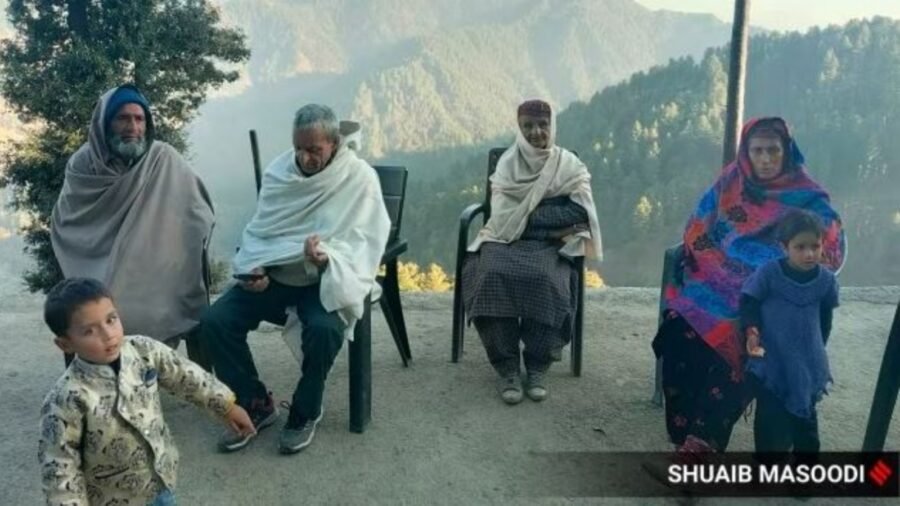
In December 2023, four Indian Army soldiers were killed in action in an ambush in Poonch. Three local civilians, amongst many picked up for questioning in the aftermath, died in custody.
The Armed Forces Tribunal’s (AFT) ruling upholding the “severe displeasure” censure against the Rashtriya Rifles Sector Commander, a Brigadier, is more than an administrative footnote. It reaffirms the Indian military’s commitment to internal accountability and command responsibility. By validating an internal administrative measure over external intervention, the tribunal demonstrates that the armed forces possess robust self-regulating internal accountability mechanisms to address operational lapses.
Advertisement
The armed forces broadly split penalties into two types: Disciplinary and administrative. Disciplinary action comes through a court-martial for serious offences under the Army Act, with penalties including imprisonment, loss of rank or dismissal. Administrative action, however, deals with lapses of leadership, judgement and oversight that may not warrant a full trial but cannot be ignored. A censure of “severe displeasure” may sound mild, but it carries a telling effect on career progression.
The Indian Army maintains a zero-tolerance policy towards human rights violations. While genuine errors of judgment can occur in the fog of war, intentional breaches are treated with utmost seriousness. By rejecting the officer’s appeal, the Tribunal did not merely validate an administrative action. It underscored that the military possesses both the moral clarity and the institutional machinery to uphold the highest ethical standards from within.
While a high-stress counter-terrorist environment can severely test operational discipline, the Army’s response in the Poonch incident was self-correcting. Instead of deflecting blame or waiting for external oversight, it ordered its own Court of Inquiry. That scrutiny ultimately held the Sector Commander administratively responsible for severe lapses in command oversight and control.
Advertisement
This is why the ruling is a landmark. It reinforces the principle of command responsibility: That a superior is responsible not only for what he orders, but for what he fails to prevent when he fails to supervise, train and discipline his troops. By applying this principle to the Poonch incident, the Army has once again confirmed that its internal legal mechanisms are sophisticated enough to hold a commander accountable, irrespective of rank, without requiring outside intervention.
In fact, this decision brought much-needed clarity to the debate around the Armed Forces Special Powers Act (AFSPA).
Section 7 of AFSPA protects personnel acting in good faith from prosecution by outside agencies without prior sanction of the central government. However, that protection did not stop the Army’s internal departmental review.
This is critical, as it shows that the military does not use AFSPA to hide from basic discipline. Instead, it uses the Army Act to ensure that emergency powers are matched with even higher professional standards.
This ruling reinforces the Army’s own long-standing ethos: That its true legitimacy rests on professional discipline, even when facing a brutal adversary. The AFT explicitly tackled the emotional fallout of combat, reinforcing the Army’s doctrine that human grief and the natural impulse for retaliation must always yield to the strictures of law.
It does not weaken the chain of command, but fortifies it and proves that the military’s “winning hearts and minds” doctrine is deeply ingrained in operational reality, and not just a public relations exercise.
Far from damaging morale or causing hesitation in high-stakes operations, this kind of internal resolution strengthens the force. It reassures the rank-and-file that they serve in an institution governed by honour, fairness and clear boundaries.
In counter-terror operations, the trust of the Awaam — the local population — is the Army’s central weapon. After all, they are the centre of gravity in any counter-insurgency/counter-terrorist operation. Human intelligence dries up, over-ground workers multiply, and every operation becomes harder when that trust is broken. One incident of perceived impunity can undo years of confidence-building. The Army knows this better than any commentator.
This is far from the first time the Army has demonstrated its capacity for rigorous self-correction. This instinct is institutional memory, not an exception.
In 2010, when a “staged” encounter came to light in the Machil sector, where three civilians were killed and passed off as infiltrating terrorists, the Army did not shield the guilty. It initiated disciplinary proceedings and a court-martial sentenced the personnel to life imprisonment.
In July 2020, in Amshipora, three labourers from Rajouri were killed and falsely branded as terrorists. The Army did not wait for a formal police chargesheet. It initiated its own inquiry, publicly declared that prima facie the provisions of AFSPA had been violated, and put an officer on court-martial for violating Standard Operating Procedures.
The world took note of Indian soldiers’ professionalism during the Kargil conflict in 1999. When Pakistan refused to acknowledge its own dead soldiers, leaving bodies on the icy heights, it was Indian soldiers who collected them, offered Namaz, and buried them with full military honours under the Geneva Conventions. That is why, globally, the Indian soldier is celebrated for discipline.
In an era where institutions often panic under scrutiny, the Indian military has shown what a mature institution does: It investigates its own senior leadership, validates administrative censure from within, and proves that true power lies in absolute accountability.
The buck did stop at the top in Poonch. That is why this case will endure as a blueprint: Not of a failure, but of an Army confident enough to correct itself to protect both national security and human dignity, ensuring that no rank is above the timeless code of institutional honour.
The writer is a former Colonel in the Indian Army and served as Defence Public Relations Officer in the 3&4 Corps and 14&15 Corps of the Indian Army. His operational background includes service in Siachen, Jammu and Kashmir and Sri Lanka

Nepal floods: Why rescue operations in hydropower tunnels are so challenging
By Sohail Khan · 31 Aug
Next employment challenge is about better jobs
By Sohail Khan · 31 Aug

Leave a Reply