E. coli in drinking water, just 11% stations have all basic amenities: Why CAG is concerned
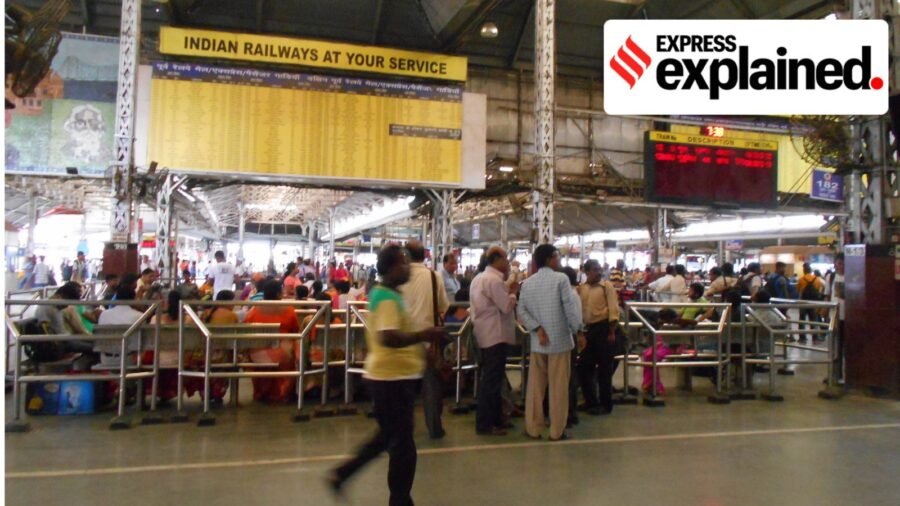
A recent report by the Comptroller & Auditor General (CAG) on facilities at railway stations has revealed some concerning findings for passengers. E. coli bacteria were found in samples of drinking water; more than 89% of the stations lacked one or more basic amenities such as seating, toilets, fans and signage; complaints relating to cleanliness, water availability and medical assistance increased; 59% of passenger amenity works were delayed; and funds allocated for such facilities were underutilised, the CAG report tabled in Parliament on August 12 said. The audit covered the period from 2019-20 to 2023-24.
Following the report, the government swung into action, with Minister for Railways Ashwini Vaishnaw on Sunday directing corrective measures including a new ‘tank to tap’ water filtration system at around 20,000 locations, including water coolers.
“From now onwards, the water quality at stations will be monitored at the board level. There will be scheduled cleaning and maintenance of storage tanks. Progress and water quality reports will be published periodically to ensure transparency,” said a senior ministry official.
The last time the CAG undertook an audit of passenger facilities at stations was in 2016. Nearly a decade later, the national auditor observed that deficiencies persisted despite repeated assurances given by the Ministry of Railways in response to its last report. We explain the key findings.
Minimum Essential Amenities (MEA)
The provision of mandatory basic facilities, or MEA, at railway stations was first introduced in 2003 by the Railway Board and revised in April 2018. These include drinking-water taps, seating, urinals, toilets, waiting halls, water coolers, fans, clocks, platform shelters, public-address systems, parking-cum-circulatory areas and electronic train indicator boards. These facilities were to be provided by August 31, 2018, at all stations.
However, the CAG found that more than two decades after the MEA norms were first introduced, only 11% of inspected stations had no shortfall in these amenities. The audit found that even major stations with annual revenues of more than Rs 710 crore and annual passenger footfalls ranging from 1.03 crore to 11.47 crore failed to ensure the availability of basic amenities. Shortfalls were found at major stations including New Delhi, Howrah, Hazrat Nizamuddin Junction, Secunderabad, MGR Chennai Central, Ahmedabad, Chhatrapati Shivaji Maharaj Terminus, KSR Bengaluru, Surat and Anand Vihar Terminal.
The CAG selected a total of 512 non-suburban stations (8.66% of more than 5,900 stations) for its study. It found that only 54 stations (under 11%), spread across 13 zones, had provided all minimum essential amenities as per the norms.
Story continues below this ad
The CAG found that adequate drinking-water taps were not available at 188 stations and waiting halls were not provided at 21. The prescribed number of urinals and latrines was not available at 111 and 59 stations respectively, while the covered area of platforms or platform shelters was below the prescribed minimum at 62 stations. Another 60 stations did not have clocks, 128 had fewer water coolers than prescribed, while dustbins were not provided as per norms at 149 stations.
The national auditor reported significant deficiencies in amenities for Divyangjan, including standard ramps with railings (44%), earmarked parking lots (55%), non-slippery walkways (32%) and drinking-water taps at alternate water booths on each platform (58%).
There was also an underutilisation of funds allocated for ‘Customer amenities’ over the five-year period from 2019-20 to 2023-24, ranging from 36% to 44% of the budget grants.
Quality of drinking water
The CAG also assessed the hygiene, cleanliness and maintenance of passenger amenities at the stations. It found lapses in the maintenance of water coolers, rag picking, pest and rodent control measures, the discharge of sewage from drains or toilets at stations, and the upkeep of toilets, urinals and bathrooms.
Story continues below this ad
It further found that water samples from water coolers tested positive for E. coli at Coimbatore, Palakkad Junction, Hyderabad, Chhatrapati Shivaji Maharaj Terminus, Bhiwandi Road, Kalyan, Lonavala and Madhupur. “Chemical analysis of drinking water was not conducted by health inspectors at 179 stations in 11 zones and was not carried out as per prescribed periodicity (twice a year) at 77 stations in six zones,” the auditor said.
It also found that tests for all parameters specified in the ‘Uniform Drinking Water Quality Protocol’ were not carried out at any of the 512 selected stations.
The report shows that these deficiencies persisted despite the Railways spending around Rs 700 crore annually on maintaining sanitation at stations. Expenditure exceeded the budget grant by Rs 72.66 crore in 2022-23 and Rs 9.20 crore in 2023-24 for station sanitation.
Poor monitoring, increasing complaints
The CAG found that the Zonal Railway Users Consultative Councils (ZRUCCs) and Divisional Railway Users Consultative Councils (DRUCCs), which are tasked with monitoring passenger amenities, did not meet at the prescribed frequency of three times a year.
Story continues below this ad
Further, passenger complaints about amenities received through RailMadad show that complaints relating to medical assistance, cleanliness, malfunctioning electrical equipment and the availability of water at stations increased substantially (see the box).
Among passengers who submitted complaints or suggestions, 37% in 2022-23 and 42% in 2023-24 expressed dissatisfaction with the resolution of their complaints.
Two editorial flags beyond the line edit: “more than 89%” is technically fine but “only 11% had all MEAs” is cleaner and is your stronger CAG finding; and I would make sure the Rs 710 crore / 1.03–11.47 crore sentence means those thresholds/ranges apply to each of the listed stations rather than to some broader category. Otherwise the piece is structurally sound.
COP31 hosts Australia and Türkiye face the fossil-fuel question
By Sohail Khan · 28 Sep
Rishi Sunak, Ro Khanna, Dinesh D’Souza: united by colour; divided among white nationalists
By Sohail Khan · 28 Sep