Dry mouth while sleeping: Why it happens and whether a humidifier can help
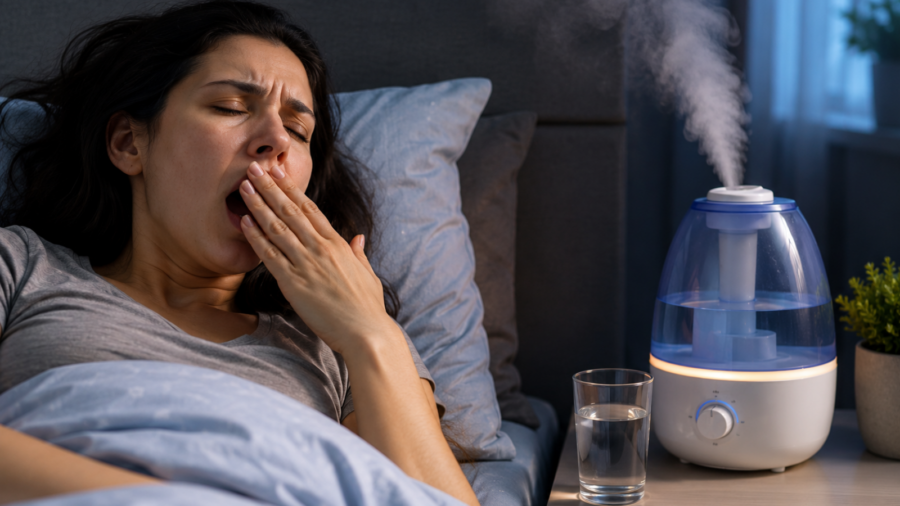
Waking up with a dry, sticky mouth can be surprisingly uncomfortable. For some people, it happens only occasionally in winter or after sleeping in an air-conditioned room. For others, it becomes a daily problem. A recent question on Quora also read: Can using a humidifier at night actually help with dry mouth, and if so, how should it be used?
So, we dug deeper and reached out to Dr Jatin Arora, Head of the Department of Dental at ISIC Multispeciality Hospital, who tells indianexpress.com that the answer depends on what’s causing the dryness in the first place.
Story continues below this ad
Can a humidifier really help?
“A humidifier can help if dry mouth is caused by dry air, especially during winters or in air-conditioned rooms. It adds moisture to the air and may reduce dryness,” says Dr Arora.
However, he cautions that it “will not solve dry mouth caused by medications, mouth breathing, snoring, or underlying health conditions.”
In other words, while a humidifier may improve comfort in a dry environment, it won’t address every cause of dry mouth.
Why do some people wake up with a dry mouth?
There are several possible reasons. “Morning dry mouth can happen due to sleeping with an open mouth, snoring, dehydration, certain medicines, or reduced saliva production,” Dr Arora explains.
Story continues below this ad
“Conditions like diabetes or some autoimmune disorders can also contribute.”
That is why identifying the exact cause matters for proper management and long-term oral health.
How should you use a humidifier?
If you’re using a humidifier, Dr Arora recommends keeping room humidity between 40 and 60 per cent. He also warns against overdoing it. “Avoid excessive moisture as it can encourage mould growth.”
At the same time, he clarifires that “a humidifier should support comfort but should not replace medical advice if dry mouth continues despite lifestyle changes.”
Story continues below this ad
 If using a humidifier, keep it clean and maintain room humidity around 40–60%
Can dry mouth damage your teeth?
Many people think dry mouth is merely an inconvenience, but it can have a significant impact on oral health.
“Yes, long-term dry mouth can affect oral health because saliva helps protect teeth and gums,” says Dr Arora.
When saliva production falls, the mouth loses one of its natural defence systems. “It can increase the risk of cavities, gum problems, bad breath, mouth infections, difficulty chewing, and discomfort while speaking or swallowing.”
When should you see a doctor?
Occasional dry mouth isn’t usually a cause for concern. But persistent symptoms shouldn’t be ignored.
Story continues below this ad
“If dry mouth continues for weeks, affects daily activities, or is associated with frequent cavities, mouth sores, difficulty swallowing, excessive thirst, or other symptoms, it should be evaluated,” Dr Arora cautions.
“A dentist or doctor can identify the cause and suggest appropriate treatment to protect oral and overall health.”
Thus, a humidifier may help if dry air is drying out your mouth overnight. But if the problem persists despite lifestyle changes, it’s important to find out what’s causing it rather than simply masking the symptoms.

Microplastics in bottled water: What 240,000 particles per litre means for your health
By Sohail Khan · 28 Sep
Women’s safety falls through the gap between intention and policy
By Sohail Khan · 28 Sep
Give India’s poor cash. But don’t stop there
By Sohail Khan · 28 Sep